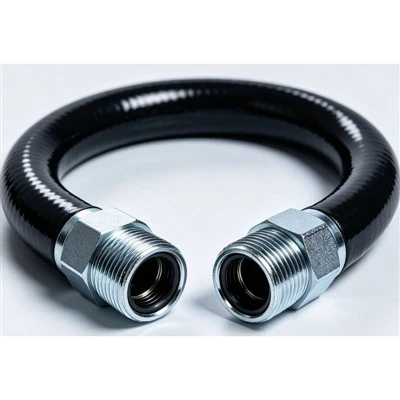
When considering the use of HNBR (Hydrogenated Nitrile Butadiene Rubber) hoses in cryogenic applications, it’s essential to conduct a comprehensive analysis from multiple perspectives. As a supplier of HNBR hoses, I’ve received numerous inquiries about whether these hoses can be employed in cryogenic environments. In this blog, I’ll share my in – depth knowledge and insights on this topic. HNBR Hose
Understanding HNBR Hoses
HNBR hoses are well – known for their excellent mechanical and chemical properties. The hydrogenation process of nitrile butadiene rubber significantly enhances its performance. It offers high abrasion resistance, good tear strength, and remarkable resistance to oil, fuel, and ozone. These properties make HNBR hoses a popular choice in various industrial applications, such as automotive, oil and gas, and hydraulic systems under normal operating conditions.
Cryogenic Applications: A Harsh Environment
Cryogenic applications involve extremely low temperatures, typically below – 150°C (- 238°F). In such environments, materials face several challenges. The most prominent issue is brittleness. As the temperature drops, the molecular motion of materials slows down, and their flexibility decreases. This can lead to cracking and failure of components, especially under stress or vibration.
Another challenge is the change in material dimensions. Most materials contract as they cool, and if the contraction is not properly accounted for, it can cause leaks, misalignments, or mechanical failures in the system. Additionally, cryogenic fluids are often highly reactive, and the hose material must be resistant to chemical attack from these substances.
Performance of HNBR Hoses in Cryogenic Conditions
Brittleness and Flexibility
The key factor that determines whether an HNBR hose can be used in cryogenic applications is its low – temperature flexibility. Standard HNBR compounds have a glass transition temperature (Tg) around – 40°C to – 50°C. When the temperature drops below the Tg, the rubber converts from a flexible, rubbery state to a brittle, glassy state. This means that in typical cryogenic temperatures, regular HNBR hoses will lose their flexibility and become prone to cracking.
However, advancements in rubber compounding technology have led to the development of low – temperature – resistant HNBR compounds. These special formulations can maintain a certain degree of flexibility at much lower temperatures. By carefully selecting the right additives and adjusting the hydrogenation level, it’s possible to lower the Tg of HNBR to around – 70°C or even lower. While this is still not suitable for the extremely coldest cryogenic applications, it does expand the range of temperatures where HNBR hoses can potentially be used.
Chemical Compatibility
HNBR hoses generally have good resistance to a wide range of chemicals, including many cryogenic fluids such as liquid nitrogen and liquefied natural gas (LNG). Liquid nitrogen is an inert gas in its liquid form, and HNBR shows good chemical stability in contact with it. For LNG, which mainly consists of methane, HNBR also has acceptable resistance because of its excellent oil and fuel resistance.
But other cryogenic fluids like liquid oxygen (LOX) are highly reactive oxidizers. Standard HNBR hoses are not suitable for contact with LOX because the rubber can pose a fire hazard in an oxygen – rich environment. Special oxygen – compatible hoses need to be developed for such applications.
Thermal Contraction
Thermal contraction is a concern for any material used in cryogenic applications. HNBR, like other polymers, will contract as the temperature drops. To address this issue in hose design, engineers can use reinforcement layers and proper fitting designs. The reinforcement layers can help to control the contraction and prevent excessive deformation of the hose. Additionally, the fittings should be designed to accommodate the thermal movement of the hose without causing leaks.
Case Studies and Practical Applications
In some industrial settings where the temperature is moderately low, HNBR hoses have been successfully applied. For example, in certain LNG – related processes where the temperature is around – 100°C, specially formulated HNBR hoses have been used for transferring LNG. These hoses are designed with low – temperature – resistant compounds and appropriate reinforcement to ensure reliable operation.
However, in applications where the temperature is extremely low, such as in some scientific research facilities using liquid helium (at around – 269°C), HNBR hoses are not typically used. Instead, materials with even lower Tg values, such as PTFE (Polytetrafluoroethylene), are preferred.
Advantages of Using HNBR Hoses in Moderately Cryogenic Applications
Cost – effectiveness
Compared to some high – performance materials specifically designed for cryogenic applications, HNBR hoses can be more cost – effective. For applications where the temperature is not extremely low, using HNBR hoses can provide a good balance between performance and cost.
Familiarity and Ease of Installation
Many industries are already familiar with HNBR hoses due to their wide use in non – cryogenic applications. This familiarity makes it easier for engineers and technicians to install and maintain HNBR hoses in moderately cryogenic environments. The installation procedures and connection methods are similar to those in normal applications, reducing the need for extensive training.
Limitations and Considerations
Temperature Limitations
As mentioned earlier, even the most advanced low – temperature – resistant HNBR compounds have their limits. They are not suitable for the coldest cryogenic applications. It’s crucial to accurately assess the temperature range of the application before deciding to use HNBR hoses.
Compatibility Testing
Before using HNBR hoses in a cryogenic application, it’s essential to conduct compatibility testing. This includes testing the hose material’s resistance to the specific cryogenic fluid, as well as its performance under cyclic temperature changes and mechanical stress at low temperatures.
Conclusion
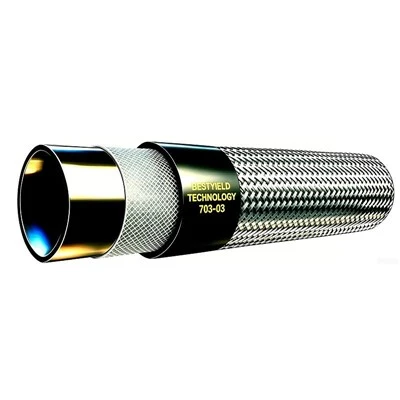
In conclusion, while standard HNBR hoses are not suitable for extreme cryogenic applications, specially formulated HNBR hoses can be used in moderately low – temperature cryogenic scenarios. Their performance in terms of flexibility, chemical compatibility, and thermal contraction can be optimized through advanced compounding and design techniques.
MVQ Hose If you are involved in a cryogenic application project and are considering using hoses, I invite you to reach out for more information. As an HNBR hose supplier, I’m committed to providing high – quality products and comprehensive technical support. We can work together to determine if our HNBR hoses are the right fit for your specific needs. Feel free to contact us to start a discussion about procurement and find the best solution for your cryogenic application requirements.
References
- "Handbook of Elastomers", Second Edition. By Bhupendra K. Sharma and Sukant K. Tripathy.
- Technical reports on HNBR materials from major rubber manufacturers.
- Industry papers on cryogenic applications and material selection.
BESTYIELD Technology (Huizhou) Co., Ltd.
BESTYIELD Technology (Huizhou) Co., Ltd. is one of the most professional hnbr hose manufacturers and suppliers in China, featured by quality products and good price. Please rest assured to buy durable hnbr hose made in China here and get quotation from our factory. Customized orders are welcome.
Address: Yinshan Industrial Zone, Liangjing Town, Huiyang District, Huizhou City, Guangdong Province
E-mail: rick@bestyield.net
WebSite: https://www.bestyield.org/
