If you’ve ever picked up a car door latch, a smartphone battery connector, or even the tiny metal tabs inside a TV remote, you’re holding a part that almost certainly came from a progressive die. These tools aren’t just metal chunks stamped into shape—they’re the backbone of high-volume, precise manufacturing, and if you work in metal stamping, you know progressive dies are anything but static. Over the last 5 years, I’ve watched my shop field more questions about new die builds than I did in the previous 15 combined: clients don’t just want a die that punches parts anymore; they want one that’s faster, smarter, and cheaper to run. If you’re a stamping engineer or operations manager looking to upgrade your tooling, let’s break down the real trends shaking up progressive die tech right now, no stuffy whitepaper jargon—just what we’re seeing on the shop floor. Progressive Dies
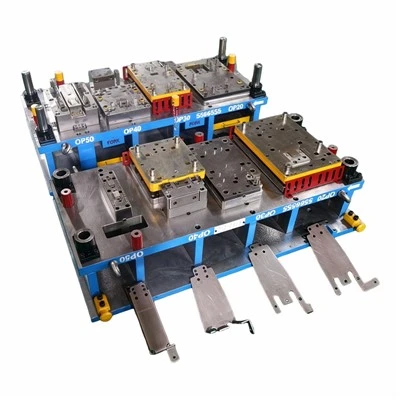
First, let’s cut to the chase: the biggest shift isn’t in how dies are built, but in how they talk. Back in the day, a progressive die was a closed box—you set it up, stamped parts, and only opened it when something broke or output dropped. Now, smart dies are becoming the new standard, and it’s not just a gimmick. Last quarter, we built a die for a medical device client that has 8 tiny sensors built into the stripper plate, punch holders, and die cushion. Each sensor monitors wear, press load, and even sheet thickness variation in real time. The data doesn’t just sit on a hard drive either; it syncs to the client’s manufacturing execution system (MES) so if a punch is starting to wear 10,000 parts before it would usually fail, their line gets a heads-up. No more unplanned die changes mid-run, no more scrapping entire batches because a broken punch slipped through. A lot of suppliers claim “smart dies” now, but the difference is that we’re not adding sensors for the sake of it—we’re tailoring them to what the part actually needs. For example, a car part that runs 24/7 on a 10,000-ton press needs load monitoring, while a small consumer electronics part running on a 100-ton press might only need wear tracking for its tiny forming tabs.
That leads to the second trend: smaller, tighter tolerance requirements are pushing dies past what conventional machining can pull off. A couple years ago, most stamped parts for electronics had tolerances of ±0.005 inches; now smartphone connectors need ±0.001 inches, which is thinner than a human hair. To hit that, we’re ditching traditional milling and turning for more 5-axis machining and wire EDM for critical die components. Wait, let’s be real—wire EDM isn’t new, but we’re using it way more for die components like punches and die inserts that do the final forming. The tricky part with tight tolerances isn’t just making the part fit; it’s making sure the die holds that consistency for millions of cycles. We tested a die last year that used 0.0005-inch precision wire EDM for its shear edges, and it ran 12 million parts before we saw any tolerance drift—compared to a conventional die of the same part that needed a mid-run adjustment at 4 million parts. The tradeoff? Higher upfront machining costs, but clients save way more on scrap and rework over the die’s lifecycle. We’re also seeing more use of coated tool steels now too—like TiN and TiCN coatings on punches and stripper pins—that cut friction and wear, so those tight tolerances stay consistent even after hundreds of thousands of cycles.
Third, design for additive manufacturing (DfAM) is finally moving from prototyping to full production dies. For years, additive manufacturing (3D printing) was just for making quick prototype dies that only ran a few hundred parts. Now, we’re 3D printing some die components for production runs, especially for things like die cushions, support brackets, and even small forming inserts. The biggest win here? Weight and material savings. A traditional die cushion for a large appliance part used to be a solid steel block that weighed 500 lbs; a 3D printed version using a lattice structure only weighs 220 lbs, which means less wear on the press and easier die changes. Wait, but people always ask: “Can 3D printed parts hold up to 10 million cycles?” We ran a test last year for a HVAC part die: a 3D printed forming insert vs. a conventional machined insert. The 3D printed one wore at about the same rate, and it cost 30% less to make. The catch is that it works best for non-critical structural parts or components that don’t see direct punch contact. We still machine the shear edges and punch holders from solid tool steel, but for things that don’t need super tight tolerances, 3D printing is a game-changer for lead times and cost. A conventional die might take 8 weeks to make; one with 3D printed components can be done in 5, which is huge for clients who need to get a new part to market fast.
Another trend that’s flying under the radar but changing everything: material flexibility. Back in the day, a die was built for one specific material—stainless steel 304, 0.5 mm thick, and that’s it. Now, clients want dies that can run multiple materials right on the same line: aluminum, copper, even those new high-strength steels that are used in electric vehicles. A lot of our clients are EV startups, and they don’t want to have to build a new die every time they switch a part material for weight savings. So we’re modifying dies to have adjustable components: interchangeable punches and die inserts that can swap out in minutes, instead of hours. For example, we built a die for a cable connector that can run copper, brass, and even thin stainless steel—all with just changing the forming inserts on the stripper plate. We also adjust the blankholder force and feed rate via servo motors, so the press and die can adapt in real time if the sheet material varies slightly. That’s not just about flexibility; it’s about reducing inventory. A client used to stock 3 separate dies for their 3 materials, now they stock one die and a set of inserts, saving thousands in tooling costs.
Now, let’s talk about the elephant in the room: sustainability. For a long time, stamping was seen as a dirty industry, but progressive die tech is shifting to be way greener. First, less scrap: smart dies cut errors, so we’re throwing away 15-20% less material on average than we were 5 years ago. Second, material efficiency: dies that can run thinner materials mean less metal overall for parts. For EV parts, every gram counts—lighter batteries mean longer range, so a die that can form a 0.3 mm aluminum part instead of 0.5 mm saves weight and material. Also, we’re moving away from coated steels that have harmful chemicals, and switching to low-friction coatings that are more eco-friendly, plus using more recycled tool steel for die components. Last year, we built a die that uses 75% recycled tool steel, and it performed just as well as one made from virgin steel. It’s not just a trend for the sake of ESG reports—our clients, especially in automotive and medical, are demanding more sustainable tooling, so it’s becoming a non-negotiable.
Wait, let’s address what’s not a trend either—stop buying into the hype that robots will replace dies or that dies are going away. No, dies are still the cheapest, fastest way to make high-volume precision parts. The trends we’re seeing are all about making dies better: more flexible, smarter, longer-lasting, more sustainable. If you’re running a stamping operation and you’re still using dies that are 10+ years old, you’re probably dealing with unplanned downtime, high scrap rates, and higher operating costs. For example, a client of ours ran an old die that had average downtime of 8 hours a week due to punch wear and misalignment; we swapped it out for a smart die with sensor monitoring and coated punches, and their downtime dropped to 2 hours a week, saving them $120k a year in lost production. That’s not a number I pulled out of thin air—we track that kind of stuff on every die we build.
So where does this leave you? If you’re looking to upgrade your progressive die tooling, don’t just go for the cheapest option. Look for a supplier that’s actually doing the smart die, DfAM, and material flexibility work, not just selling “new tech” as a marketing buzzword. A lot of suppliers will tell you they offer smart dies, but they just add 2 sensors and call it a day—you want someone who will sit down with you, look at your current parts, your run rate, your material needs, and build a die tailored to your operation, not a generic one size fits all.

If you’re tired of dealing with dies that break mid-run, cost too much to operate, or can’t keep up with your changing part needs, let’s chat. We’ve built dies for everything from small medical components to large automotive EV parts, and we can help you find a progressive die solution that fits your budget and production goals. Don’t wait until your next die failure to upgrade—reach out to start the conversation.
Automotive & EV Stamping Parts References:
- Journal of Manufacturing Processes, "Advancements in Progressive Die Technology for High-Volume Precision Stamping," 2022.
- Society of Manufacturing Engineers (SME), "Smart Tooling: Sensor Integration for Metal Stamping Dies," 2023.
- Additive Manufacturing, "Design for Additive Manufacturing of Die Components for Metal Stamping," 2021.
- Automotive Engineering International, "Progressive Die Trends for Electric Vehicle Component Manufacturing," 2024.
Dongguan Changdong Tool & Die Co., Ltd.
With abundant experience, we are one of the most reliable progressive dies manufacturers and suppliers in China. Please feel free to buy advanced progressive dies made in China here from our factory. Good service and quality products are available.
Address: No. 56-B, Fumin South Road, Dalang Town, Dongguan City, Guangdong Province, China
E-mail: sales@stamping-die.com
WebSite: https://www.metalstampingdie.com/
