What is the leakage inductance of a transformer – like inductor?
As a seasoned inductor supplier, I’ve encountered numerous inquiries about the technical nuances of inductors over the years. One question that frequently surfaces is about the leakage inductance of a transformer – like inductor. In this blog, we’ll delve deep into what leakage inductance is, why it matters, how it occurs, and its implications for inductor performance. Inductor
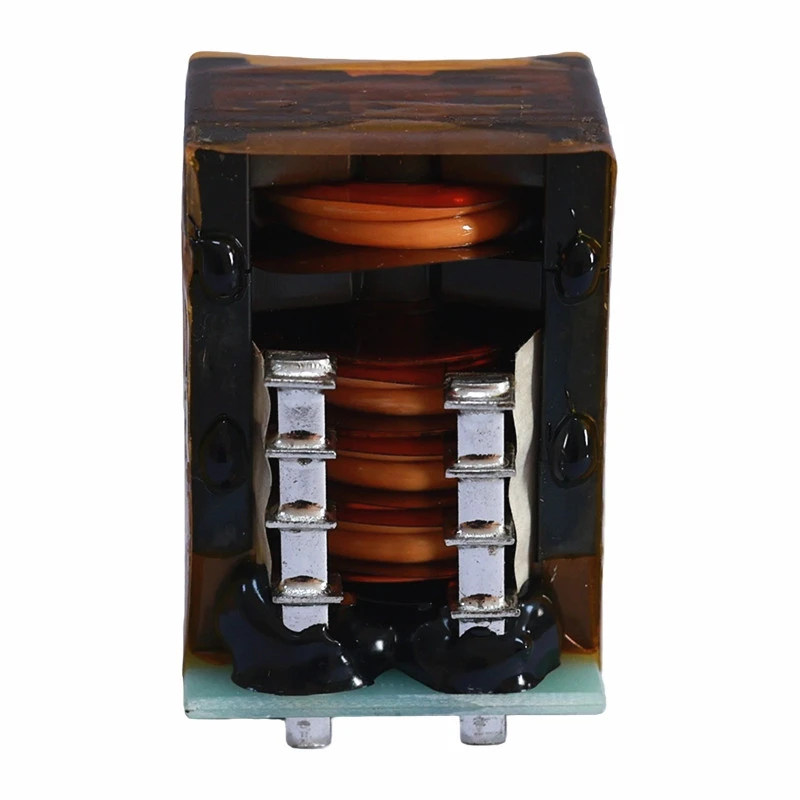
Understanding the Basics of a Transformer – like Inductor
A transformer – like inductor shares many similarities with a traditional transformer. It consists of two or more coils wound around a common magnetic core. The primary function of such an inductor is to transfer electrical energy from one coil to another through the magnetic field. When an alternating current (AC) flows through the primary coil, it creates a changing magnetic field in the core. This changing magnetic field then induces a voltage in the secondary coil according to Faraday’s law of electromagnetic induction.
Definition of Leakage Inductance
Leakage inductance can be thought of as an unwanted by – product in a transformer – like inductor. In an ideal world, all of the magnetic flux generated by the primary coil would link with the secondary coil, resulting in a perfectly efficient energy transfer. However, in reality, not all of the magnetic flux couples between the coils. The portion of the magnetic flux that does not link with the secondary coil is called the leakage flux.
Leakage inductance is the inductance associated with this leakage flux. It is as if there is an additional inductor in series with the primary or secondary coil of the transformer – like inductor. Mathematically, leakage inductance can be calculated based on the geometric and magnetic properties of the coils and the core.
Causes of Leakage Inductance
There are several reasons why leakage inductance occurs in a transformer – like inductor:
- Physical Separation of Coils: The physical distance between the primary and secondary coils can cause the magnetic flux to leak. If the coils are not wound closely enough around each other, some of the magnetic field lines generated by the primary coil will not reach the secondary coil. For example, in a loosely – wound inductor, there is a greater chance of flux leakage.
- Non – uniform Magnetic Field: The magnetic core may not distribute the magnetic field uniformly. Imperfections in the core material, such as air gaps, cracks, or variations in magnetic permeability, can cause the magnetic field to deviate from the ideal path. As a result, some of the flux may not couple between the coils.
- Coil Geometry: The shape and size of the coils also play a role. Coils with irregular shapes or large cross – sectional areas may have more leakage flux. For instance, a rectangular – shaped coil may have different leakage characteristics compared to a circular – shaped coil.
Measuring Leakage Inductance
Measuring leakage inductance is crucial for understanding the performance of a transformer – like inductor. There are several methods to measure it:
- Open – Circuit Test: In this test, the secondary coil is left open – circuited, and an AC voltage is applied to the primary coil. The measured inductance of the primary coil under this condition is the sum of the primary magnetizing inductance and the leakage inductance. By knowing the magnetizing inductance, the leakage inductance can be calculated.
- Short – Circuit Test: In the short – circuit test, the secondary coil is short – circuited, and a reduced – voltage AC is applied to the primary coil. By measuring the current and voltage in the primary coil and using the principles of electrical circuits, the leakage inductance can be determined.
Effects of Leakage Inductance on Inductor Performance
Leakage inductance can have several significant effects on the performance of a transformer – like inductor:
- Reduced Efficiency: Since leakage inductance represents energy that is not transferred between the coils, it leads to energy losses in the form of heat. This reduces the overall efficiency of the inductor. In high – power applications, these losses can be substantial and may require additional cooling mechanisms.
- Voltage Regulation: Leakage inductance affects the voltage regulation of the inductor. When the load on the secondary coil changes, the leakage inductance causes a voltage drop in the primary and secondary circuits. This can result in a variation of the output voltage, which may not be desirable in applications that require a stable voltage supply.
- Transient Response: In circuits where the inductor is subjected to rapid changes in current, leakage inductance can cause voltage spikes. These voltage spikes can damage other components in the circuit and may require additional protection circuits.
Minimizing Leakage Inductance
As an inductor supplier, we are always looking for ways to minimize leakage inductance. Here are some common techniques:
- Tightly – Wound Coils: By winding the primary and secondary coils as closely as possible, we can reduce the physical separation between them and minimize the leakage flux. This can be achieved through careful coil – winding techniques and the use of appropriate winding machines.
- High – Quality Magnetic Cores: Using magnetic cores with high magnetic permeability and low losses can help in better flux coupling. Materials such as ferrite cores are commonly used due to their excellent magnetic properties.
- Coil Design Optimization: Optimizing the coil geometry, such as using circular coils instead of rectangular ones in some cases, can also reduce leakage inductance. Additionally, proper layer – winding techniques can improve the magnetic coupling between the coils.
Applications and Considerations
In different applications, the impact of leakage inductance varies. In power supply applications, minimizing leakage inductance is crucial to improve efficiency and voltage regulation. For example, in switch – mode power supplies, high leakage inductance can cause excessive voltage spikes during switching transitions, which can lead to component failure.
In audio applications, leakage inductance can affect the frequency response of the inductor. It can introduce distortion and reduce the audio quality. Therefore, in audio transformers, special attention is paid to minimizing leakage inductance to ensure high – fidelity sound reproduction.
Conclusion
Leakage inductance is an important parameter in transformer – like inductors. Understanding its causes, effects, and measurement methods is essential for both inductor design and application. As a reliable inductor supplier, we are committed to producing high – quality inductors with minimized leakage inductance to meet the diverse needs of our customers.
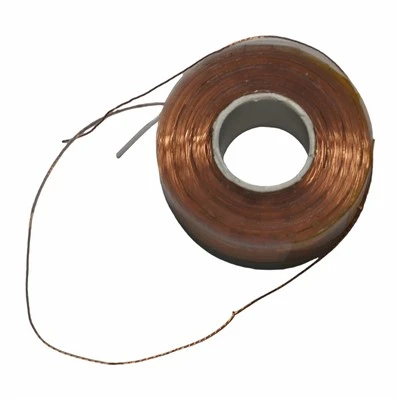
Whether you are working on a power – hungry industrial project or a high – end audio system, our team of experts can provide you with the right inductor solutions. We have the knowledge, experience, and state – of – the – art manufacturing facilities to ensure that our inductors meet the highest standards of performance.
Low-voltage Transformer If you are interested in learning more about our inductor products or have specific requirements for your project, we encourage you to contact us for procurement discussions. Our dedicated sales team is ready to assist you in finding the perfect inductor for your application.
References
- Grover, F. W. (1946). Inductance Calculations: Working Formulas and Tables. Dover Publications.
- Chapman, S. J. (2012). Electric Machinery Fundamentals. McGraw – Hill Education.
- Alexander, C. K., & Sadiku, M. N. O. (2017). Fundamentals of Electric Circuits. McGraw – Hill Education.
Dongguan Hensiron Electric Co., Ltd.
As one of the most professional inductor suppliers in China, we have world-leading production equipment and strong manufacturing capabilities. Please feel free to buy high quality inductor made in China here from our factory. Customized orders are welcome.
Address: Building 4, Xinxing Industrial Zone, Wangao Road, Wanjiang Street, Dongguan City, China
E-mail: jessica@dghensiron.com
WebSite: https://www.dghensiron.com/
