Hey there, fellow bikepackers and bike enthusiasts! I’m stoked to have you here today. As a supplier of mountain bike frames, I get asked a ton of questions, but one that pops up more often than I’d expect is, "Can I use a mountain bike frame for bikepacking?" Well, let’s dig into this topic and see if a mountain bike frame is the right fit for your next bikepacking adventure. Mountain Bike Frame

First things first, what’s the deal with bikepacking? It’s basically a blend of cycling and backpacking. You load up your bike with all the gear you need for a multi – day trip and hit the road, or more accurately, the trails. You could be biking through mountains, along forest paths, or on gravel roads. It’s all about the freedom and adventure of exploring the great outdoors on two wheels.
Now, let’s talk about mountain bike frames. We’ve been in the frame – making game for a while, and we know a thing or two about what makes a good mountain bike frame. These frames are built tough. They’re designed to handle the rough and tumble of the trails. You’ve got those big jumps, the rocky descents, and the tight turns. The frames are often made from materials like aluminum or carbon fiber. Aluminum is strong, durable, and relatively affordable. Carbon fiber, on the other hand, is lighter and can offer better shock absorption, but it comes with a heftier price tag.
So, can you use a mountain bike frame for bikepacking? The short answer is yes, you totally can. But there are a few things you need to consider.
One of the main things is geometry. Mountain bike frames are typically designed for agility and quick handling on the trails. They have a shorter wheelbase and a more aggressive head – tube angle. This is great for technical mountain biking, but it might not be ideal for long – distance bikepacking. When you’re carrying a lot of gear, you want a more stable ride. A longer wheelbase and a slacker head – tube angle can provide that stability, making it easier to control your bike when it’s loaded up.
But don’t worry too much. Many modern mountain bike frames have a more relaxed geometry compared to the old – school ones. They’re a bit more versatile and can handle the weight of your bikepacking gear. You might still notice a difference in handling, but it’s definitely doable.
Another aspect is the mounting points. For bikepacking, you need to be able to attach all your gear to the bike. This includes things like panniers, frame bags, and handlebar bags. Some mountain bike frames come with plenty of mounting points. They’ve got eyelets on the top tube, down tube, and seat stays, which are perfect for attaching bags. But if your mountain bike frame doesn’t have these mounting points, it’s not the end of the world. You can use aftermarket solutions like straps and clamps to attach your gear. It might take a bit more time to set up, but it’ll get the job done.
The tire clearance is also crucial. When you’re bikepacking, you’ll want to run wider tires. Wider tires provide more stability and better traction on different surfaces, whether it’s gravel, mud, or sand. Mountain bike frames usually have a decent amount of tire clearance, but it’s still something you need to check. You don’t want to end up with a frame that’s too narrow for the tires you want to use. If you’re planning to use really wide tires, say 2.6 inches or more, make sure your mountain bike frame can accommodate them.
Suspension is another factor. Mountain bikes often come with front suspension forks and, in some cases, rear suspension. While suspension is great for absorbing impacts on the trails, it can be a bit of a double – edged sword when it comes to bikepacking. Suspension adds weight to the bike, and when you’re carrying a lot of gear, every ounce matters. Plus, if you’re on a long, flat stretch of road, the suspension can make your pedaling less efficient. However, if you’re going to be riding on really rough terrain, the suspension can provide a much more comfortable ride. Some bikepackers prefer hard – tail mountain bikes (ones with front suspension only) as they offer a good balance between weight and comfort.
Let’s talk about the pros and cons of using a mountain bike frame for bikepacking.
The pros are plenty. First off, mountain bike frames are tough as nails. You don’t have to worry about them breaking down on the rough trails. They can handle the bumps and bruises of off – road riding. Second, they’re widely available. There are so many different models and brands of mountain bikes out there, which means you can find a frame that fits your budget and your riding style. Third, if you already own a mountain bike, you can save money by using its frame for bikepacking instead of buying a dedicated bikepacking bike.
On the flip side, the cons are mainly related to the things we’ve already discussed. The geometry might not be the best for long – distance comfort, and the suspension can add unnecessary weight. Also, some mountain bike frames might not have enough mounting points for all your gear, which can be a hassle.
So, if you’ve decided that a mountain bike frame is the way to go for your bikepacking needs, here are some tips on choosing the right one.
First, think about your budget. As I mentioned earlier, carbon fiber frames are lighter and more high – end, but they’re also more expensive. Aluminum frames are a more budget – friendly option and still offer great durability.
Second, consider the frame size. A properly sized frame is crucial for a comfortable ride. Make sure you measure your inseam and other body dimensions and choose a frame size that matches. You can also test – ride different bikes to see how they feel.
Third, look at the brand and the reputation of the frame. You want to buy from a reliable supplier who stands behind their products. That’s where we come in! We’ve been in the business for years, and we’ve got a great track record of providing high – quality mountain bike frames.
Fourth, check for any additional features you might need. For example, some frames come with internal cable routing, which can make your bike look cleaner and protect the cables from damage.
In conclusion, using a mountain bike frame for bikepacking is definitely a viable option. It has its pros and cons, but with a bit of planning and the right choice of frame, you can have an amazing bikepacking experience.
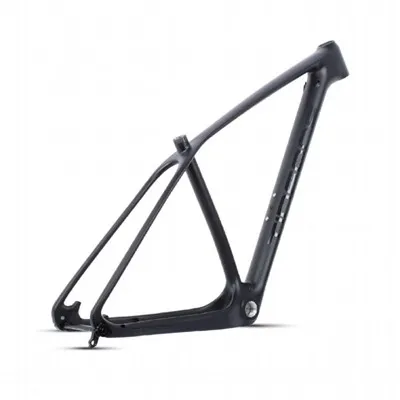
If you’re interested in learning more about our mountain bike frames or you’re thinking about making a purchase, don’t hesitate to reach out. We’re here to answer all your questions and help you find the perfect frame for your bikepacking adventures. Whether you’re a seasoned pro or just starting out, we’ve got a frame that’s right for you. Let’s get you out on the trails and exploring the world on two wheels!
Carbon Fiber Fork References:
- "Bikepacking Handbook" – A great resource for all things bikepacking.
- "Mountain Biking: The Ultimate Guide" – Covers the basics of mountain biking, including frame design and materials.
Huizhou Magic Carbon Co., Ltd.
As one of the most professional mountain bike frame manufacturers and suppliers in China, we have world-leading production equipment and strong manufacturing capabilities. Please feel free to buy customized mountain bike frame made in China here from our factory. For quotation, contact us now.
Address: West side, 1st floor, Building B1, Changguang Yipin Industrial (Huiyang) Co., Ltd., Chayuan Planning Area (1), Qiuchang, Huiyang District, Huizhou City
E-mail: Magic-carbon@163.com
WebSite: https://www.magic-carbon.com/
