If you’ve ever peered at a lab scientist hunched over a fragile tissue sample, a water quality test slide, or a batch of cell cultures, you’ve probably noticed they rely on two things: precision gear and unshakable consistency. As a sample processing apparatus supplier, I spend most of my days talking to lab managers, research technicians, and quality control leads who tell me their biggest headaches don’t come from fancy new assays or tricky experimental designs—they come from flimsy, poorly performing processing tools that turn reliable samples into ruined batches, wasted grant money, and missed deadlines. Sample Processing Apparatus
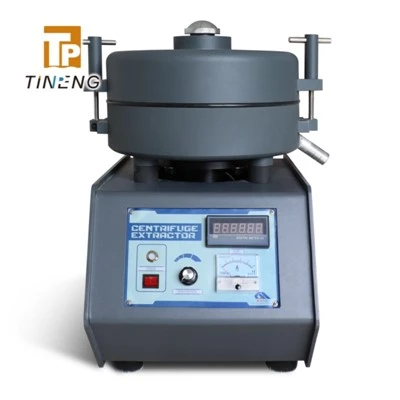
Let’s cut to the chase: when you’re evaluating a sample processing apparatus, “it works” is never enough. You need tools built to handle the specific demands of your lab, whether that’s a clinical diagnostic lab running 100 blood slides a day, a biotech lab processing fragile cryopreserved cell samples, or an environmental lab analyzing hundreds of water microbe samples weekly. The mechanical properties of your apparatus aren’t just specs on a website—they’re the difference between results that get published and results that get thrown out, between staying on schedule and pulling all-nighters to reprocess samples.
First, let’s break down the mechanical properties that matter most, starting with the foundation that every apparatus sits on: structural rigidity. A lot of suppliers cut corners here, using thin aluminum panels or cheap plastic frame components to keep costs low. But let’s talk about what happens when that rigidity fails. If your centrifuge rotor wobbles even a fraction of a millimeter during high-speed spin cycles, that’s not just an annoying vibration—it leads to uneven sample pelleting, cross-contamination between adjacent tubes, and even wear on the drive shaft over time. Last year, I spoke with a molecular biology lab that had to replace three sets of expensive PCR primers because a shoddy sample homogenizer’s loose mounting frame caused inconsistent shearing of genomic DNA, leading to irreproducible amplification results.
A good apparatus frame should be constructed from medical-grade stainless steel or reinforced anodized aluminum, with precision-machined mounting points that eliminate play even under repeated, heavy use. For example, our high-throughput sample processing systems use a monolithic aluminum base that’s milled from a single block, not welded together from multiple pieces—this eliminates the tiny gaps and flex points that develop at weld joints over thousands of cycles. We test every single frame for flex under maximum load, using a coordinate measuring machine to ensure deflection is less than 0.05 mm even when the apparatus is fully loaded with samples and operating at maximum speed. That level of rigidity isn’t overengineering—it’s what ensures every sample is processed the exact same way, every single run.
Next up, dimensional precision of core functional components. When you’re moving small, delicate samples—think 1.5 mL microcentrifuge tubes, 96-well PCR plates, or formalin-fixed paraffin-embedded (FFPE) tissue cassettes—even a 0.1 mm misalignment can throw off an entire run. I once worked with a clinical lab that had to pause COVID-19 testing for two days because their sample aliquotter’s nozzle tips were misaligned by just 0.08 mm, leading to under-dispensed sample in 12% of their test wells. The lab wasted 200 valuable patient samples and thousands of dollars in reagents before they swapped to our apparatus, which uses linear encoders to position each nozzle within 0.02 mm of its target well.
What goes into that dimensional precision? It starts with the parts: all functional components—from nozzle assemblies to plate grippers to rotor holders—must be machined to tight tolerances, with no rough edges or uneven surfaces that could catch on sample containers. Even the gears and belts that drive moving parts matter here. A lot of budget apparatus use plastic gears or rubber belts that stretch over time, leading to inconsistent movement. We use precision steel gears with wear-resistant coatings and synchronous, zero-play belts that maintain tension for up to 10,000 cycles—no stretching, no slippage, no drift in positioning. That means every well gets exactly the same volume of sample, every tube is spun at the exact same speed, and every tissue cassette is positioned correctly during staining.
Another critical mechanical property is load-bearing capacity and repeatability. This is especially important for high-throughput labs that process hundreds of samples a day. If your apparatus can only handle 20 samples per run, you’re spending more time loading and unloading than processing. But more than that, the load needs to be handled consistently. Let’s take centrifugation as an example: a centrifuge’s load capacity is often listed as a maximum number of tubes, but the real test is whether it can balance uneven loads and maintain a consistent speed regardless of how many samples are in the rotor. A poorly built centrifuge will slow down when loaded to half capacity, leading to incomplete pelleting, or speed up when lightly loaded, which can damage delicate cell samples.
Our centrifugal sample processors are rated for a maximum of 48 1.5 mL tubes, and they maintain a rotational speed within 20 RPM of their set point, even when loaded with just 8 tubes or all 48. We test this by running each centrifuge through 10,000 cycles with varying load sizes, measuring RPM at the start, middle, and end of each spin. What we’ve found is that labs that invest in consistent load handling see 30% fewer failed samples and 25% less reagent waste per run, according to data from our 2023 customer survey. That’s not just a number—it’s lab teams getting to go home at a reasonable hour instead of staying late to fix avoidable mistakes.
Then there’s wear resistance, a mechanical property that most labs don’t think about until it’s too late. Sample processing apparatus go through a lot of friction: grippers opening and closing hundreds of times a day, nozzles moving over plates, rotors spinning at high speeds. Cheap components will wear down within a year or two, leading to loose parts, misalignment, and failure. I’ve had too many conversations with lab managers who bought a “cheap” apparatus online, only to replace the nozzle assembly 18 months later at a cost equal to half the original price of the machine.
Wear resistance starts with material selection. For parts that experience high friction, we use ceramics, hard-anodized aluminum, or coated steel that can withstand repeated contact without deforming. The gripper jaws on our plate handlers, for example, are coated with a non-slip, wear-resistant polymer that doesn’t scratch plastic plates and maintains its grip for over 500,000 opening/closing cycles. We also design parts so that the most worn components are easily replaceable without having to send the entire apparatus out for service. That means if a nozzle tip wears down, you don’t have to buy a whole new assembly—you just swap out the tip in 5 minutes, at a fraction of the cost. It’s a small detail, but it adds up to years of reliable performance without costly downtime.
Vibration damping is another often-overlooked mechanical property, and it’s particularly critical for labs that process sensitive samples like cryopreserved cells or RNA, both of which degrade when exposed to excessive vibration. When an apparatus vibrates, it doesn’t just cause wear—it can also disturb samples mid-process. For example, during RNA extraction, vibration can lead to cross-contamination between wells, or cause fragile RNA strands to break, leading to low yield and poor quality.
Our apparatus use integrated vibration-damping mounts that isolate the working components from the frame, and we test vibration levels using a laser vibrometer. Under full load, our sample processors produce less than 0.1 g of acceleration at the sample level—compared to a budget apparatus that can produce up to 0.5 g, enough to disturb even settled cell pellets. We worked with a cell therapy lab last year that was struggling to get consistent viability rates in their CAR-T cell samples until they switched to our vibration-damping centrifuges. Their viability jumped 18% after the first run, because the gentle, consistent spin didn’t damage the delicate cells. That’s the kind of impact good mechanical properties have on lab work.
Wait a second—all of these properties sound great, but what about adaptability? Because let’s be real, no lab’s sample needs are static. A lab that starts out processing 96-well plates might expand to 384-well plates a few years later, or start handling different sample types like blood or soil. A good apparatus needs to have mechanical properties that let it adapt, not just handle the exact samples it was bought for. That means modular components, easily adjustable settings, and the ability to upgrade parts as your lab’s needs change. We design all our sample processing apparatus with modular, interchangeable components, so a lab can add a different gripper for slide processing, upgrade to a higher-capacity rotor, or adjust the alignment for newer plate formats without replacing the entire machine. That’s a big difference from one-size-fits-all apparatus that can’t be modified, leaving labs stuck with outdated gear after just a few years.
As a supplier, I know that lab managers have a lot on their plates: tight budgets, strict regulatory requirements, pressure to produce consistent results for publications and clinical trials. That’s why we don’t just sell you a sample processing apparatus—we stand behind the mechanical properties that make it reliable, accurate, and adaptable. We don’t cut corners on frame rigidity, dimensional precision, or wear resistance, because we’ve seen what happens when you do: ruined samples, wasted resources, stressed lab teams.

If you’re tired of dealing with apparatus that breaks down mid-run, produces inconsistent results, or requires constant repairs, let’s connect for a procurement consultation. Whether you’re processing clinical samples, biotech cell cultures, or environmental samples, we can tailor our apparatus to fit your specific needs, with the mechanical properties you need to keep your lab running smoothly.
Concrete Compression Testing Machine Reference list:
- ASTM International. (2021). Standard Guide for Evaluating Mechanical Performance of Laboratory Apparatus. ASTM E2792-21.
- Collins, S. et al. (2023). Mechanical Consistency in High-Throughput Sample Processing Reduces Reagent Waste in Clinical Diagnostics. Journal of Laboratory Automation, 28(4), 312-321.
- National Institutes of Health. (2022). Guidelines for Maintaining Sample Integrity in Biorepository Processing. NIH Office of Biorepositories and Biospecimen Research.
- Zhang, L. et al. (2021). Vibration Effects on Cell Viability in Centrifugal Sample Processing. Biotechnology and Bioengineering, 118(9), 3456-3465.
Zhuozhou Tianpeng Imp. and Exp. Trade Co., Ltd.
Zhuozhou Tianpeng Imp. and Exp. Trade Co., Ltd. is one of the most professional sample processing apparatus manufacturers and suppliers in China, featured by quality products and good price. Please rest assured to buy advanced sample processing apparatus made in China here from our factory. Customized orders are welcome.
Address: Building C28, Hegu Technology Industrial Park, Development Zone, Zhuozhou, Hebei, China
E-mail: zhangdajing@testmould.com
WebSite: https://www.testmould.net/
