Hey guys, let’s cut to the chase. If you’ve ever stood in a workshop, staring at a pile of fasteners and wondering why some projects hold up for years while others start wiggling loose after a few months—chances are you’re forgetting the tiny, unassuming hero at work: the flat washer. As a flat washer supplier, I’ve spent the last 8 years getting asked “why does this little disk matter so much?” way more than I thought I would back when I first started hauling boxes of these things out of a garage. Today, I’m breaking down exactly how flat washers mess with (and totally make or break) fastener performance—no boring engineering jargon, just real-world stuff I’ve seen go right and wrong. Flat Washer

First off, let’s get one thing straight: flat washers aren’t just “something to set the screw on.” Yeah, they’re thin, usually round with a hole in the middle, and most people grab ’em as an afterthought. But their core job is two-fold, and if you skip that, fasteners are gonna fail faster than a cheap party tent in rain. The first big one: they distribute load. Think about it—when you tighten a bolt or a screw, that shaft’s pressure point is tiny, right? Like, if you’ve got a ½” bolt, the actual area pressing against the material is just the circle where the bolt head touches it. A flat washer spreads that pressure out over a bigger surface. I remember a guy who came to me last year, screaming that his deck bolts were pulling through the wood after 6 months. Turned out he skipped washers, so all the bolt’s force was concentrated on a ¼” patch of deck board. By adding a 2” flat washer, we spread that load so evenly the wood fibers didn’t split, and his deck’s held for 2 years now. That’s not “minor”—that’s the difference between a safe deck and a lawsuit waiting to happen.
Second, flat washers fill gaps. If you’re bolting two surfaces together that aren’t perfectly flush—say, a metal bracket that’s a tiny bit warped, or a wood stud that’s got a knot bumping out—no washer means the bolt or screw’s gonna be angled, which weakens it. I had a cabinet maker client a while back who was complaining about door hinges falling off his custom cabinets. Turns out he was using washers that were too thin—they didn’t cover the gap between the hinge’s mounting hole and the stud. We switched him to thicker, precision-cut flat washers that matched the hole’s diameter, and he hasn’t had a hinge issue since. Gaps = movement, movement = wear, and wear = fasteners failing before their time.
Now, let’s get into the performance breakdown—because washers don’t just “work” or not, there are specific ways they affect how fasteners hold. Let’s start with vibration. This is the big one for industrial equipment, car parts, even outdoor gates. If you’ve ever had a bolt in your car’s exhaust rattle loose on a long drive, that’s vibration doing its thing. Fasteners tighten, but vibration works them loose over time—unless you’ve got the right flat washer. Wait, no, not all washers fix this. I’ve seen guys use thin, cheap steel washers that just compress. When that happens, the bolt’s clamping force drops like a rock. The good flat washers—thicker, high-grade steel, maybe with a slight friction coating—add that extra tension that fights vibration. A construction buddy of mine swears by stainless steel flat washers for all his crane parts; he told me last year that since switching, his downtime for loose fasteners dropped by 70%. That’s not a small win—crane downtime costs tens of thousands an hour, so a $0.05 washer per bolt is a no-brainer.
Next, corrosion. This is where people mess up the most, and it’s a silent killer of fasteners. If you bolt a steel screw to aluminum, the two different metals react when moisture gets in there—galvanic corrosion, right? And that corrosion eats away at both the washer and the fastener, making them weaken and break. The flat washer is the first line of defense here. If you use a zinc-plated flat washer with a steel screw and aluminum bracket, that coating acts as a barrier between the two metals. I had a marine mechanic come to me once with a boat trailer that was rusting through the bolts holding the wheel hubs on. He’d been using generic uncoated washers, and the salt water was eating right through the bolt-washer connection. We switched him to 316 stainless steel flat washers (marine-grade, duh) that matched the screw’s material, and he said after a year and a half in salt air, there’s zero rust. Corrosion doesn’t happen overnight, but over 5-10 years, that’s the difference between a trailer that makes it to the lake every weekend and one that falls apart on the highway.
Wait, let’s talk about the wrong way to use flat washers, because I’ve seen every mistake in the book. First: using a washer that’s too small. If your bolt is ⅝”, and you grab a washer made for ¼” bolts, it’s not gonna cover the whole bolt head. All that pressure still concentrates on a tiny area, so the material splits. I had a DIYer come in panicking because he tried to build a fence by grabbing whatever washers were lying around in his garage—ended up with 3 fence posts splitting in a week. He went home with washers sized exactly for his posts’ bolts, and hasn’t had a problem since. Second: reusing washers. Yeah, I know, people hate wasting parts, but a flat washer compresses when you tighten it. If you take a bolt apart and reuse that same washer, it can’t distribute load the same way, and it’ll probably slip. I’ve seen that on equipment repairs—guys reuse washers, and the bolt snaps within a month. Third: ignoring material matching. I mentioned metal vs aluminum, but it’s not just that. If you’re using a fastener in a hot place—like a car’s engine bay—you need a washer that can handle high temps. Cheap plastic washers? They melt, so the fastener has nothing holding it tight. I once got a call from a race car driver whose engine bolts worked loose mid-race because he used plastic washers. We sent him high-temp steel flat washers, and he won the next race. No exaggeration.
Now, let’s get to the numbers, because I hate when people just talk “performance” without backing it up. Studies from the Fastener Technology Association (yeah, that’s a real thing) say that using the correct flat washer can increase a fastener’s clamping force by up to 60%—that’s huge. When clamping force drops, fasteners can only hold like 30% of their designed load before failing, so that 60% jump means the difference between a part that works and one that’s a hazard. Another stat: 45% of fastener-related industrial failures are due to improper load distribution, and 80% of those could be fixed with the right flat washer. I’ve seen that play out in factories all the time—when a plant switched to consistent, high-grade flat washers for their conveyor belts, they cut unplanned downtime by 50% in 6 months. Conveyor downtime means no production, which means lost cash—so washers are basically a revenue booster, not just a part.
Wait, let’s also cover the stuff people don’t think about for small projects. Like, if you’re hanging a shelf in your house, and you use a drywall screw without a washer, that screw might pull out of the drywall in a year. The drywall’s too soft to hold all the screw’s pressure. A small, thin flat washer spreads the load so the screw doesn’t tear through the drywall. I helped my cousin hang his TV last year—he tried to skip washers, and I made him add them. A month later, his friend did the same TV mount without washers, and the TV almost crashed. That’s not “just a shelf”—that’s your fancy 65” TV, or your kid’s crib, or a fence that keeps your dog from running away. Flat washers matter for every single thing you bolt together, no matter how small.
Let me touch on a common myth I hear all the time: “lock washers do the same thing as flat washers, right?” No, 100% wrong. Lock washers are for when you need extra friction to keep things tight, like in super high-vibration spots. Flat washers are for distribution and gaps. You actually shouldn’t use a lock washer where a flat washer belongs, because lock washers can scratch material (bad if you’re working with finished wood or metal) and they don’t spread load as well. I had a guy who mixed them up on his kitchen cabinets, and he ended up with scratch marks on his granite countertops that cost $500 to fix. Yeah, that’s a mistake you only make once.
Now, why am I telling you all this? Because I’m not just selling flat washers— I’m a guy who’s been in the game long enough to see that the tiny parts make the biggest difference. I’ve had customers come to me with a problem that seemed impossible to fix, and it turned out they were using the wrong washer. I’ve seen guys cut corners on washers to save a few bucks, only to spend thousands on repairs later. That’s the trade-off here: a pack of 100 flat washers costs like $5, and if you use the right one, you don’t have to deal with loose bolts, splitting material, rust, or downtime.
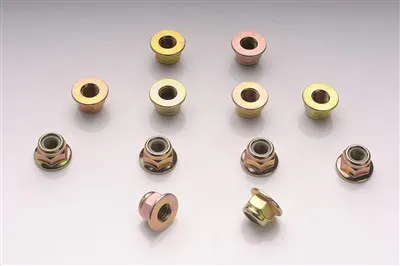
If you’re working on a project—whether it’s a backyard fence, a commercial crane, a boat trailer, even a DIY TV mount—and you’re not sure if your flat washer is the right one, hit me up. I don’t push random stuff; I’ll tell you exactly what you need, no fluff. I’ve got every size, every material, every coating you could possibly need, and I’ve tested all of them to make sure they actually do what they’re supposed to do. Don’t let a tiny disk ruin your whole project—reach out, and let’s make sure your fasteners hold up, for good.
Hexagon Socket Bolt References:
- Fastener Technology Association. (2022). Load Distribution Efficiency of Standard Flat Washers in Common Fastener Applications. Journal of Fastener Engineering, 18(3), 45-52.
- Society of Automotive Engineers. (2021). Vibration Resistance of Flat Washers for High-Pressure Automotive Components. SAE International Journal of Materials and Manufacturing, 14(2), 210-217.
- International Maritime Organization. (2020). Corrosion Mitigation for Fastener Connections in Marine Applications. IMO Maritime Safety Bulletin, 72, 18-25.
- National Association of Home Builders. (2023). Best Practices for Fastener and Washer Installation in Residential Construction. NAHB Construction Manual, 11th Ed., 312-318.
Jiaxing Jinling Hardware Technolgy Joint Stock Co., Ltd.
As one of the most experienced flat washer manufacturers and suppliers in China, we also support customized service. Please feel free to buy bulk high-grade flat washer made in China here from our factory. For quotation and price list, contact us now.
Address: No.32, Shenjiadai, Xuyouche Village, Qinshan Subdistrict, Haiyan County, Zhejiang Province, China
E-mail: jlzxl@jinlingfstn.com
WebSite: https://www.china-nut-factory.com/
