If you’ve ever worked with industrial machinery, robotics, agricultural equipment, or even that big old garage door opener that grinds in summer heat, you’ve probably wondered at some point: “Can my DC gearmotor handle this garbage temperature?” I get that question all the time, mostly because I’m the go-to gearmotor guy for a ton of folks in manufacturing, automation, and field work. And let’s be real—high-temp environments are everywhere these days, not just in factories with wonky ventilation. Think metal stamping plants where floors hit 120°F, agricultural harvesters baking in a Texas August, even those outdoor security cameras or solar trackers sitting in the Arizona sun 24/7. So let’s cut the jargon and break this down straight, no corporate fluff. DC Gearmotor
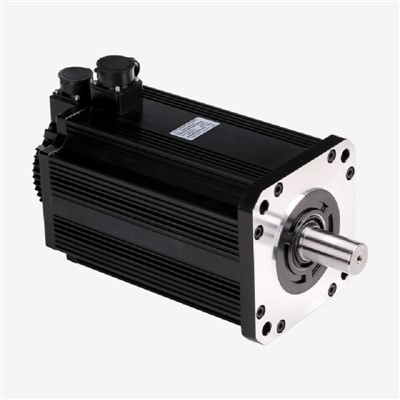
First off, let’s remember what a DC gearmotor actually is: it’s a regular DC motor paired with a gearbox, right? The gearbox is the part that slows down the motor’s speed and cranks up the torque, which is what you need to lift heavy stuff, turn gears, or push through tough loads. Now, heat is the big enemy here, and it doesn’t come at just one form. There’s ambient heat from the space around the motor—like that 150°F warehouse where they store raw steel. Then there’s heat the motor makes itself when it’s working hard (that’s called internal heat generation). If those two stack up, you’ve got a recipe for failure before you even finish your work shift.
So the short answer? No, not every DC gearmotor works in high temps. But the good news is, there are specific models built just for that. Let’s get into the nitty-gritty that actually matters, not the textbook stuff that makes your eyes glaze over. First, the motor itself. Most standard DC motors use copper windings coated in regular enamel insulation. That insulation has a temperature limit—usually around 130°F to 150°F for your basic stuff. Crank the temp higher than that, and the insulation breaks down. When that happens, the copper wires start touching each other, short out, and boom—your motor dies. But for high-temp use, we swap that insulation out for something way tougher, like a class H or class N enamel. Class H can handle up to 180°F, and class N goes even higher, like 200°F. That’s a game-changer, especially for places that stay hot all year.
Then there’s the bearings. Standard bearings use regular grease, right? Grease turns to sludge when it’s too hot, or even evaporates if the temp’s really high. If your bearings seize up, the motor stops turning, and you’re down a whole line. So for high-temp gearmotors, we use synthetic bearings with high-temperature grease. Synthetic grease doesn’t break down in heat, and it keeps lubricating the bearings even when it’s cooking outside. Some models even use metal bearings instead of plastic, but only if they’re rated for high heat—wait, no, actually plastic bearings work sometimes but only the ones made of PEEK or something, not the cheap nylon ones. I’ve seen a guy last year use a nylon bearing gearmotor in a steel mill, and it lasted 2 weeks before the bearing melted. Oops. That’s a mistake you don’t wanna make.
Now the gearbox part, which is half the unit. Most gearboxes are made of metal, but the gears and the lubricant inside them are super important. Standard gear oil turns thin and runs out when it’s hot, or just gets sticky and doesn’t move. For high-temp gearboxes, we use synthetic gear oil or even solid lubricants, like PTFE coatings. Those don’t break down, and they keep the gears from grinding. Also, the gearbox casing—some cheap ones use aluminum that softens, but the good ones use cast iron or heat-treated steel. I always tell customers, if you’re working in temps over 125°F, don’t skimp on the gearbox casing. It’s worth the extra $20 to not have to replace a whole $500 motor every month.
Wait, but here’s a thing people don’t always talk about: duty cycle. If your gearmotor is running non-stop, it’s gonna get way hotter than if it’s only running 30% of the time. Like, if you have a conveyor belt that’s moving parts 24/7, that motor is working harder, so it’s generating more heat on top of the ambient heat. So even if your motor is rated for 180°F, if it’s running non-stop in a 140°F space, it might hit 190°F, which is over its limit. So we have to adjust for duty cycle. I always ask customers two questions when they call me about high-temp gearmotors: 1) What’s the actual ambient temp where this will live? 2) How often is it running? That changes everything.
Also, environmental factors that go hand-in-hand with high heat. Like, if it’s hot and dusty, or hot and humid, that makes it way worse. Dust can get into the motor and trap heat, humidity can corrode the metal parts. So a lot of our high-temp gearmotors have sealed housings, not open ones. Open motors let air cool them, but they also let dust and moisture in. Sealed motors might run a tiny bit hotter, but they protect the internal parts. That trade-off is worth it for most outdoor or dusty applications.
Let me give you some real examples of where I’ve supplied these, so you get a feel. Last year, a farm equipment company called me for harvester reel gearmotors. They were working in central California, where summer temps hit 115°F, and the harvester sits in the sun all day. Their old gearmotors failed every harvest season—would seize up halfway through, and they’d lose thousands in crop. We swapped them for our high-temp class H insulation gearmotors with synthetic bearings and sealed gearboxes. They put 800 acres through last season, and not a single failure. That’s the kind of win I live for. Another one: a metal stamping plant in Ohio. Their line runs 20 hours a day, 6 days a week, and the floor temp is 135°F. We used class N rated motors there, with synthetic gear oil, and they’ve been running for 14 months now without a single breakdown.
Now, what are the red flags to watch out for if you’re shopping around? First, if a supplier just says “this motor works in high temps” without telling you the insulation class, bearing type, or gearbox lubricant, they’re either lying or don’t know what they’re talking about. I always tell customers to ask for specs—don’t take marketing buzzwords like “heavy duty” or “industrial grade” at face value. Second, don’t underrate your application. If you think “it’s only 110°F, so regular should work,” you’re probably wrong when you factor in duty cycle. Third, cheap gearmotors from random Amazon brands—9 times out of 10, those use standard insulation and regular grease. I saw a guy buy one for his solar tracker, and it died in 3 months because the grease evaporated in the Arizona heat. He had to buy a proper high-temp one from me to fix it.
Wait, but can you modify a standard DC gearmotor to work in high temps? Some people try that, like replacing the grease or rewinding the windings. But here’s the thing: rewinding a motor’s windings isn’t cheap, and if you don’t use the right enamel, you’ll mess it up more. And even if you change the grease, the insulation on the windings is still the regular stuff. I’ve seen people waste $500 trying to modify a $300 gearmotor, when they could’ve just bought the right high-temp one for $450 and been done with it. Save yourself the headache—don’t modify, buy the right unit upfront.
Another thing to mention: voltage and speed? No, those don’t really affect high-temp performance, as long as the motor is rated for that voltage. The main factors are the insulation, bearings, gearbox parts, and the casing. Oh, and cooling—wait, some high-temp gearmotors have built-in heat sinks, or even fans, to pull heat away. That’s helpful for motors that are running really hard in super hot spaces. I use those for applications where the motor is under constant heavy load, like cranes or large conveyors.
Now, let’s wrap this up so it makes sense for anyone actually looking to buy. The short version is: DC gearmotors can definitely work in high-temperature environments, but only if they’re specifically designed for that. Standard models will fail fast because their insulation, bearings, and gearbox parts aren’t built to handle the heat. When you’re shopping, look for insulation rated class H or higher, high-temperature synthetic bearings, synthetic gear lubricant, and a sealed or heat-treated casing. Always tell your supplier the exact ambient temp and duty cycle—don’t guess, because that’s how you end up with a dead motor when you need it most.
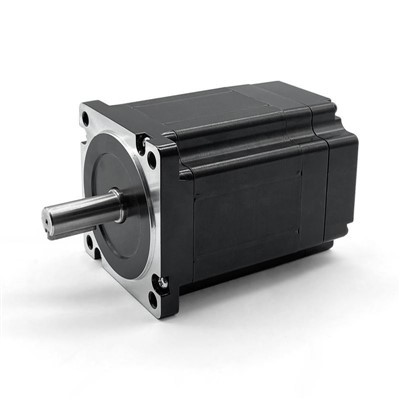
If you’re working in a hot space—whether it’s agriculture, manufacturing, solar, robotics, anything—don’t waste time and money on gearmotors that aren’t built for the heat. I’ve been doing this for 12 years, seen every failure under the sun, and I can help you pick the right one for your exact application. Just reach out to talk through your needs, and we’ll get you set up with something that doesn’t quit when the temp spikes.
AC Servo Motor References
- NEMA Standards Publication MG 1-2021, Motors and Generators – Part 1: General Requirements, National Electrical Manufacturers Association
- Bearings Lubrication for High-Temperature Applications, SKF Group Technical Document, 2022
- Gear Lubricants Selection for Extreme Temperatures, American Gear Manufacturers Association (AGMA) Technical Bulletin 925-A15, 2015
- Thermal Degradation of Electrical Insulation for Rotating Machines, IEEE Transactions on Industry Applications, Vol. 56, No. 3, 2020, pp. 2891-2898
Zibo Auric Mechanical and Electrical Technology Co., Ltd.
As one of the leading dc gearmotor manufacturers and suppliers in China, we warmly welcome you to buy advanced dc gearmotor for sale here from our factory. All customized motors are with high quality and competitive price.
Address: B419, High-tech Entrepreneurship Park, High-tech Zone, Zibo City
E-mail: cui@auricmotor.com
WebSite: https://www.auricmotor.com/
