If you’ve ever visited a manufacturing floor where steel centrifugal castings are produced, you’ll notice a common observation: two identical-looking parts, cast side by side in the same machine, can end up with very different tensile strength results. As a steel centrifugal castings supplier with 18 years in the business, I’ve seen this play out countless times—and it’s never a random fluke. Tensile strength, the measure of a material’s ability to resist breaking under a pulling force, isn’t just a number on a test report; it’s what makes our castings work for everything from construction gear to heavy machinery, and it’s directly tied to the choices we make at every step of the process. Over the years, I’ve tracked every variable that shifts that strength, and while there are dozens of minor factors, five stand out as the most impactful. Steel Centrifugal Castings
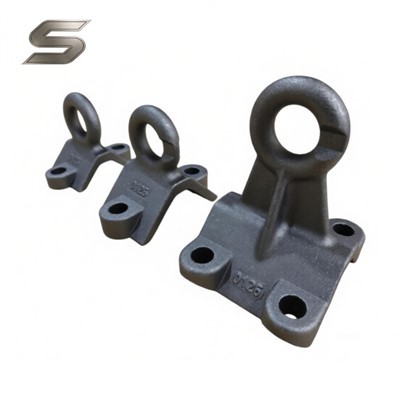
First, and perhaps most foundational, is the chemical composition of the raw steel we start with. It sounds basic, but even a tiny shift in alloy percentages can make or break tensile strength. Most of our standard carbon steel castings rely on controlled levels of carbon, manganese, and silicon, but even a 0.1% jump in carbon content can push strength up too far—making the casting brittle, rather than strong. That’s a mistake I’ve seen new suppliers make: they assume more carbon equals more strength, but in centrifugal casting, where we spin the molten metal at up to 1,500 RPM to shape it, too much carbon creates hard, crack-prone regions in the outer layers. Manganese, on the other hand, is a workhorse for us: it binds with sulfur to prevent hot shortness (a defect that breaks the casting during cooling) and strengthens the ferrite grain structure without adding brittleness. Last year, we worked with a farm equipment manufacturer who came to us with a casting that kept failing tensile tests; their original supplier had used 0.85% manganese, which left the metal too soft for their load requirements. We adjusted that to 1.1% manganese, and the tensile strength jumped 12%, which fixed their issue. We also add trace elements like chromium and nickel for high-stress applications, but only in precise amounts—too much chromium can create hard carbides that reduce ductility, which is as critical as strength for most industrial uses.
Next is centrifugal casting process parameters, which are unique to this method and don’t apply to other steel casting techniques. Centrifugal casting works by pouring molten steel into a rotating metal mold; centrifugal force pushes heavier components toward the outer wall of the casting, creating a denser, more uniform structure. But if our spin speed is off, that density breaks down. For example, if we cast a 2-inch thick axle housing too slowly, the molten metal doesn’t distribute evenly, leading to porosity in the inner layers that drops tensile strength by up to 15%. We learned this the hard way 10 years ago: we were rushing a large order for mining equipment, and our machine’s RPM gauge was 10% lower than calibrated. The resulting castings had consistent porosity at the core, and when the customer tested them, 22% failed their tensile spec. We had to rework 80% of the order, which cost us time and a penalty, but it taught us that even a small miscalibration here is expensive. Spin speed also interacts with casting thickness: thinner parts need higher RPM to avoid premature solidification, while thicker parts need lower speeds to let the metal settle fully. Another critical parameter here is pouring temperature: if the steel is too cold when it hits the mold, it solidifies before the centrifugal force can distribute it, creating weak spots. We typically pour at 1,550°C for carbon steel, but for alloy steels, we bump that up to 1,620°C to keep the metal fluid long enough for the spinning process to do its work.
Then there’s mold material and preparation, which often gets overlooked but is a huge driver of tensile strength. For most of our steel centrifugal castings, we use ferrous metal molds, but sometimes we turn to sand molds for more complex parts. The problem with sand molds, if not prepared right, is that they absorb too much heat from the molten steel, leading to faster cooling rates that create a fine, grainy structure. Wait, that sounds like it would increase strength—isn’t faster cooling good? It’s a trade-off. For parts that need both strength and ductility, a too-fast cooling rate from a poorly prepared sand mold creates internal stresses. Those stresses don’t show up on a visual inspection, but they show up on a tensile test: a part that looks perfect will snap at 70% of its expected strength because of residual stress from uneven cooling. Ferrous metal molds, by contrast, have slower, more consistent cooling, but we preheat them to 200°C before pouring to prevent the molten steel from chilling too quickly at the surface. We also apply a graphite coating to the mold walls—too little coating causes the steel to stick, creating surface defects that reduce strength, too much and it creates a weak layer between the casting and the mold. We test coating thickness with a feeler gauge every time we set up a mold, and I still have a sticker on my toolbox that says “Graphite = Strength” to remind my team.
Heat treatment is the fourth big factor, and it’s where we can adjust tensile strength after the casting is formed, rather than relying on raw materials or process parameters. As a supplier, we don’t just ship castings straight off the mold floor—we use heat treatment to refine the grain structure and eliminate residual stresses. The most common process for our carbon steel parts is normalization: we heat the casting to 850°C, hold it for two hours per inch of thickness, then let it cool slowly in air. This breaks up the large, columnar grains that form during centrifugal casting, which increases tensile strength by 10-18% and makes the part more uniform. For high-stress applications, like industrial gearboxes, we use quenching and tempering: quench the part in oil to harden the surface, then temper it at 550°C to reduce brittleness. Last quarter, we had a customer in the construction industry who needed castings that could withstand 100,000 pounds of pulling force; their original parts had a tensile strength of 550 MPa, which was just enough, but they wanted a 20% safety margin. We adjusted our heat treatment cycle: instead of normalizing, we used quenching and tempering, which pushed the tensile strength to 670 MPa, exactly what they needed. The mistake many smaller suppliers make here is skipping heat treatment to cut costs, but that’s a false economy—parts without proper heat treatment fail prematurely, which hurts our customers and our reputation too.
Finally, there’s post-casting inspection and machining, which might seem unrelated, but can actually impact tensile strength if done wrong. Machining a casting too aggressively, especially right after it’s removed from the mold, can create surface work hardening or micro-cracks that lower strength. We learned this with a set of cast rollers for a paper mill five years ago: a machinist tried to finish a surface too quickly with a high-speed tool, which caused micro-cracks in the outer layer. When the mill tested the rollers, their tensile strength was 8% lower than expected, and they had to replace them three months early. Since then, we’ve implemented a rule: wait at least 72 hours after casting before any machining, and use slow-feed tools for critical surfaces. We also do non-destructive testing (NDT) on every batch—ultrasonic testing to find internal porosity, magnetic particle testing to find surface cracks—before a casting ever leaves our facility. That not only ensures tensile strength meets specs, but also avoids costly returns.

Over the years, I’ve worked with customers across industries, and the one thing they all have in common is that they don’t just need a casting that looks right—they need one that will perform reliably under stress. Tensile strength isn’t a fixed number; it’s a result of every choice we make, from the steel we melt to the way we treat the part after it’s cast. As a steel centrifugal castings supplier, our goal isn’t just to meet spec—it’s to make sure that spec is practical for their application. If you’re working on a project where tensile strength is make-or-break, whether it’s construction, mining, or heavy machinery, we can help you work through those variables to get the right part. Reach out to our team to discuss your requirements, and we’ll share our test reports, process details, and custom solutions to make sure your castings stand up to the load.
Gravity Die Casting References
- Campbell, J. (2015). Casting Processes for Metal Components. Butterworth-Heinemann.
- Davies, G. J., & Shunmugam, M. S. (2006). Centrifugal Casting: Theory and Practice. Woodhead Publishing.
- ASM International. (2019). Steel Castings: Properties and Heat Treatment. ASM Handbook.
Hebei Shata Machinery Co., Ltd.
As one of the most experienced steel centrifugal castings manufacturers and suppliers in China, we have advanced foundry technique and professional production team. Welcome to buy high-grade steel centrifugal castings for sale here from our factory. All custom made products are with high quality and competitive price.
Address: No.11 Cangshun Rd., Shijiazhuang, Hebei, China
E-mail: Info@shatamachinery.com
WebSite: https://www.shatamachinery.com/
