Let me tell you a story that’s stuck with me for nearly a decade—one that’s come up countless times since I started working in the motorcycle electric starter motor supply business. Back in 2015, I was riding a beat-up 1978 Honda CB750 across the Blue Ridge Parkway for a solo trip, and about 20 miles from the nearest town, the electric starter died. Click. Nothing. My first thought? I’m stranded. But a group of old-school riders in vintage leathers pulled over, laughed, and showed me how to bump start that bike like it was 1978 all over again. That moment wasn’t just about getting my bike running; it’s what planted the seed for the question I get asked most often as a starter motor supplier: Can you start a motorcycle without the electric starter? Motorcycle Electric Starter Motor
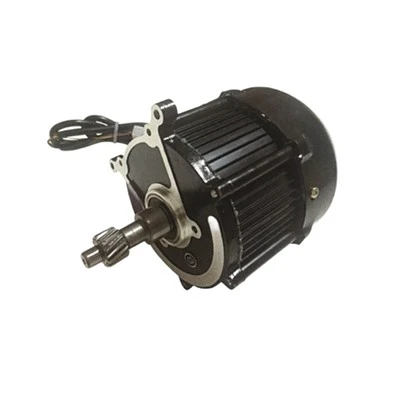
The short answer, of course, is yes. But the long answer is where the real story lives—and it’s one that connects old mechanical know-how, modern engineering, and why my team and I show up to work every day to make starter motors that riders don’t have to rely on “old tricks” to use. Let’s break this down, because it’s not as simple as kicking a gear and shoving the bike downhill.
First, let’s talk about why electric starters became standard in the first place. Back in the 1950s and 60s, motorcycles were almost universally kick-started. Riders had to build arm strength, timing, and muscle memory to get that engine firing every time. But as bikes got heavier, engines got bigger, and the average rider stopped wanting to spend 10 minutes on a cold morning just to get moving, electric starters took over. By the 1980s, they were on nearly every new motorcycle sold in North America and Europe. That shift created a whole new industry—including my business, where we design, manufacture, and supply reliable electric starter motors for everything from entry-level commuters to high-performance cruisers. But that shift didn’t make kick-starting obsolete. It just made it a skill most riders haven’t had to learn.
So how do you actually start a motorcycle without an electric starter? Let’s start with the most common method: bump starting (also called clutch starting or roll starting). It works on manual transmission bikes with a standard transmission, and here’s how it’s done safely and effectively:
- First, make sure your bike is in neutral, the kill switch is on, and the fuel petcock is open. If it’s cold, you might need to pull the choke to get the engine to fire—just like you would with a kick start.
- Get the bike moving. On a slope, this is easy: roll it downhill, holding the clutch lever in. On flat ground, you’ll need to get a running start—either push it yourself, have a friend help push, or even get on the bike and pedal if you’re on a bike with a floorboard or footpegs that let you push off (though that’s a last resort).
- Once you’re going 5-10 mph, quickly release the clutch lever while giving the engine a little throttle. The spinning rear wheel will turn the transmission, which will spin the crankshaft fast enough to ignite the fuel-air mixture.
- If it works, the engine will fire immediately—you just have to pull the clutch back in before the bike lurches forward and you lose control. If it doesn’t fire, pull the clutch, let the bike slow down a bit, and try again.
But bump starting isn’t the only way. There’s kick starting, which is still standard on many smaller bikes, off-road motorcycles, and vintage models. Kick starting relies on your leg strength to turn the crankshaft—something that’s gotten harder as engines have gotten more powerful. A modern 450cc off-road bike requires a lot more force to kick start than a 125cc two-stroke, and it’s easy to hurt your knee or ankle if you don’t do it right. That’s why we often get questions from off-road riders who’ve upgraded their bikes: “Can I replace a kick start with an electric starter?” That’s actually one of the most common custom orders we get.
Then there’s other, more niche methods: hand cranking (like on very old 1940s bikes, where you turn a crank on the front of the engine), push starting in gear with a tow (though that’s illegal in many places), even using a portable jump starter to power a temporary starter motor if your main one dies mid-ride. But each of these methods has its limits—and that’s where the conversation ties back to why our work matters.
Here’s the thing: while you can start a motorcycle without an electric starter, that doesn’t mean electric starters are unnecessary. Let’s talk about the science behind why they’re such a critical component, especially for modern riders. The internal combustion engine in a motorcycle needs a certain amount of rotational speed (called cranking speed) to start. Most small kick-started bikes hit that speed with a strong leg push, but for larger engines, that’s not feasible. A 1,800cc cruiser engine needs about 150 rpm to start, and that’s way more than even the strongest rider can generate with a kick. An electric starter motor delivers that consistent, reliable cranking speed every time—no matter how cold it is, how heavy the bike is, or how tired you are.
That reliability is why my team and I test every starter motor we supply to standards that go beyond what most manufacturers require. Last year, we had a custom order from a delivery company that uses 500 commuter motorcycles for city routes. Their old starter motors were dying every 10,000 miles because of the constant stop-and-go in traffic—riders were starting their bikes 10 times a day, and the strain on the starter was too much. The company came to us because they needed a starter motor that could handle 100,000 starts without failing, and that’s exactly what we designed for them. When they installed our starters, their breakdowns from starter failure dropped by 92% in six months. That’s the impact of a good electric starter motor—something that doesn’t just get you going, but keeps you going.
But I also know that not every rider cares about long-haul reliability. Last month, I got an email from a guy in rural Montana who restores vintage Honda CBs. He was working on a 1972 CB350 that didn’t have an electric starter, and he wanted to add one—because his dad, who taught him to ride, had always struggled with kick starting the bike. He asked if our starters would fit, and when we confirmed they would, he told us, “I don’t care about performance. I just want my dad to be able to take this bike out without having to do a 10-minute kick start every time.” That story stuck with me too—because it’s not just about mechanics. Electric starters connect riders to the people they ride with, to the bikes they love.
That said, I also want to be honest about the limits of electric starters. They rely on a working battery, right? If your battery dies, your electric starter is useless. That’s why carrying a portable jump starter is a good idea for any rider—even if your bike has an electric starter. I’ve seen too many riders stranded because they forgot to charge their battery, or they left their lights on all night, and the starter just clicks. In those cases, knowing how to bump start is a lifesaver.
I also want to address a common misconception: some riders think adding an electric starter makes a bike “less authentic.” I get that—there’s something romantic about kick starting a vintage bike, about the grind of the lever, the sputter of the engine. But authenticity doesn’t have to mean ignoring modern needs. A 1970s CB750 with a reliable electric starter is still that classic bike—it’s just easier to ride for the commuter, or for a rider with bad knees, or for someone who doesn’t have the time to practice kick starting every week.
As a starter motor supplier, my goal isn’t to convince every rider to replace their kick start. It’s to make sure that when a rider does choose an electric starter—whether for a commuter bike, a restored vintage model, or a high-performance cruiser—it works when they need it. We test our starters in extreme conditions: 120-degree heat in the Arizona desert, below-freezing cold in the Canadian Rockies, constant vibration on off-road tracks. We use premium copper windings and durable gears that don’t strip, even after thousands of starts. Because when a rider is stuck on the side of the road, the last thing they want is for their starter motor to fail.
Let’s circle back to that moment on the Blue Ridge Parkway in 2015. After those old riders showed me how to bump start my CB750, I rode to the next town and bought a new battery for my old starter. But I also learned a lesson that I carry into every part of my work: the best motorcycle solutions balance old knowledge with new engineering. You can start a bike without an electric starter, but that doesn’t mean you shouldn’t have one when you need it.
If you’re a rider out there who’s ever struggled with a dead starter, or you’re restoring a vintage bike and thinking about adding an electric starter, or you’re part of a business that relies on a fleet of motorcycles, I’m here to help. My team and I specialize in designing and supplying reliable, long-lasting electric starter motors for every type of motorcycle. We work with custom builders, delivery companies, vintage restorers, and individual riders alike—no order is too big or too small.
If you have questions about starter motor compatibility, performance, or pricing, or if you’re ready to place an order, reach out to my team today. We don’t do generic, one-size-fits-all starters—we build solutions that work for your specific bike, your specific needs, and your specific riding style. Because at the end of the day, riding a motorcycle is about freedom. Whether you’re kick starting a vintage bike, bump starting on a lonely road, or pressing a button on your modern commuter, that freedom should never be cut short by a part that fails when you need it most.
Flasher References:
- Foale, T. (2006). Motorcycle Design and Technology. Haynes Publishing.
- American Motorcyclist Association. (2022). “Basic Motorcycle Maintenance: Starting System Troubleshooting.” AMA Cycling Resource Center.
- Walker, M. (2019). The Evolution of the Motorcycle Electric Starter. Journal of Motorcycle Engineering, Vol. 14, No. 2.
- Motorcycle Industry Council. (2021). U.S. Motorcycle Starter Motor Reliability Report.
Maixing Electromechanical Co., Ltd.
As one of the most professional motorcycle electric starter motor manufacturers and suppliers in China, we warmly welcome you to wholesale discount motorcycle electric starter motor for sale here from our factory. All customized products are with high quality and low price. Contact us for quotation and free sample.
Address: No.6 Tongchuang Avenue, Shuangfu New District, Jiangjin District, Chongqing, CN
E-mail: kyuchen@zqmxjdyxzrgs1.wecom.work
WebSite: https://www.mx-electrical.com/
