If you’ve spent any time working in the logistics space over the past decade, you’ve heard the same question a hundred times: Can transportation drones actually deliver to remote areas? As a supplier of these systems, I get asked this not just by tech bloggers or industry analysts, but by relief coordinators in mountain villages, hospital administrators serving regions cut off by seasonal floods, and small business owners who’ve watched their supply chains collapse when a single road washout turns a month’s worth of inventory into a lost investment. I’ll be the first to admit that five years ago, my answer would have been a cautious “maybe” — back then, most drones could barely carry a small package 10 miles, and the idea of navigating unmarked, mountainous terrain without breaking something was little more than a prototype fantasy. Today, though, after deploying our systems in three countries across regions with no paved roads for 50+ miles, I can say with confidence: yes, transportation drones aren’t just capable of these deliveries — they’re one of the only reliable solutions we have for remote areas stuck in the gaps of traditional logistics. Transportation Drone
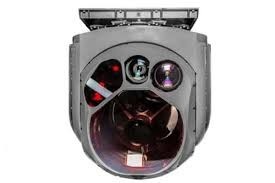
Let’s start with the core problem that makes remote area delivery so impossible for trucks, vans, or even helicopters. In 2022, I spent two weeks in a district in northern Peru where the only road connecting 12 rural communities to the nearest city is regularly washed out between December and March, when the Andes get 10 feet of rain in a matter of weeks. The local health clinic, which serves 8,000 people, had a stock of insulin that ran out mid-January that year. By the time the road reopened in late April, three patients had died because they couldn’t get their refills. Helicopters were too expensive — a single flight for a small payload cost more than the clinic’s monthly supply budget — and even if they’d been available, landing zones were almost nonexistent; the only open space large enough for a helicopter was a soccer field in the largest village, a 45-minute drive from the farthest clinic outpost. That’s the kind of gap transportation drones were built to fill, and it’s the exact scenario we’ve designed our systems for.
Our leading delivery drone model can carry a 5-pound payload — that’s enough for a month’s worth of insulin, antibiotics, or even small agricultural parts — for up to 60 miles on a single charge. More importantly, it’s built to handle the conditions that make remote areas unnavigable for other vehicles. Most small drones can’t handle wind over 20 miles per hour, but our systems use a proprietary stabilization system that keeps them steady in gusts up to 35 mph, which is standard in mountainous or coastal remote regions. We also pre-map flight routes with a combination of satellite data and on-site LiDAR scans, so even if there are no marked roads or cell towers, the drone can navigate around trees, rocky outcroppings, or unexpected obstacles without a human controlling every second of the flight. That’s a game-changer: traditional remote-control drones require constant line of sight, but our autonomous system can fly a pre-planned route, land at a designated micro-landing zone (we’re talking a 10×10 foot cleared patch, often just a patch of level ground in a farmer’s field or a clinic parking lot), and even return to the base all on its own.
But let’s get real — it’s not all smooth flights and easy wins. There are legitimate barriers to scaling this technology for remote areas, and as a supplier, I’m not here to pretend every delivery goes off without a hitch. The biggest one is infrastructure: most remote areas don’t have reliable power to charge drones, or cell service to monitor flights. To solve that, we’ve developed a portable solar charging station that can be set up in a village in less than two hours, no external power source needed. We also worked with local governments in Tanzania and Nepal to get special flight authorization for these drones, since they operate below the 400-foot threshold that most countries consider for unregulated airspace. We train local community members, not just technical staff, to operate the drones and maintain the charging stations — because at the end of the day, a system that relies on outside experts can’t be sustainable in a place where a two-day road trip to the nearest city is the norm.
Another common concern is payload and weather. Can drones carry enough to be useful? Our 5-pound payload is modest compared to a truck, but for many remote areas, that’s exactly what’s needed most. The clinic in Peru I mentioned earlier doesn’t need 50 cases of bandages every week — it needs a small, consistent supply of life-saving medications, vaccines, or diagnostic tests that can’t sit in hot trucks for days while waiting for a road to clear. For agricultural communities in the Himalayas, a 5-pound payload might be a replacement part for a irrigation pump or a packet of high-yield seeds that can get their crop through a drought. We also recently tested a prototype high-capacity model that can carry 20 pounds for 30 miles, for areas where multiple small deliveries make more sense than a single long flight. As for weather, we’ve learned to avoid flights during heavy rain or wind over 35 mph, and our drones have a built-in weather radar that will automatically return to base if conditions get too severe — something no truck driver can do when a storm rolls in mid-delivery.
I’ve seen firsthand how this changes communities. Last year, we deployed our drones to a group of 6 villages in the mountains of northern Vietnam, where the only road is closed for six months a year during winter snow and ice. Before the drones, the local school had to close during those months because they couldn’t get textbooks, paper, or even food for the 120 students who live too far to commute. Now, the drones deliver weekly lesson plans, school supplies, and even fresh fruit to the students. A local beekeeper told us that before the drones, he had to travel 8 hours by dirt road to sell his honey in the nearest city — that trip cost him a third of his profit. Now, a drone delivers small batches of honey to a processing facility 40 miles away, and he keeps 100% of the income. These aren’t just “tech solutions” — they’re tools that change daily life, and that’s why the question of whether transportation drones can deliver to remote areas isn’t just a technical one. It’s a question of equity: do people who live in places disconnected from traditional infrastructure deserve the same access to goods and services as people in cities?
Critics will point out that drones are still too expensive for many small communities, and that’s a fair point — at first, our systems had a high upfront cost that put them out of reach for many village councils. That’s why we’ve worked with impact investment groups and nonprofits to create a pay-per-delivery model, similar to how cell phone service works. Instead of a community buying the entire drone fleet and charging stations upfront, they pay a small fee every time we deliver a payload, and we handle maintenance, charging, and route updates. In Peru, that model cut the cost of each medical delivery by 70% compared to helicopter services, and communities can start using the drones with no initial investment. We also offer discounted systems for nonprofits working in food security, healthcare, or education, because at the end of the day, this technology’s biggest value isn’t for big corporations — it’s for people who have been left behind by traditional logistics.
Another common myth is that drones are only useful for small, lightweight items. But we’ve been testing temperature-controlled payload compartments that can keep vaccines, blood samples, and even fresh food at a consistent temperature for up to 12 hours, which is more than enough for most remote delivery routes. In Kenya, we partnered with a medical charity to deliver COVID-19 vaccines to remote villages that had no refrigeration or regular supply routes — the drones kept the vaccines at 36-46 degrees Fahrenheit, and the delivery time was 2 hours, compared to 3 days by truck on a rough dirt road. That kind of reliability isn’t something we could have promised 5 years ago, when most drones would have overheated the vaccine compartment mid-flight or been blown off course by wind.
Of course, there are still limits. We can’t deliver a ton of gravel to build a road, and we can’t replace every truck route. But for the 1.2 billion people worldwide who live in remote areas with limited or no road access, according to the World Bank, drones fill a gap that no other solution can. Traditional logistics works for areas that have roads, but roads are expensive to build and maintain — especially in mountainous, desert, or flood-prone regions. Transportation drones don’t need to grade a road or clear a path; they just need a small landing spot and a way to charge. For communities that have been waiting for decades for infrastructure that will never come, that’s a revolutionary option.
As a supplier, my goal isn’t to sell drones as a one-size-fits-all solution. It’s to work with communities to assess their specific needs — how far do they need to send a payload, how much do they need to carry, what kind of terrain do they have — and build a system that fits, not the other way around. We don’t just drop off a drone and leave; we train local operators, adjust routes based on seasonal changes, and update our technology to handle new challenges. In Nepal, for example, we had to adjust our pre-mapped routes every monsoon season because landslides and new cleared paths changed the terrain — so we started working with local communities to share satellite data updates, making the entire operation more collaborative and sustainable.

If you’re someone who’s been struggling with delivering to a remote area, whether it’s healthcare supplies, agricultural parts, or small business inventory, I encourage you to reach out. We don’t just sell drones — we work with you to design a solution that fits your needs, no matter how far off the grid you are. The question isn’t whether transportation drones can deliver to remote areas — it’s how quickly we can make this technology accessible to everyone who needs it.
References
Agricultural Machinery/Farm Equipment World Bank. (2022). Infrastructure for Remote and Rural Communities. Washington, DC: World Bank Group.
International Civil Aviation Organization. (2023). Unmanned Aircraft Systems Regulations for Remote Operations. Montreal, QC: ICAO.
World Health Organization. (2021). Drone Delivery for Medical Supplies in Hard-to-Reach Areas. Geneva, Switzerland: WHO Press.
Shandong Lesong Drone Technology Co., Ltd.
As one of the most professional transportation drone manufacturers in China, our products have good reputation in the market. Please rest assured to wholesale high quality transportation drone for sale here from our factory. Good service and punctual delivery are available.
Address: Yuncheng County, Heze City, Shandong Province
E-mail: Ella36988@163.com
WebSite: https://www.china-uavfactory.com/
