If you’ve ever stood on a packaging production floor, you know the tiny, often underdiscussed details that make or break a run. Last week, a regular client of ours—one that makes craft beer in the Pacific Northwest—called in a panic. They’d just tested new tamper-evident shrink bands for their 12oz cans, and their line operator reported something off: some bands were wrinkling, others weren’t sealing all the way, and a few were even slipping off mid-pack. Their go-to question? “Can shrink tunnels even be used with shrink bands?” Shrink Tunnels & Accessories
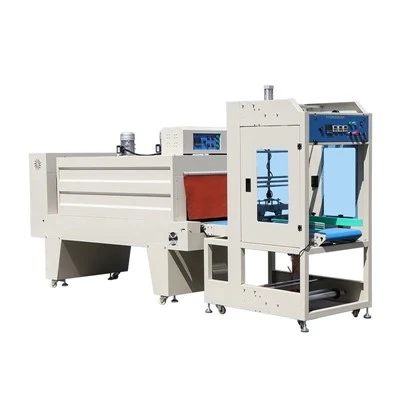
It’s a fair one. For years, I’ve fielded this exact query from small-batch brewers, snack brands, and even pharmaceutical packagers testing tamper seals for the first time. As someone who’s spent 12 years in the shrink tunnels & accessories business—starting out as a line helper before moving to sales and technical support—I’ve seen how the right equipment (and, more importantly, the right pairing of that equipment with materials) can make a good packaging line great, and a bad pairing turn a whole run into waste.
Let’s start with the basics: what a shrink band is, and what a shrink tunnel does, because if you get these two definitions mixed up, that panic call you just got might get worse. A shrink band is a thin, often flexible polymer sleeve (most commonly PVC, PETG, or olefin, depending on the application) that wraps around a specific part of a product—usually the neck of a can, a bottle cap, or the top of a jar—to act as a tamper-evident seal. The goal is simple: if someone pries the cap off, the band breaks, so consumers know the product hasn’t been opened. A shrink tunnel, meanwhile, is a heated, conveyor-equipped chamber that uses controlled heat to shrink polymer materials (like shrink wrap for multipacks or shrink bands) tight around a product. The heat source can be hot air, infrared, or even steam, depending on the tunnel’s design.
For decades, the misconception has lived on that shrink tunnels are only for bulk shrink wrap on multipacks—like the plastic around 12-packs of soda. But here’s the truth I drill into every new client: shrink bands aren’t a “side accessory” to shrink wrap. They’re a precision polymer application, and when paired with the right shrink tunnel, they perform better than any handheld heat gun (the mistake a lot of small brands make when testing bands for the first time). Handheld guns are hit-or-miss—they can burn the band, leave it uneven, or take so long that production speeds drop. A shrink tunnel, when calibrated right, applies uniform heat across every single band, every single product, no shortcuts.
But wait—there’s a catch. Not all shrink tunnels are built for shrink bands. I once worked with a craft hot sauce maker who bought a cheap, repurposed shrink tunnel meant for bulk multipack shrink wrap. They ran their bands through it, and half the bands melted around the bottle’s neck, ruining hundreds of jars. Why? That tunnel was too large. The conveyor speed was too slow, and the heat distribution was uneven, with hot spots at the center and cold edges. Shrink bands need a different balance of heat and airflow than full shrink wrap. Bulk shrink wrap is thicker, needs longer dwell time (how long the product is in the tunnel), and often needs higher temperatures. Shrink bands are thinner, so they need shorter dwell time and more consistent, focused heat—usually around 200 to 280 degrees Fahrenheit, depending on the polymer. PVC bands need the lower end of that range, PETG and olefin a bit higher, and the tunnel needs to circulate air evenly so every inch of the band gets heated, not just the side facing the heat element.
Now, let’s get into the science that makes this work, because I hate giving clients vague answers. Shrink bands are made with oriented polymer—meaning the molecules are stretched in one direction during manufacturing, so when heat is applied, the molecules snap back to their original, smaller size. This is called heat shrinkage, and it’s non-negotiable for a tight, tamper-resistant seal. For that snapping to happen uniformly, the heat has to be applied across the entire surface of the band, not just one spot. A shrink tunnel designed for shrink bands has what we call “focused zone heating” and adjustable airflow. Hot air is directed at the band, not just blasting through the entire chamber like it would for bulk wrap. This means less waste, less shrinkage on the rest of the product (you don’t want the band pulling the label off the bottle), and a seal that doesn’t break before it’s supposed to.
I’ve seen this play out firsthand with a coffee client a few years back. They switched from handheld heat guns to our entry-level shrink band-specific tunnel for their cold brew bottles. Their first run went from a 4% reject rate (wrinkled, misaligned bands) to less than 0.5%. The line speed went up 20% because they didn’t have to stop to fix misseals, and their tamper-evident compliance rate—something they’d struggled with for big-box retail—shot up because every band was applied the same way, tight and intact. That’s the difference. Shrink tunnels don’t just “work” with bands—they work better than any other method when designed for that specific application.
But here’s another myth I want to bust: you don’t need to invest in a $50,000 industrial tunnel to make this work. We supply everything from compact, bench-top shrink tunnels for small-batch craft brands doing 500 units a day to high-speed lines for big pharmaceutical packagers doing 50,000 units an hour. The key is matching the tunnel’s specs to your band material, line speed, and product size. For small brewers testing bands for the first time, our entry-level semi-automatic shrink tunnel paired with a basic conveyor works perfectly. For a pharmaceutical client needing sterile tamper seals, we supply IR-heated shrink tunnels that are certified for clean room environments, with humidity controls to prevent band warping in humidity-sensitive materials.
The other part that people overlook is accessories. You can’t just throw a shrink band on a product and send it through a tunnel. You need the right applicator, too. Shrink band applicators feed the sleeves onto the product’s neck (or cap, or jar rim) evenly, so they’re not lopsided. We supply adjustable applicators that work with every common bottle and can size, and we calibrate them to pair with our shrink tunnels so the band is perfectly centered before it even hits the heat. If the band is lopsided going into the tunnel, even the best tunnel can’t fix that. We always tell clients: don’t buy a shrink tunnel in a vacuum. Pair it with the right band material and applicator, and you’ll avoid 90% of the common issues—wrinkling, slipping, melting.
I remember a call last month from a craft soda maker who insisted their bands were the wrong material because they kept slipping off the cans. Turns out, they were using a PVC band (which works great for bottles) on aluminum cans, and their old tunnel had too much airflow, which blew the thin PVC band off the smooth can neck. We switched them to a thinner olefin band, adjusted their tunnel’s airflow settings to be gentler on narrow necks, and now their slippage rate is zero. That’s the kind of problem that gets fixed not by replacing your tunnel, but by matching the materials and settings to the equipment.
So to circle back to the original question: Can shrink tunnels be used with shrink bands? The answer is a resounding yes—if you pair the right shrink tunnel (designed for the thin, precision application of bands) with the correct band material and calibration. The alternative—using a bulk shrink tunnel or handheld heat guns—leads to inconsistent seals, wasted product, and more time spent fixing errors than running production.
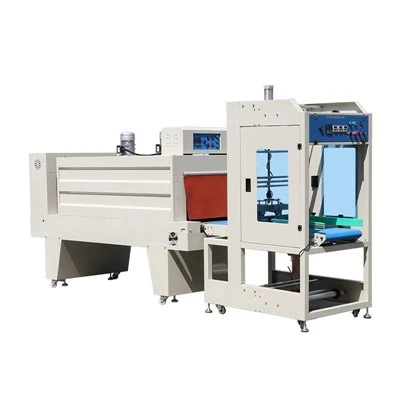
If you’re in the process of testing tamper-evident seals for your product, or you’ve run into issues with band performance on your line, we can help. Our technical team works directly with clients to assess your line speed, product size, and band material, then recommends the right shrink tunnel and accessories to fit your needs—no one-size-fits-all solutions, no overpriced equipment you don’t need. We’ve worked with everyone from one-person craft brands to large retail packagers, and we know that the best packaging lines are built on small, precise details—like pairing the right heat source with your shrink bands.
Smart Packaging Systems For more information on how we can support your shrink tunnel and shrink band needs, feel free to reach out to our team for a consultation. We’ll walk you through our product offerings, share case studies from brands in your industry, and help you troubleshoot any current issues with your current line.
References
- Soroka, W. (2018). Fundamentals of Packaging Technology. Institute of Packaging Professionals.
- Hanlon, J. F., Kelsey, R. J., & Forcinio, H. E. (2019). Handbook of Packaging Technology. Wiley.
- American Society for Testing and Materials (ASTM). (2021). Standard Test Method for Heat Shrinkage of Plastics Films and Sheeting. ASTM D2732-21.
- Shrink Film and Sleeve Association. (2020). Guidelines for Shrink Tunnel and Shrink Sleeve Pairing in Packaging Applications. SFS Publication 12-20.
Langfang Huanqi Machinery Equipment Co., Ltd.
As one of the most professional shrink tunnels & accessories manufacturers and suppliers in China, we also support customized service. Please feel free to buy advanced shrink tunnels & accessories for sale here from our factory. Quality products and reasonable price are available.
Address: No.40, Row 11, North Side of Central Street, Wangpeizhuang Village, Pingshu Town, Dacheng County, Langfang City, Hebei Province
E-mail: huanqijixie@outlook.com
WebSite: https://www.huanqiwrap.com/
