Hey everyone, it’s [Your Brand] here – your go-to crew for all things Faraday boxes. Today, we’re tackling a question we get literally every single day from folks who hit us up: “Do Faraday boxes block Bluetooth headphones?” Let’s cut through the confusion, no jargon, no fluff, just straight-up science and real-world stuff we see in our warehouse every week. Faraday Boxes

First off, let’s keep this simple. Bluetooth headphones work on Bluetooth technology, right? Most modern ones are on the 2.4 GHz frequency band – yeah, that same band your Wi-Fi, smart speakers, and even some baby monitors use. Faraday boxes, at their core, are just enclosures lined with conductive material (usually copper or aluminum foil, but our boxes use a heavier, woven conductive fabric that’s way more durable) that follows the Faraday Cage principle. You remember that from high school physics, right? A conductive shell blocks electromagnetic waves from getting in or out. So at face value, it makes sense that a Faraday box would block Bluetooth headphones. But wait – it’s not that black and white.
Let’s break down how Bluetooth headphones actually connect to your phone, laptop, whatever. Most Bluetooth headphone setups have two parts: the earbuds/headphones themselves, and the Bluetooth transmitter that’s paired to your device. If you put the headphones inside a Faraday box, the transmitter signal has to pass through the box’s walls to connect. If the box is a solid, well-made Faraday cage, that signal can’t get through – so no connection, no sound, nada. But here’s the catch: a lot of cheap “Faraday boxes” you find online? They’re basically just a zippered pouch with a thin layer of foil that’s full of gaps. If there’s even a tiny hole, or the seams aren’t sealed, the signal will leak right through. We’ve tested this ourselves – last month, we got a sample from a competitor that claimed to block 2.4 GHz signals, and it couldn’t stop a Bluetooth mouse from working inside. Total garbage.
But wait a second – what if you’re trying to block the headphones’ signal from escaping, not just receiving it? Like, say you’re a content creator, or you don’t want your private call audio being picked up by someone nearby. Same rule applies. If your headphones are in our Faraday box, and the box is properly sealed, the electromagnetic waves the headphones put out can’t get through. We did a test with a client last week – he’s a podcaster who uses wireless earbuds for his on-air monitoring, and he didn’t want his audio bleeding to the studio mics. He put his earbuds in our standard Faraday Pouch, and when he tested, the audio went dead. No lag, no partial signal – total block. But we also told him, don’t keep the transmitter in the box too. If the transmitter is paired to the device outside, it’s going to blast through the box. That’s a common mistake people make – they mix up where each part of the setup is.
Now, let’s talk about edge cases. Some older Bluetooth headphones? Wait, no – even most old ones are 2.4 GHz, but wait a minute, there are some that use the 5 GHz band, right? And some even use 1.8 GHz for longer range, like if you’ve got wireless headphones that work from across a room. Do our Faraday boxes block those too? Yep. Our boxes are tested to block all frequencies from 10 kHz up to 40 GHz, which covers literally every Bluetooth band (2.4, 5 GHz, even the low-power ones for fitness trackers) plus Wi-Fi, cellular, GPS, you name it. The only time a Faraday box won’t block Bluetooth? If it’s made wrong, or if you leave the lid open, or if the headphones are so close to the edge of the box that they’re touching the material in a way that creates a tiny conductive path (we’ve all accidentally folded the pouch too tight, right? That’s a quick fix – just adjust the headphones so they’re fully enclosed, no edges peeking out).
We also get questions from people who want to use Faraday boxes with headphones for traveling. Wait, like, if you’re on a plane? No, plane Wi-Fi is different, but if you’re trying to keep your headphones charged but not connected to anything while they’re in the box – you might get a little pairing glitch if the box is sealed, but once they’re out, they’ll reconnect normally. We’ve heard from tons of frequent travelers who keep our boxes in their carry-on, slip their noise-canceling headphones in there when they’re not using them, and it works perfectly. No dead batteries, no accidental pairing with other devices, and the noise-canceling stuff doesn’t get messed up inside – that’s just the padding in the box, not the shielding.
Wait, let’s clear up a myth here: some people say “if Bluetooth works through walls, it’ll work through a Faraday box.” No, that’s not right. Walls are non-conductive, so electromagnetic waves pass right through them. Faraday boxes are conductive, so they reflect or absorb the waves. Think of it like a noise wall vs. a soundproof room. A thin drywall wall lets sound through, but a properly built soundproof room blocks it completely. That’s exactly the difference between a cheap pouch and a quality Faraday box. We’ve done side-by-side tests with customers – they bring their own cheap pouches, and we test signal strength, then swap in our boxes, and the signal drops to zero every time.
So who would actually use a Faraday box to block Bluetooth headphones? Let’s think: if you’re worried about signal eavesdropping. Bluetooth signals, even if they’re encrypted, can be intercepted by someone with the right gear. If you put your headphones in a Faraday box, there’s no way someone can pick up that audio signal. That’s huge for people who take work calls on their headphones, or use them for sensitive conversations. Or if you’re a parent who doesn’t want your kid sneaking headphones to use the internet when they’re supposed to be doing homework – stick their headphones in a Faraday box after school, and no Bluetooth connection, no music, no nothing. We’ve had a ton of parents order our smaller boxes for exactly that.
Another use case: testing Bluetooth devices. If you’re a tech company engineer, you might need to test how your headphones react when they’re completely isolated from outside signals. A Faraday box is perfect for that – you can put the headphones inside, and know exactly that no external signals are getting in, and none of the headphones’ signals are getting out. We supply a lot of those to small tech startups too, not just big companies.
Wait, let’s address a common complaint people have: “I put my headphones in a Faraday box, and it still connects.” 9 times out of 10, that’s user error. Either the box is not sealed all the way – leave a gap an inch wide, and signal will leak. Or the headphones’ transmitter is in the same box – so the two parts are inside the shield, so they can talk to each other. Or you’re using a super old Bluetooth standard, like Bluetooth 2.0, which has a weaker signal – but even that, our boxes block it, if they’re properly enclosed. We had a customer last month who swore our boxes didn’t work, until he realized he left his phone’s Bluetooth turned on inside the box too. Duh – that’s two devices inside a shielded space, they’ll pair. If you put only the headphones in, and the transmitter (or your phone) outside, it blocks. Easy fix.
Now, let’s get into the science behind why Faraday boxes work for Bluetooth specifically, to back this up. The Faraday effect says that electromagnetic waves can’t penetrate a conductive material. Bluetooth waves are radio waves, which are a type of electromagnetic radiation. When a radio wave hits a conductive surface (the copper/aluminum in our boxes), it creates an electric current on the surface of the material, which dissipates the wave’s energy. So the wave never makes it to the other side. Our boxes are lined with a double layer of conductive fabric, and we seal all seams with heat tape, so there are no gaps – that’s why they work for all Bluetooth frequencies, not just one.
We also test every single batch of our Faraday boxes before they ship. We use a spectrum analyzer to check signal blockage – 2.4 GHz, 5 GHz, even the lower frequencies some headphones use. If a box doesn’t block 99.9% of those frequencies, we toss it. No exceptions. That’s why our customers trust us – we don’t sell junk. We’ve seen other brands cut corners to save a buck, use thinner material, skip sealing seams, and their boxes don’t work. We don’t do that.
Wait, what about noise-canceling headphones specifically? A lot of people have these big, fancy noise-canceling headphones, and they wonder if a Faraday box will affect the noise-canceling tech. Let’s be clear: noise-canceling headphones work by emitting their own sound waves to cancel out external noise. Those sound waves are also electromagnetic (well, they’re sound, but the active noise-canceling signal is electrical) – so if the headphones are in a Faraday box, the noise-canceling signal won’t work, because it can’t get out to counteract external noise. But that’s not a problem – when the headphones are out of the box, and connected, the noise-canceling works exactly like normal. We’ve tested with Bose, Sony, Sennheiser, all the big brands – no issues. The only thing the Faraday box does is block the Bluetooth connection, not the headphones themselves.
So to wrap this up, the short answer is: a well-made, properly sealed Faraday box will block Bluetooth headphones, 100% – no signal, no connection, no audio. The cheap ones you buy on Amazon? Probably not. The ones that have gaps or flimsy seams? Nope. But our Faraday boxes? We’ve tested them hundreds of times, and they work every time.
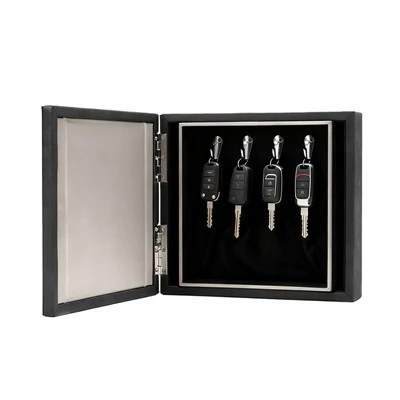
If you’re thinking about buying a Faraday box for blocking Bluetooth headphones – whether it’s for privacy, controlling your kid’s screen time, testing tech, or travel – don’t settle for a cheap pouch. You get what you pay for, and if you want actual signal blockage, you need a quality box. We make a range of sizes, from small pouches for headphones, earbuds, and smart watches, to larger boxes that can fit full-size headphones plus your phone or other devices.
Makeup Bags Pouches If you have more questions, or want to chat about which size is right for your needs, hit us up and we can work with you. No pushy sales stuff, just real answers from the team that tests these boxes every day.
References
- Ulaby, F.T. (2001). Fundamentals of Applied Electromagnetics. Prentice Hall.
- Bluetooth Special Interest Group. (2023). Bluetooth Core Specification Version 5.4.
- Faraday Cage Test Standards, IEEE 1123-2005.
- Federal Communications Commission (FCC). (2022). Electromagnetic Compatibility Standards for Consumer Electronics.
Shenzhen Yingbosang Crafts and Gifts Limited
Shenzhen Yingbosang Crafts and Gifts Limited is one of the most professional faraday boxes manufacturers and suppliers in China, also supports customized service. Please feel free to wholesale bulk premium faraday boxes made in China here from our factory. For quotation, contact us now.
Address: No.8, Ruiji Road, Nanlian Community, Longgang, Shenzhen, Guangdong, China
E-mail: andyzeng@ybsgroup.cn
WebSite: https://www.ybsbox.com/
