Hey there! Let’s cut to the chase—if you’ve ever walked past a substation that hums like a hyperactive bee hive or wondered how a factory’s power doesn’t go up in sparks when a machine kicks on, you’ve stared at a high voltage switchgear panel without even knowing it. I’ve been selling these bad boys for 12 years, and still, most folks I chat with ask, “Wait, that thing isn’t just a fancy metal box?” Spoiler alert: nope, it’s way more important than that. Let’s break this down like we’re geeking out over a new tool at the shop—not some stuffy engineering textbook. High Voltage Switchgear

First off, let’s get the basics right: high voltage (HV) here isn’t the static shock you get from rubbing your socks on carpet. We’re talking any voltage over 1,000 volts AC (that’s U.S. standard) or 1,500 volts AC if you’re in most other parts of the world. Stuff that powers big factories, apartment complexes, wind farms, hospitals—places where a power blip isn’t an inconvenience, it’s a disaster. So what’s the panel’s job? Think of it as the traffic controller for all that electricity. It doesn’t just “hold” power—it directs it, stops it when it’s not needed, and keeps everyone and everything from getting fried when something goes sideways.
Let me walk you through what’s actually inside one of these panels, because most people only see the big gray metal box bolted to a concrete pad. From the front, you’ve got those little switches and touchscreens operators stare at—they’re not just for show. Those are the HMI (Human-Machine Interface) units, like the TV remote for your house, but way less likely to get broken by a toddler. Peek behind the lockable doors, and you’ve got the heavy hitters: circuit breakers. These are the heros. If a line gets overloaded (like when your factory’s new robot arm kicks on at the same time as the assembly line), or there’s a short circuit, the circuit breaker snaps open in a fraction of a second—faster than you can blink—to cut off the power and prevent a fire or explosion. No joke, I’ve been on a site where a old breaker failed, and it melted a transformer so bad the whole neighborhood was out for 3 days. That’s why upgrading to a good panel isn’t a “nice-to-have”—it’s non-negotiable.
Then there’s the busbar. If the circuit breakers are the traffic lights, the busbar is the main highway for electricity running through the panel. It’s usually a thick strip of copper or aluminum (copper’s better for conductivity, but aluminum’s lighter, so we use both depending on the job) that’s insulated so it doesn’t zap anything it touches. Next, you’ve got disconnectors—these are the backup safety step. The circuit breaker can cut power fast, but if you need to work on the panel, you need a way to make 100% sure there’s no juice left. Disconnectors only open when there’s no power flowing, so they physically separate parts of the panel to keep technicians safe. It’s like locking a gate on a highway after the cops turn off the traffic—you know no cars (or electricity) are getting through. And don’t forget the relays—these are the brains that tell the circuit breakers when to trip. Modern relays are digital now, not the old analog dials, so they can spot issues before a human even sees them. I once installed a panel with a relay that caught a loose line in a wind farm 2 minutes before it would’ve caused a huge fault. The operator was shocked (pun totally intended) at how precise that thing is.
Now, let’s talk about why this isn’t something you can grab off Amazon and stick in your basement. High voltage is dangerous—like, “call 911 if you touch this” dangerous. So these panels have to meet strict safety standards. IEC 62271, ANSI C37, those aren’t just random letters—they’re global rules that make sure the panel won’t fail when it needs to. No cutting corners here. I’ve seen cheap knockoff panels from random overseas sellers that skipped over-insulation, and they’re ticking time bombs. Last year, a small manufacturing plant used one of those, and a worker got electrocuted trying to fix a line because the insulation melted. I still think about that, which is why I never sell anything that doesn’t pass those standards.
Let’s get real about where these panels actually get used, because most people don’t see them day to day, but they’re everywhere. Hospitals? Their HV panels run the emergency generators—if the grid goes down, that panel instantly switches power to the hospital’s critical rooms (ER, ICU) without a single blip. Wind and solar farms? Those renewable sources generate high voltage power that needs to get stepped down (wait, no, actually step up) to go through the grid, and the switchgear makes sure the power flows smoothly and doesn’t damage the turbines. Malls and large apartment complexes? They have multiple switchgear panels to split power between different buildings, so if one line trips, only half the complex goes dark, not all of it. Even data centers—you think a data center can afford a 10-second power outage? Their switchgear is the reason their servers stay up when the grid hiccups.
I know what some of you are thinking: “Hey, can’t I just use a regular breaker box for my big factory?” Nope, and here’s why. Regular residential or commercial breaker boxes top out at like 480 volts, max. HV panels handle way more—up to 1,000 volts, sometimes 35,000 or even 115,000 volts for big grid stations. They’re built to handle way higher loads, have better insulation, and the safety systems are way more robust. Your home breaker will trip if you plug in two space heaters at once, but a factory’s milling machine pulling 10x that power needs a panel that can handle it without frying.
Now, let’s talk about common mistakes I see clients make when they’re looking for these panels. First, they underbuy. They go for the cheapest option, not considering their future growth. I had a auto parts shop call me last year, they thought a 10,000 amp panel was enough, but 2 years later they expanded and needed a 15,000 amp panel—so they had to replace the whole thing, which cost way more than if they’d just sized up from the start. Second, they skip maintenance. A lot of folks buy a panel and forget about it until it breaks. I do annual checkups for all my clients, and last quarter I found a loose busbar on a panel that was 5 years old. If I hadn’t caught that, it would’ve arced and taken out their whole warehouse. Third, they don’t hire a pro to install it. I’ve seen panels installed wrong, with wires that are too tight or too loose, because someone tried to do it to save cash. Installation is half the battle—even the best panel is useless if it’s wired wrong.
As a HV switchgear supplier, my job isn’t just to sell a metal box. It’s to make sure your power is reliable, your people are safe, and you don’t have to panic when the grid does something weird. I’ve been doing this long enough to know that a good panel pays for itself in one less power outage, one less safety hazard, one less headache. Whether you’re a small business owner looking to upgrade your shop’s power, a project manager building a new wind farm, or someone who just wants to make sure their hospital’s power is never lost, I’ve got the right panel for you.
If you’re tired of settling for panels that cut corners, or you’re planning a project and need to figure out what kind of switchgear you actually need, don’t hesitate to reach out. I’m happy to walk you through your options, answer any questions you have, or even come check out your site to make sure we get the size and specs right. No sales pitch, no pressure—just straight talk, like we’re two people in the industry figuring out what works best for you.
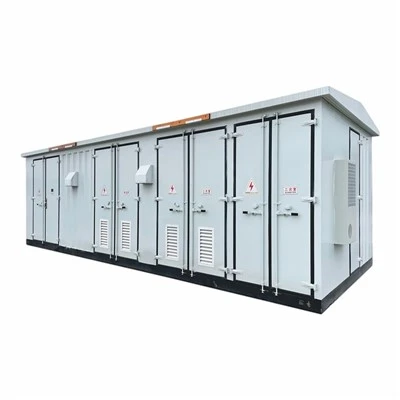
When it comes to high voltage switchgear, you don’t want to play around. Get in touch, and let’s make sure your power is handled right.
Prefabricated Substation References
IEC 62271: High-voltage switchgear and controlgear standards
ANSI C37: American National Standard for Power Switchgear
IEEE Std 242: Recommended Practice for Protection and Coordination of Industrial and Commercial Power Systems
Shandong Xunchi Electric Co., Ltd.
Shandong Xunchi Electric Co., Ltd. is one of the most professional high voltage switchgear manufacturers and suppliers in China, featured by quality products and low price. Welcome to wholesale advanced high voltage switchgear made in China here and get quotation from our factory. Customized orders are welcome.
Address: No.1 East Campus of Dachi Company on the North Ring Road, Yongchang Street Office, Chengwu County, Heze City, Shandong Province, China
E-mail: sdxcdq@126.com
WebSite: https://www.china-xunchielectric.com/
