Hey there! I’m a supplier of Pu Screen Mesh, and today I’m gonna chat with you about what’s actually in this stuff – its chemical composition. Pu Screen Mesh
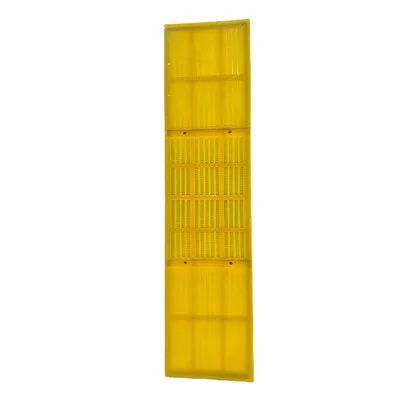
First off, let’s break down what "Pu" stands for. It’s short for polyurethane. Polyurethane is a super versatile polymer that’s used in a whole bunch of products, and our screen mesh is no exception.
Polyurethane is made up of organic units that are linked by carbamate (urethane) links. These links are formed through a chemical reaction between a di – or polyisocyanate and a polyol. The di – or polyisocyanate is a compound with multiple isocyanate groups (-NCO), and the polyol is a molecule with multiple hydroxyl groups (-OH).
In our Pu Screen Mesh, the base polyurethane composition gives it some amazing properties. The polymer chains in polyurethane can be arranged in different ways, and this affects the overall characteristics of the screen mesh. For example, if the chains are more linearly arranged, the mesh might be more flexible. On the other hand, if there’s more cross – linking between the chains, the mesh becomes stronger and more resistant to wear and tear.
Now, let’s talk about what else might be in there. We usually add some additives to the basic polyurethane mixture. One common additive is a stabilizer. These stabilizers help prevent the polyurethane from degrading when it’s exposed to things like heat, light, or oxygen. Oxidation can make the screen mesh brittle over time, and the stabilizers slow down this process, making the mesh last longer.
Another important additive is a plasticizer. Plasticizers are substances that increase the flexibility and workability of the polyurethane. They do this by reducing the intermolecular forces between the polymer chains. This means that the screen mesh can bend and flex without cracking, which is super important, especially if it’s going to be used in applications where it needs to conform to different shapes.
We also sometimes add colorants to the Pu Screen Mesh. These can be either pigments or dyes. Pigments are insoluble particles that are dispersed throughout the polyurethane matrix, while dyes are soluble in the polymer. The colorants not only make the mesh look more appealing but can also serve some practical purposes. For example, a black screen mesh might absorb less heat than a white one in direct sunlight, which can be a factor in applications where temperature is a concern.
Let’s get a bit more technical about the chemical makeup. The polyols used in our Pu Screen Mesh are often polyester polyols or polyether polyols. Polyester polyols are made by the reaction of a dicarboxylic acid (like adipic acid) and a diol (such as ethylene glycol). They tend to give the polyurethane good mechanical properties, like high tensile strength and abrasion resistance. Polyether polyols, on the other hand, are made by the reaction of an alkylene oxide (for example, ethylene oxide or propylene oxide) with a starter molecule. Polyether – based polyurethanes are usually more flexible and have better resistance to hydrolysis than polyester – based ones.
The isocyanates we use are typically aromatic or aliphatic. Aromatic isocyanates, like toluene diisocyanate (TDI) and methylene diphenyl diisocyanate (MDI), are more commonly used because they’re relatively inexpensive and give good mechanical properties. However, aliphatic isocyanates, such as hexamethylene diisocyanate (HDI) and isophorone diisocyanate (IPDI), are more resistant to yellowing and degradation from UV light. So, depending on the application of the screen mesh, we might choose one over the other.
In terms of the manufacturing process, the chemical components are carefully mixed in specific ratios. First, the polyol and the additives are blended together in a mixing tank. Then, the isocyanate is added, and a chemical reaction called polymerization takes place. This reaction is exothermic, which means it releases heat. The mixture is then poured into a mold or extruded through a die to form the screen mesh shape. During this process, the polyurethane cures and hardens, taking on the final form of the screen mesh.
The chemical composition of our Pu Screen Mesh gives it a wide range of benefits. It’s super durable, so it can withstand a lot of wear and tear. It’s also resistant to chemicals, which makes it suitable for use in environments where it might come into contact with various substances. The flexibility of the mesh allows it to be used in different applications, from filtration systems to protective barriers.
If you’re in the market for high – quality Pu Screen Mesh, you’ve come to the right place. Our mesh is made with the best chemical composition to meet your specific needs. Whether you need a flexible mesh for a custom – shaped filtration system or a strong, wear – resistant one for an industrial application, we’ve got you covered.
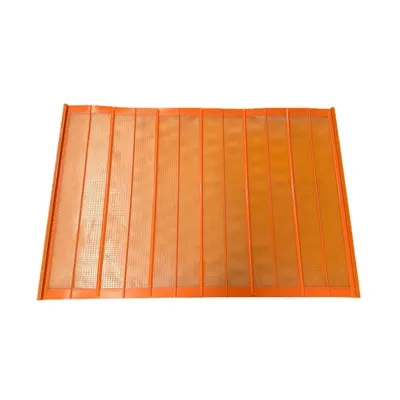
Don’t hesitate to reach out if you have any questions or if you’re interested in placing an order. We’re here to help you find the perfect Pu Screen Mesh for your project. Contact us to start a conversation about your requirements and let’s work together to get you the best product at a great price.
Polyurethane Screen Panel References
- "Polyurethanes: Chemistry and Technology" by J. H. Saunders and K. C. Frisch
- "Handbook of Polyurethanes" edited by G. Oertel
Yangzhou Yaye Wire Mesh Manufacturing Co., Ltd.
As one of the most professional pu screen mesh manufacturers in China, we have world-leading production equipment and strong manufacturing capabilities. Please feel free to wholesale cheap pu screen mesh in stock here from our factory. Also, free sample is available.
Address: No. 1 Jiangjia Road, High-tech Industrial Park, Jiangdu District, Yangzhou City, Jiangsu Province
E-mail: 13952515577@163.com
WebSite: https://www.yayescreen.com/
