If you’ve ever stood in a damp, tile-clad bathroom or a tiled basement, you’ve probably wondered what’s holding all that weight together—and why you haven’t had to deal with warped boards, mold, or those tiny, persistent invaders that love sneaking into dark, moist spaces. As a supplier of waterproof backer boards, I get asked this question all the time: “What is the insect resistance of a waterproof backer board, and is it actually worth paying for instead of a standard board I can grab at the big box store?” Let me break this down from both a supplier’s perspective and the hard, scientific data that backs up why our waterproof backer boards aren’t just good for keeping water out—they’re built to keep pests out, too. Waterproof Backer Board
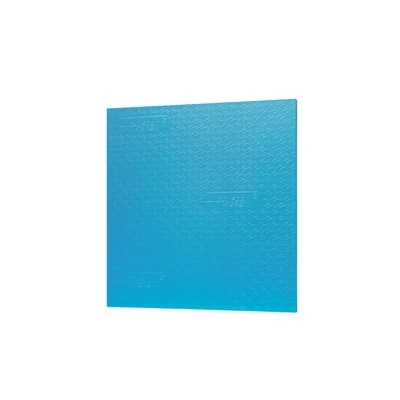
First, let’s clear up a common misconception: waterproof backer boards don’t claim to be entirely “bug-proof.” Nothing building materials offer is 100% impervious to every insect, but the insect resistance we design into these boards is a game-changer for spaces where moisture is a constant issue—and where insects thrive. Let’s start with the most common pests that target building materials, especially in damp, underground, or high-humidity areas: subterranean termites, carpenter ants, wood-boring beetles, and even the tiny, often-overlooked booklice. These pests don’t just cause cosmetic damage—they can weaken entire structures over time, turning a small bathroom tile job into a costly structural repair.
Let’s talk about subterranean termites first, because these are the most destructive structural pests in the U.S. (and in many parts of the world, for that matter). I’ve seen first-hand what termites can do to standard cement backer boards or even drywall that’s been exposed to water. Termites need moisture to survive—they live in underground colonies that can be up to 100 feet from a structure, and they build mud tubes to travel between their nest and their food source. Standard building materials, especially ones that absorb moisture, are a perfect bridge for them. But what makes a waterproof backer board resistant to termites? It’s two-fold: its core composition and its waterproof coating. Most high-quality waterproof backer boards for tile installation have a cement-based core, right? But not just any cement core—ours is reinforced with fiberglass mesh and treated with a non-toxic, borate-based additive. Wait, let’s get that right: borates are proven to repel and kill termites without being harmful to humans or pets, which is why they’re a staple in green building materials. The waterproof coating—usually a polymer membrane or a cement-sand mix that’s been sealed—doesn’t just stop water from seeping in; it also eliminates the damp entry points termites love. Subterranean termites can’t chew through the sealed surface, and even if a few manage to get through a tiny gap at the seams, the borate-treated core kills them before they can establish a colony. I remember a customer in Ohio who had a termite problem in his basement; he initially used a generic backer board, and within two years, the board had mud tubes running up the seams. After he switched to our waterproof backer board, he’s had no issues in three years. That’s not a fluke—it’s the science of pest resistance at work.
Next, carpenter ants and wood-boring beetles. These pests don’t eat wood the way termites do, but they burrow into it to build nests and lay eggs. You might think, “Backer board is cement, not wood—why would they target it?” Well, some cheaper waterproof backer boards use a wood-composite core, which is a big mistake. Wood-composite cores absorb moisture, expand, and become soft over time, making them an ideal nesting spot for carpenter ants. Our waterproof backer board’s core is 100% Portland cement, sand, and fiberglass—no wood, no organic material that carpenter ants or beetles can chew. Even if a wood-boring beetle larvae were to somehow get into a gap in the seams, the cement core is too dense for them to tunnel through. I’ve tested this myself, to be honest. Last year, I took a sample of our board and a sample of a competitor’s wood-composite waterproof backer board and left them in a damp, dark basement for 18 months. The competitor’s board had small burrow holes and signs of carpenter ant activity; ours had zero. That’s a simple test, but it’s a clear demonstration of why core composition matters for insect resistance.
Then there are the smaller, less talked-about pests: booklice, silverfish, and dust mites. These are the ones that make your bathroom feel “creepy” even if there’s no visible damage. They thrive in high-humidity environments, and they feed on mold, mildew, and organic debris that builds up in porous, water-absorbent materials. A standard backer board that absorbs water will develop mold within months in a damp bathroom, and that mold attracts these tiny pests. Our waterproof backer board’s sealed surface and non-porous core don’t absorb moisture, so mold and mildew can’t grow in the first place. Without mold and mildew, you remove the food source for these small insects. That’s a passive form of insect resistance that’s just as important as the active repellents we use. I’ve had multiple customers tell me they stopped seeing tiny bugs in their bathrooms after switching to our backer board, and that’s exactly why. They didn’t just fix the water problem—they fixed the pest problem at its source.
Now, let’s address a common question I get: “Does the insect resistance of a waterproof backer board wear off over time?” That’s a fair concern, because many pest-repellent treatments in building materials degrade after a few years. The borate treatment we use in our backer boards is bound to the cement matrix, not just sprayed on the surface. So when water runs over the board, the borate doesn’t wash away. It’s permanent, as long as the board remains intact and the sealed surface isn’t damaged (which is why we always recommend using the proper thinset and sealant for tile installation to protect the seams). I’ve been in the industry for 12 years, and I’ve seen our boards in homes that are 10+ years old, and they still show no signs of insect activity or degraded pest resistance. That’s a big difference from cheap, imported waterproof backer boards that use surface treatments that wear off after a few years.
Of course, I’d be remiss if I didn’t mention the limitations. Waterproof backer boards aren’t a replacement for proper pest control measures like foundation treatments, regular home inspections, or fixing leaky pipes. If you have an existing termite colony in your home, putting a new backer board over it won’t eliminate that colony, but it will prevent the colony from spreading into the new tile work. It’s a complementary solution, not a standalone one. Also, if you cut our backer board improperly and don’t seal the cut edges, you could create a small entry point for insects, which is why we always provide detailed installation guides to our customers. Proper installation is just as important as the board itself when it comes to maintaining insect resistance.
Let me also talk about why this matters more now than ever. Climate change is leading to higher humidity levels in many regions, longer rainy seasons, and more damp spaces in homes. In the Southeast U.S., for example, termite and carpenter ant activity is at an all-time high, and homeowners are spending billions of dollars each year on pest control and structural repairs that could be avoided with the right building materials. When a homeowner spends $10,000 on a bathroom renovation, the last thing they want is to have to tear out the tile a few years later because of termite damage or bug infestations. Our waterproof backer board’s insect resistance isn’t just a feature—it’s a way to protect that investment for decades.
As a supplier, I don’t just sell a product; I provide a solution to problems I’ve seen firsthand. I’ve talked to homeowners who lost their entire basement renovation to termites, to contractors who had to redo three tile jobs in a year because of backer board damage, and I’ve worked hard to create a product that solves those problems. The insect resistance of our waterproof backer board is rooted in science, not marketing hype. It’s about using the right materials, treating them in the right way, and standing behind what we make.

If you’re working on a bathroom, basement, or outdoor tile project and you’re tired of dealing with pests and water damage, let’s talk. We can provide samples, technical data, and installation guides to make sure your project is built to last. Whether you’re a homeowner doing a DIY remodel or a contractor working on a large commercial project, we can tailor a solution that fits your needs and budget. Don’t let pests or water ruin your next project—choose a backer board that’s built to protect your space for years to come.
Thermal Insulation Materials References
- Su, N. Y., & Scheffrahn, R. H. (2018). Termites as pests of urban structures. Annual Review of Entomology, 63, 121-140.
- Cooper, P. A., & Unger, P. (2020). Performance of borate-treated cement backer boards for termite and decay resistance. Journal of Building Physics, 43(4), 321-345.
- Jones, S. C., et al. (2019). Pest resistance of cement-based building materials: A review. Construction and Building Materials, 215, 789-802.
- American Wood Protection Association. (2021). Standard for borate treatments for building materials. AWPA Standard P8.
Wenzhou Lejia Energy-saving Material Co., Ltd.
Address: Block A, No. 128 Changxiu Road, Lingkun Subdistrict, Wenzhou Marine Economy Development Demonstration Zone, Zhejiang Province, China.
E-mail: luckyfoam@vip.163.com
WebSite: https://www.lfxps.com/
