When I’m on the road visiting CNG stations across the Great Plains—from the sprawling truck stops outside Omaha to the rural fuel depots in central Kansas—one question comes up more than any other: “Can a CNG booster compressor be repaired on-site?” I get it. For station operators, every hour a booster is down is lost revenue. A single non-operational booster can stall a heavy-duty truck fueling queue for hours, or disrupt the supply chain for local fleets that rely on CNG to cut fuel costs. As a CNG booster compressor supplier with 12 years in the business, I’ve sat in countless break room conversations, sipping lukewarm coffee while operators weigh the cost of pulling a unit out of service, shipping it to a remote repair shop, or trusting someone to fix it where it stands. The short answer? Sometimes, yes—but it depends on three big factors: the type of failure, the complexity of your booster model, and how well you maintain routine inspections. Let me break this down the way I explain it to every customer who picks up the phone on a Sunday night when their compressor cuts out. CNG Booster Compressor

First, let’s get clear on what a CNG booster actually does, because that context changes everything. A CNG booster compressor takes low-pressure natural gas—usually between 100 and 300 PSI from a pipeline or storage vessel—and compresses it up to 3,600 PSI, the standard pressure for dispensing into heavy-duty truck tanks. There are two primary designs you’ll find in most fleets and stations: reciprocating boosters, which use pistons moving in cylinders (the most common type for medium to high-volume stations), and rotary screw boosters, which use intermeshing rotors to compress gas (popular for lower-volume, smaller operations). I’ve seen both designs go down for the same reasons, but the fixes that work on-site differ drastically.
The most common CNG booster failures are almost always repairable on-site—if you catch them early. Let’s start with something everyone can fix themselves, no specialized tools required: filter and separator clogs. Natural gas pulled from pipelines isn’t pure; it has moisture, pipeline debris, and even tiny rust particles that build up in the inlet filter and liquid separator. When I worked at a station in Wichita a few years back, the operator kept complaining his booster was running louder than usual and only reaching 2,800 PSI instead of 3,600. I showed up, opened the inlet filter housing, and it was so full of fine pipeline scale it looked like dark sand. Ten minutes of swapping the filter element and draining the separator brought the pressure right back. That’s a routine maintenance fix, but I’ve seen operators write off an entire day’s production because they assumed a noisy booster was a major mechanical issue, not a clogged filter. Similarly, loose pipe fittings or faulty pressure relief valves (wait—no, pressure relief valves need certified testing, but loose bolts on the motor mount? That’s a 15-minute fix I’ve done in a parking lot at 2 a.m.) are other on-site wins.
Next, failures that need a certified technician, but still don’t require pulling the unit: seal and ring damage. Reciprocating boosters rely on piston rings and rod seals to create compression; over time, those rings can wear down from debris, or get damaged if the compressor is starved of lubrication. A few months ago, a fleet operator in Des Moines called me panicking because his booster was blowing gas out of the crankcase vent. I dispatched one of our in-field techs, who drove two hours, showed up with a seal kit, and got to work. The unit only required removing the valve covers and accessing the rod seals—no need to unbolt the unit from its foundation, no need for a flatbed truck to haul it. That repair took three hours total, and the operator was back to full capacity by mid-morning. But here’s the catch: this type of repair isn’t a DIY job. You need someone trained specifically on CNG booster parts, because mixing up a piston ring size can lead to more damage, or even gas leaks that are a safety hazard.
Now, let’s talk about the failures that can’t be fixed on-site, no matter how good your tech is. The big one is major internal component failure: broken crankshafts, seized connecting rods, or cracked cylinder heads. These issues usually stem from neglect—running a booster with low oil, ignoring unusual noise, or letting small seal leaks turn into catastrophic damage. When a crankshaft snaps in the middle of a reciprocating booster, the unit has to be completely removed, shipped to a repair shop with the machinery to mill and balance parts, then reinstalled. I once had a customer in western Nebraska try to repair a broken connecting rod on-site; it ended up blowing the cylinder head off the unit, and they had to order a whole new booster, costing them $18,000 in downtime and parts. That’s the risk of pushing on-site repairs too far—some failures are just too large, too core to the unit’s design, to fix without specialized shop equipment.
Another non-negotiable reason to pull a booster for off-site repair: electrical or control system failures. Modern CNG boosters run on programmable logic controllers (PLCs), which regulate pressure, lubrication flow, and safety shut-offs. If a PLC fails, or a wiring harness corrodes from exposure to moisture, you can’t troubleshoot that safely on-site. Working with high-voltage wiring near pressurized natural gas is a recipe for disaster if you don’t have the right testing equipment. I always tell customers: if your control panel is flashing error codes for a PLC fault, call us, and we can either send a certified tech to replace the control module on-site (if it’s a simple swap) or arrange for the unit to be hauled to our service center if the board needs programming. Trying to rewire a booster’s control system without certification is not only dangerous—it can void your warranty, which is a huge hit when a new booster costs $20,000 or more.
So how do you maximize on-site repairs, minimize downtime, and avoid the costly mistakes I’ve seen over the years? It all comes down to routine, planned maintenance. I recommend every station operator schedule a monthly inspection with a certified CNG tech—someone who knows your specific booster model (I always make sure our customers have a dedicated tech assigned to their account, not a random third-party service). That inspection should include checking oil levels, draining the liquid separator, testing pressure relief valves, and listening for unusual noise. Most small issues—clogged filters, worn piston rings, loose bolts—can be caught before they turn into catastrophic failures that need off-site work.
I also tell operators to keep a basic spare parts kit on-site. A good kit should include inlet filter elements, rod seal kits, pressure gauges, and a few common replacement parts like O-rings. Having these parts on hand cuts repair time from hours to minutes when a small issue pops up. A few years back, a customer in Oklahoma had a rod seal go out on a Saturday night; they had the seal kit on their shelf, a certified tech on call, and were back to operations in two hours, instead of waiting 24 hours for a part to ship from a shop 300 miles away. That’s the difference between losing $5,000 in downtime and only losing a few hundred dollars.
Let’s be real, though: no matter how well you maintain your boosters, there will be times when on-site repair just isn’t feasible. If you have a brand new booster under warranty, for example, trying to fix a major component failure on-site will void the warranty, so you have to send it to an authorized repair center. If you have a rotary screw booster with a broken rotor assembly, that unit has to be disassembled in a shop with precision tools to realign the rotors—something you can’t do in a field or a station’s garage. I always be upfront with customers when a repair is too big for on-site work; my job isn’t to pressure them to do something risky, it’s to help them make the call that keeps their operations running and their employees safe.
Last year, I worked with a large fleet operation in Texas that had four CNG boosters across three different fueling stations. They were spending $120,000 a year in downtime and repair costs because they were trying to fix everything on-site, even major crankshaft failures. We restructured their maintenance plan: monthly inspections, on-site spare parts kits, and a dedicated tech for each station to handle small repairs, and only pulled units for off-site repair when it was necessary. Within six months, their downtime dropped by 70%, and their annual repair costs fell by $45,000. That’s the payoff of making the right call on what can be fixed on-site, and what needs a little extra support.
At the end of the day, the question “Can a CNG booster compressor be repaired on-site?” isn’t a yes or no—it’s a spectrum. Small, preventable failures? Absolutely, as long as you have the right parts, a certified tech, and a routine maintenance plan. Seal and ring damage? Often yes, if it’s caught early and you don’t have to do major disassembly. Catastrophic internal failures or control system issues? No, those need specialized shop equipment and certified engineering support.
If you’re a station operator or fleet manager staring at a noisy CNG booster right now, don’t guess at what’s wrong. Reach out to our team to walk you through a quick diagnostic, help you decide if it’s a simple on-site fix, or arrange for the support you need. We know how critical your CNG boosters are to your bottom line, and we’ve seen every failure there is—from clogged filters to snapped crankshafts. Our job isn’t just to sell you a compressor, it’s to make sure it stays running so your trucks keep moving. Let’s talk through your specific setup, your maintenance schedule, and how we can cut your downtime.
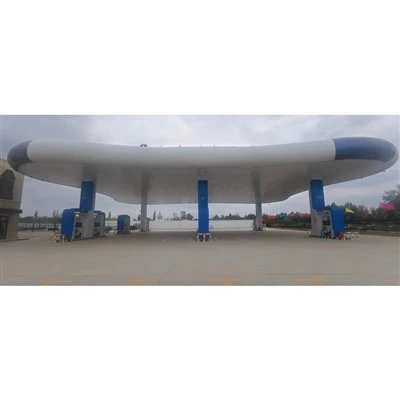
CNG Daughter Station For further reference on CNG compressor maintenance and repair best practices, consult the Compressed Gas Association (CGA) Guide for CNG Fueling Station Equipment Maintenance, and the Natural Gas Vehicle Coalition (NGVC) On-Site Compressor Repair Protocols.
Qingdao Lenado Intelligent Equipment Co., Ltd.
Qingdao Lenado Intelligent Equipment Co., Ltd. is one of the most experienced CNG booster compressor manufacturers and suppliers in China. We have world-leading production equipment and strong manufacturing capabilities. Please rest assured to wholesale bulk customized CNG booster compressor from our factory.
Address:
E-mail: genkegasstation@163.com
WebSite: https://www.cnggasstation.com/
