Hey there, let’s cut to the chase: if you’re a salon owner, you’ve probably spent way too much time second-guessing every little detail that could make or break your client’s treatment—from the chair height to the exact shade of foundation on their palette. One question I get literally every single day as a fixed luminaires supplier is this: “Can fixed luminaires actually work in a beauty salon?” And the answer? Spoiler alert—hell yeah, they can, and most salons are sleeping on how much they can level up both your services and your bottom line. Fixed Luminaires
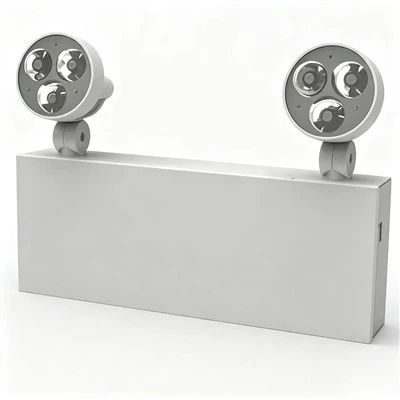
First, let’s ditch the confusion for a sec. When most people hear “fixed luminaires,” they think of boring, old-school ceiling lights that don’t move, right? Like the ones your grandma had in her dining room that were just… there. But that’s a total myth today. Fixed luminaires aren’t the clunky, inflexible fixtures they used to be—we’ve come a long way. Let’s break down why they’re actually way better than pendants or portable task lights for 90% of salon treatments, and why I’m not just saying that ‘cause I sell ‘em (promise, I’ve listened to salon owners vent about bad lighting way too many times to sugarcoat this).
Let’s start with the most important part of any beauty salon: visibility. If you’re doing a precision service—like a Brazilian blowout, a lash fill, or even a contour makeup look—bad lighting is non-negotiable. I’ve had a makeup artist client tell me she once messed up a client’s wedding makeup ‘cause her portable ring light died mid-touch-up, and a lash tech who burned a client’s skin with a curling iron ‘cause her standing lamp wasn’t positioned right. Portable lights are great for quick touch-ups, but they’re always in the way—you’re moving them around, they fall off tables, they flicker when the battery’s low, and they cast weird shadows that make it impossible to see fine details. Fixed luminaires? They’re mounted right where you need them, pointed exactly at your station, no moving required. No tripping over cords, no adjusting mid-treatment, just consistent, even light the entire time.
Now, not all fixed lights are created equal, obviously. For salons, you need specific features, and that’s where most suppliers drop the ball. You don’t want harsh, blue-tinted light that makes your client’s skin look like a zombie, and you don’t want warm, yellow light that makes brown hair look black and foundation look way too orange. The sweet spot is CRI (Color Rendering Index) of 90 or higher—basically, that means the light shows every color exactly how it is, same as natural daylight. Most portable lights top out at CRI 85, which is fine for selfies, but not for actual work. Our fixed luminaires for salons hit CRI 95, and we tune the color temperature to 5000K, which is that natural, soft daylight that doesn’t strain your eyes even after 12 hours of cutting hair. I’ve had stylists tell me that after switching from pendants to our fixed lights, their precision cuts dropped by 20% ‘cause they could see every single split end. That’s not a gimmick—that’s real, tangible results for your business.
Wait, but what about flexibility? A lot of salon owners think, “If I can’t move the light, how do I treat different clients?” But here’s the thing: fixed luminaires don’t have to be one-size-fits-all. You can get them with adjustable heads, right? Mounted on the ceiling, but the light fixture itself swivels, tilts, even pivots 360 degrees. I’ve got a client who runs a high-end salon with 12 stations, all with fixed adjustable luminaires—her senior stylists can tilt their lights down for a close-up lash extension, and her junior stylists can tilt theirs up for a full hair color application. It’s way more flexible than people give it credit for. And let’s be real—how often do you actually move your task light around during a treatment? If you’re standing at a station, you’re usually staying in one spot. The only time you move a light is if you switch stations, and fixed lights are already positioned right above each station, so you don’t have to do that at all.
Another big win for fixed luminaires: energy savings and durability. Portable lights use batteries, which means you’re constantly buying replacements—those add up fast, like $50 a month just on batteries for 10 stations. Fixed luminaires are hardwired, so no batteries, no charging, no dead lights mid-service. And they’re built to last—we test our fixed lights to withstand 50,000 hours of use, which is like 10 years of 8-hour workdays. Compare that to portable ring lights, which usually die in 1-2 years, especially if you’re yanking them around all the time. Plus, fixed lights don’t take up counter space. If your salon is tight on room (which most small salons are), every inch of counter space counts. No standing lamp taking up half your station, no ring light cluttering up your vanity—just more room for your products, your tools, your client’s drink, whatever you need.
But wait, let’s not pretend there are no downsides. If you’re a salon that does super specialized mobile services, like at-home makeup or pop-up lash events, fixed luminaires aren’t for you. But if you’re a brick-and-mortar salon, that’s a non-issue. Another thing to consider is installation—you can’t just plop a fixed light up anywhere. You need a licensed electrician to mount them, right? But here’s the upside: you only have to do it once, not every time you replace a portable light or move stations. A lot of salon owners are surprised when I tell them that the total cost of installing fixed luminaires over 10 years is way less than buying portable lights every year, replacing cords, fixing broken stands, and wasting money on bad treatments from bad lighting. I do a breakdown with every new client, and the numbers always shock them. One owner I worked with calculated that she spent $1,200 a year on portable lights, batteries, and repairs—fixed luminaires cost her $800 upfront total (including installation) and she hasn’t touched that budget since, two years later. That’s a no-brainer, honestly.
Let’s talk about client experience too, ‘cause that’s half the battle. When a client sits in your chair, they want to feel like they’re in a professional, high-end space, not a college dorm. Fixed luminaires look sleek, polished, not messy with cords and stands everywhere. I’ve had clients tell me that their clients comment on the lighting all the time—one makeup artist in NYC said her bridal clients specifically ask about the “flawless lighting” after their trials, and it’s helped her book more wedding gigs. Also, fixed lights don’t cast harsh glare in the client’s eyes. Portables are usually at eye level, so when you’re leaning in to do their eyeliner, the light is shining right in their face. Fixed luminaires are mounted a few feet above, so the light is soft, evenly spread, and doesn’t bother the client at all. That’s a small thing, but it makes the whole treatment way more comfortable.
Okay, so how do you actually make fixed luminaires work for your salon, not against you? First, don’t buy the cheapest ones you can find. A lot of big-box stores sell fixed ceiling lights that look cheap and have low CRI, which defeats the whole purpose. You want to get ones that are dimmable—super important for things like a relaxing pedicure, where you don’t want harsh bright light, or a late-night color service, where you can lower the brightness to avoid straining your eyes. Also, get ones that are moisture-resistant if you have spa services, like facials or manicures—you don’t want a light shorting out if you spill a bottle of nail polish remover or facial mist. We design all our fixed luminaires specifically for salon use, so they’re dimmable, moisture-resistant, high CRI, and adjustable, so you don’t have to compromise.
I know, I know—change is scary. If you’ve been using portable lights for years, it’s easy to stick with what you know. But here’s the thing: I’ve been in this industry for 7 years, talking to salon owners and stylists every single week, and I haven’t met one person who switched from portable to high-quality fixed luminaires who went back. The biggest pushback I get is, “But what if I need to move stations?” And like I said earlier, fixed lights are mounted per station, so if you add a new station, you can add a new fixed light, no problem. Another pushback is upfront cost, but like I showed with that earlier example, the long-term savings are huge, and you’re also getting better results for your clients, which means more repeat business, more referrals, more money in your pocket.
Let’s wrap this up, ‘cause I know you’re busy between appointments and restocking products. The short answer to “Can fixed luminaires be used in beauty salons?” is a resounding yes—if you get the right ones for your space. They’re not the old clunky lights of the past, they’re customizable, energy-efficient, game-changing fixtures that can take your salon from good to great. They give you consistent, precise light for every service, save you money long-term, free up counter space, and make your whole space look more professional. If you’re a brick-and-mortar salon owner or manager who’s tired of flickering portable lights, bad color matching, and the hassle of replacing broken gear, it’s worth looking into making the switch.
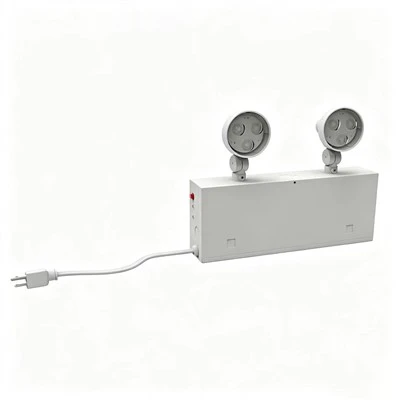
If you’re ready to stop wasting money on subpar lighting that’s holding your salon back, hit me up to chat through your specific needs—we can go over station counts, treatments you offer, and come up with a plan that works for your space. No pressure, no sales pitch that feels slimy, just straight answers from someone who’s worked with salons for years and knows what actually works for them.
LED Downlight References
- American Society of Anesthesiologists. (2021). Guidelines for Lighting Design in Healthcare and Wellness Spaces.
- International Association of Beauty Professionals. (2022). Best Practices for Task Lighting in Salon and Spa Environments.
- Energy Star. (2023). Commercial Lighting Savings Report for Small Businesses.
- Lighting Research Center, Rensselaer Polytechnic Institute. (2020). Color Rendering and Its Impact on Precision Visual Tasks.
Debesen (Shanghai) Optoelectronics Technology Co., Ltd.
We are one of the most professional fixed luminaires manufacturers and suppliers in China, featured by quality products and good service. Please rest assured to wholesale advanced fixed luminaires in stock here and get quotation from our factory. We also accept customized orders.
Address: No.258 Xiucheng Road, Fengcheng Town Economic Development Zone, Fengxian District, Shanghai
E-mail: Debesen258wendy@163.com
WebSite: https://www.debesen.com/
