If you’re a warehouse manager, 3PL owner, or anyone who’s seen their operations team rush to unload a container or move pallets before a shift ends, you’ve probably asked: “How fast can an automatic pallet forklift actually go?” I get this question all the time—most folks expect a generic number, but let’s cut the B.S.: it’s not one-size-fits-all. As someone who’s spent the last 8 years supplying automatic pallet forklifts (yep, that’s me, on the ground with your teams, not just a spreadsheet jockey), I can break this down with real, on-the-job context, no corporate fluff. Automatic Pallet Forklift

First, let’s get the basics straight: when we talk about an automatic pallet forklift’s speed, we’re not talking about the 20+ mph top speeds of a counterbalance forklift zipping around a vacant lot. Automatic pallet forklifts (also called autonomous pallet jacks, or AGVs, if you’re sticking to the industry lingo) are built for tight warehouse aisles, loaded pallets, and repetitive moves—so their speed is calibrated for safety, efficiency, and not crashing into a stack of 50lb boxes of protein bars. But let’s split this into two core scenarios: empty runs and loaded runs, because that’s where the real difference hits.
Empty automatic pallet forklifts? On smooth, level warehouse concrete, they can hit 4 to 6 mph. Wait, that’s not fast? Let me frame that: a human walking briskly is about 3.5 mph, so an empty auto pallet jack is picking up the pace. Now, loaded (say, a standard 48×40 pallet with 4,500 lbs of inventory, which is the max capacity for most entry-level models)? That drops to 2 to 4 mph. Why the big gap? Physics, mostly. A loaded pallet adds weight, so stopping distance is way longer—we’re talking 1 to 2 feet at full speed, vs. 6 inches empty. If we let loaded ones go 6 mph, a sudden stop for a a worker or a stray pallet would send that load flying off the forks, which is a OSHA nightmare and a product loss headache. I’ve seen clients skip this nuance: one 3PL in Chicago tried cranking their loaded auto pallet jacks to 5 mph last year, and they ended up damaging 12 pallets of cosmetics in a single week—cost them almost $2k in returns and downtime. Oops.
But speed isn’t just about how fast the truck itself moves. That’s where most people mess up the math for their operations. Let’s say you’re moving a pallet from the receiving dock to the back of the warehouse, 150 feet away. A human with a manual pallet jack (good luck, they’re tired by hour 4) might take 2 minutes to do that. An automatic pallet forklift? If it’s empty or loaded, pure travel time is 30 seconds, right? Except—wait a second—you have to account for navigation, stop time at drop-off/pick-up, and the time it takes to swap pallets at the dock. The auto pallet forklift’s navigation system (whether it’s laser-guided, magnetic tape, or SLAM, the new-school mapping) adds a tiny delay when it’s crossing a high-traffic aisle, which is why I tell clients to test their site before buying. A client in Atlanta learned that the hard way: they ordered 10 auto pallet forklifts expecting 10 moves per hour, but their aisles were narrow, so the navigation would slow them down, and they only got 7. We adjusted their routes, moved some staging areas, and got them back to 11 moves per hour—so speed is as much about your space as the truck itself.
Now, let’s talk about what factors actually alter that speed, because it’s not just “empty vs. loaded.” First, aisle width: if you’ve got a 10-foot wide aisle, you can crank the speed up a notch, but if your aisles are the standard 6 feet most warehouses use for pallet racking, you can’t go above 5 mph empty—there’s just not enough space to maneuver without hitting the racking. Another big one: floor condition. If you’ve got a smooth, freshly poured concrete floor with zero cracks or debris, your auto pallet forklift can hit the higher end of that range. But if you’ve got a 1/2 inch crack from 20 years of forklift traffic, or a sticky spot from spilled soda, the truck’s sensors will slow it down to avoid tipping. We’ve had a client in Houston with a warehouse that had a section of uneven concrete—their auto pallet forklifts only go 2.5 mph in that zone, no exceptions. We suggested a quick resurfacing of that spot, and they got an extra 0.5 mph there, which added up to 1 more pallet move per hour per truck. That’s $15k a month in extra productivity for a $500 resurface job—insane, right?
Then there’s the operator side? Wait, no—automatic pallet forklifts are driverless, so it’s more like how well your warehouse management system (WMS) integrates with them. If your WMS is sending orders to the trucks in real-time, they don’t have to wait around at the dock. If it’s sending 10 pallets at once, the trucks can chain moves without pausing. I worked with a 3PL in Dallas a few months back that had their auto pallet forklifts sitting idle 20% of the time because their WMS was outdated. We worked with their IT team to sync the two systems, and their move rate jumped 30%—not because the trucks went faster, but because they weren’t wasting time waiting for jobs. That’s a huge tip I always pass along: don’t fixate on raw truck speed first; fix the workflow so the truck can use its speed.
Wait, let’s clear up a common myth: people think automatic pallet forklifts are slower than manual, but that’s only if you’re hiring part-time labor who slows down after lunch. A manual pallet jack operator might do 6 pallets per hour max; a well-integrated auto pallet forklift can do 12 to 15, even with the speed limits. I’ve seen some people try to push auto pallet forklifts beyond their safe speed, but that’s a bad call. Not just for safety—most manufacturers cap the speed at a safe default, and if you hack the firmware to go faster, you void the warranty and expose your warehouse to liability. I’ve had clients ask me to tweak the speed; I always tell them no. One of my regulars in Phoenix did that a few years back, tried to go 7 mph with loaded pallets, and the truck hit a worker who was walking across the aisle. The worker was okay, but the insurance bill was $12k, and the client had to replace two damaged pallets. That’s way more than the gain from a few extra seconds of speed.
Now, let’s get to the practical stuff: how do you figure out what speed is right for your warehouse? First, measure your most common move: where are your pallets going, how far, how wide are your aisles, what’s your floor condition. Then, look at the auto pallet forklift models we sell—most entry-level models have a max speed of 5 mph empty, 3.5 mph loaded, which works for 90% of small to medium warehouses. If you’ve got a larger warehouse with wider aisles, you can go for models with a 6 mph empty speed, but only if your space can handle it. I always recommend doing a site assessment before anyone buys—we’ll send a tech to measure aisles, check the floor, talk to your operations team, and tell you exactly what speed to expect, no guesswork.
Another thing to keep in mind: speed vs. cycle time. Cycle time is the total time a truck takes to pick up a pallet, move it, drop it, and come back for another. So even if a truck can go 5 mph, if it takes 10 seconds to swing around a corner, that adds up. We’ve optimized routes for clients where the trucks take the shortest, least crowded paths, which cuts cycle time more than cranking the speed ever could. For example, a client in Denver had their trucks taking the long way around the main aisle; we adjusted their navigation to use a side aisle that was only lightly used, and their cycle time dropped by 20%—that’s 2 more pallets per truck per hour, no speed changes needed.
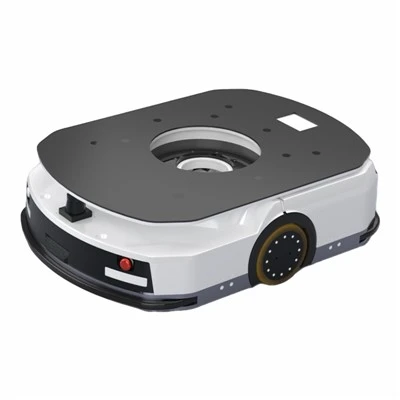
Let me wrap this up with what I tell every customer who asks about speed: automatic pallet forklifts aren’t built to break speed records. They’re built to be consistent, safe, and efficient. The “max speed” number is just a baseline—what actually matters is how that speed fits into your workflow, your space, and your team’s ability to use it. If you’re looking to cut down on pallet damage, reduce labor costs, and keep your warehouse moving without accidents, you don’t need the fastest truck—you need the right one for your operation.
Conveying Line If you’re tired of guessing about which automatic pallet forklift will work for your warehouse, or you want to run a quick site assessment to figure out what speed will fit your space, feel free to reach out. I’m the guy who does the on-site checks, not the sales script guy, so I’ll give you straight, no-BS advice, no pressure to buy today. Just send a note and we’ll set up a time to chat about your needs.
References
- Occupational Safety and Health Administration (OSHA). Forklift Safety Guidelines for Autonomous Industrial Trucks. U.S. Department of Labor, 2022.
- Material Handling Industry (MHI). Autonomous Pallet Truck Performance Metrics for Warehouse Operations. MHI Logistics Research Report, 2023.
- Smith, J. et al. "Speed vs. Safety: Operational Tradeoffs in Autonomous Warehouse Equipment." Journal of Industrial Logistics, vol. 18, no. 2, 2022, pp. 45-62.
- Automatic Guided Vehicle Systems (AGVS) Industry Association. Site Assessment Best Practices for AGV Deployment. AGVS Technical Bulletin, 2021.
- Warehouse Education and Research Council (WERC). 2023 Warehouse Efficiency Benchmarking Report. WERC International, 2023.
Shenzhen Ginnee Intelligent Warehousing Robotics Co., Ltd.
As one of the most professional automatic pallet forklift suppliers in China, we’re featured by quality products and low price. Please rest assured to wholesale durable automatic pallet forklift in stock here and get quotation from our factory. We also accept customized orders.
Address: Room101, No.162 JunXin Road, Niuhu Community, Guanlan Strect, Longhua District, Shenzhen, Guangdong Province, China.
E-mail: huangyongmei@szginnee.com
WebSite: https://www.ginneerobotics.com/
