Hey everyone, if you’re working with telecom, data centers, or industrial gear, you’ve probably heard about the XL-21 Cabinet – and if you’re a procurement person or operations lead, one question that’ll pop up every single time is: “What’s the power draw on this thing?” As someone who’s been supplying XL-21 Cabinets for the past 7 years, I get it – this isn’t just a random number. Mess it up, and you’re stuck with overloaded PDUs, sky-high utility bills, or worse, downtime that costs you thousands. Let’s break this down straight, no corporate jargon. XL-21 Cabinet
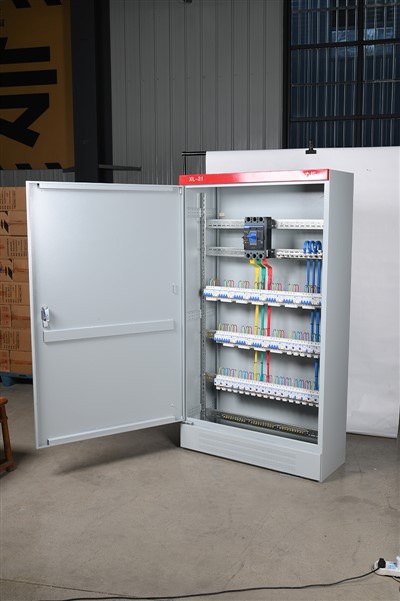
First, let’s get one thing clear: the XL-21 isn’t a one-size-fits-all power pig. The base cabinet itself – the metal enclosure, no gear inside – uses almost nothing. We’re talking 12 to 18 watts max. That’s like leaving a small LED bulb on all day. The real power? That comes from what you mount inside it. This is where a lot of people get tripped up. If you’re just housing a single 100W switch, that’s your baseline. But if you’re cramming in servers, routers, UPS units, or environmental controls (like cooling fans, temperature sensors), that number jumps fast.
Wait, let’s make that concrete. I’ve seen customers come in saying “I need the XL-21” and then they load it with: 2 rack servers (each drawing ~350W), 4 48-port switches (120W each), a small 150W UPS for backup, and 2 internal cooling fans (25W each). Add that all up: 350+350+120+120+120+120+150+25+25 = 1,330 watts. That’s 1.33 kW. But here’s the secret no one tells you – we always factor in a 20% overhead for inefficiency. Every piece of gear wastes a little power as heat, PDUs have loss, and if you’re running that cabinet 24/7 (which 99% of the time you are), that overhead isn’t optional. So round that 1.33 kW up to ~1.6 kW for your total peak draw.
Let’s talk about different use cases because that’s where most people misjudge. If you’re using the XL-21 for a small remote site – like a retail store’s point-of-sale network, or a small office’s VoIP system – you’re looking at a much lower load. Base setup: 120W switch, 1 wireless access point, maybe a 50W modem. Total peak? Around 200W. That’s nothing, you can plug that into a standard 15A wall outlet. But if it’s a carrier-grade deployment, or a data node with high-density gear? I’ve had customers run 4 kW on an XL-21 before – but that’s with heavy-duty servers, high-speed routers, and redundant cooling. Important note: our XL-21 is rated for up to 6 kW continuous power draw, so as long as you stay under that, you’re good.
Now, let’s get into the practical stuff that matters for your bottom line. Let’s do a quick cost calculation to make it real. If your XL-21 runs at 1.6 kW (that mid-range number I mentioned earlier) 24/7, your utility rate is $0.15 per kWh. Multiply 1.6 kW x 24 hours x 30 days = 1152 kWh per month. Times $0.15, that’s ~$173 a month. If you scale that up to 3.5 kW, that jumps to ~$378 a month. That’s a difference of over $2,400 a year – no small change. A lot of times, customers ask us to optimize power usage, and we’ll tell them to check for unused gear – like extra switches they don’t need, or old servers that draw more power than newer models. It’s easy to overcrowd the XL-21 because it’s designed to hold a lot, but every extra unit adds up.
Wait, let’s address a common myth: people think the XL-21’s power draw is static, but it’s not. It fluctuates based on load. If a server is idle, it might draw 50% less power than when it’s at full load. If your network is slow, your router might spike. That’s why we don’t just give you a single number – we give you a range, based on your specific gear. That’s also why as a supplier, I don’t just sell you a cabinet and dip. I’ll ask you what you’re mounting inside, how many units, what kind of environment it’s in (hot? Cold? Humid?), and then give you an accurate number. A lot of random suppliers online skip that step, and that’s how you end up with a cabinet that blows your PDU or runs up your bills.
Let’s throw in some real numbers we see day-to-day, just so you have a reference. Remote branch office setup: ~200W. Small business server cabinet: ~800W. Medium data node: ~1.8 kW. High-density industrial deployment: ~5.5 kW (which is right under the 6 kW max rating, so that’s safe). We never go over 6 kW because that’s the cabinet’s continuous limit – going higher can cause overheating, which shortens the lifespan of your gear, and that’s a headache no one wants.
Another thing: environmental factors. If you’re putting the XL-21 in a hot room with no extra ventilation, the cooling fans inside run more, which adds power draw. We usually add an extra 10-15% for that. If it’s in a climate-controlled data center, you don’t need that extra, so your draw is lower. That’s a small detail but it makes a big difference. I had a customer last year who installed his XL-21 in a garage that hit 95°F in the summer – he ended up with an extra 120W draw because the fans were working overtime. We adjusted his power calculation right away and he didn’t have any issues.
Now, why does this all matter for you? If you’re a procurement lead, you need to make sure your existing infrastructure can handle the load. If you’re looking to add XL-21 Cabinets to your network, you don’t want to buy too many high-capacity PDUs and waste money, or too few and risk overload. For operations teams, monitoring your power draw means you can catch inefficiencies – like a faulty fan that’s drawing extra power, or a server that’s running way more than it should. The XL-21 is built to be flexible, but you have to match its power capacity to your actual needs.
Wait, let’s clear up a mistake people make with power units. A lot of folks mix up watts, kilowatts, and volt-amperes (VA). The XL-21’s power rating is in watts, but when you’re talking about electrical circuits, you’ll see VA too. For most setups, the difference is negligible – a 1.6 kW draw is about 1.6 kVA. But if you have a lot of inductive loads (like motors in UPS units), the VA can be higher. We usually tell customers to use their gear’s nameplate wattage, then add the 20% overhead, and that’s your safe number. No need to overcomplicate it unless you’re dealing with very sensitive gear.
As someone who’s been in this for years, I’ll tell you the most common mistake is guessing the power draw. I’ve had customers tell me “Oh, it’s just a small cabinet, it’ll use 500W” and then load it with 3 servers and a 1kW router, ending up blowing a PDU within a week. The XL-21 is durable, but it’s not indestructible. That’s why when you’re working with us, we’ll walk through your setup step by step – no generic quotes, no vague numbers. We’ll even help you calculate your total projected power so you can plan your electrical upgrades or PDU purchases ahead of time.
Let’s circle back to the original question: “What’s the power consumption of the XL-21 Cabinet?” The short answer: it depends on what’s inside. The base cabinet is almost nothing, but the total power draw for a fully loaded, properly sized XL-21 is between 200W and 5.5 kW, with a max continuous rating of 6 kW. But that number’s not set in stone – it changes with your gear, environment, and usage. The key is to get an accurate count by listing every piece of hardware you’re mounting, then adding a buffer for overhead and environmental factors.
If you’re in the market for an XL-21 Cabinet, or you’re not sure if your current setup will work, we’re here to help. We’ve worked with telecom companies, small businesses, industrial facilities, and data centers, so we know exactly how to tailor the XL-21 to your needs. Don’t guess on power draw – get an accurate calculation, and make sure your cabinet is sized to handle your load without wasting money or risking downtime.
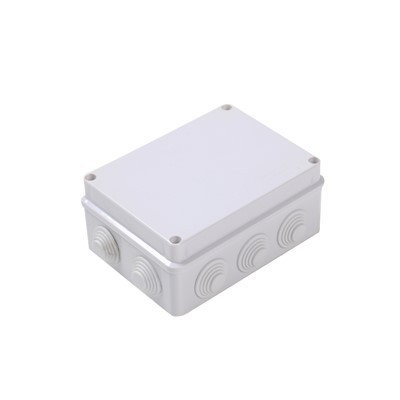
If you’re ready to chat about your requirements, shoot us a message to connect and we can walk through all the details, from power specs to installation tips, no pressure at all.
Photovoltaic Grid Box References
- Industrial Electrical Equipment Association (IEA). 2023. Power Efficiency Guidelines for Telecommunication Cabinets
- XL-21 Technical Manual. 2022. Vendor-Specified Power Ratings and Operating Parameters
- U.S. Energy Information Administration (EIA). 2024. Commercial and Industrial Utility Rate Averages
- Data Center Dynamics. 2023. Environmental Factors Impacting Network Equipment Power Draw
Shandong Qinghua Yike Electric Co., Ltd.
As one of the most experienced xl-21 cabinet manufacturers in China, we also support customized service. We warmly welcome you to buy durable xl-21 cabinet for sale here from our factory. If you have any enquiry about cooperation, please feel free to email us.
Address: No. 378 Taozhuang Village, Zaoyuan Town, Lanshan District, Linyi City, Shandong Province
E-mail: admin@sd-qhyk.com
WebSite: https://www.qhecobox.com/
