If you’re a bore welder tasked with keeping heavy machinery, pipelines, or large structural parts up and running, you’ve probably stared at a rusted, corroded bore at 2 a.m. and thought: Can my current bore welder even handle this? Corrosive environments—think offshore oil rigs, chemical processing plants, saltwater coastal facilities, or even food and beverage mills with constant washdowns—are brutal on every piece of equipment, and bore welders are no exception. As a supplier who’s shipped these machines to thousands of job sites over the past decade, I get this question all the time. The short answer? It depends. But let’s break down what actually makes a bore welder work (or fail) in corrosive spaces, the mistakes most folks make, and how to pick a setup that won’t leave you stranded mid-job. Bore Welder

First, let’s get one thing straight: Bore welding isn’t like regular stick welding you do in a shop. Bore welders are portable, fit right into the tight bore of a cylinder, pipe, or hydraulic ram, and their parts are exposed to way more than just a nice, clean steel surface. Most basic bore welders off the shelf use mild steel or cheap aluminum for key components—parts that rub against the bore’s interior, hold the welding wire, or generate the heat for the weld. In a corrosive environment? Those parts will pit, corrode, and seize up faster than you can strike an arc. I’ve seen a brand-new entry-level bore welder stop working halfway through a repair on an offshore pipeline because the wire feed motor corroded from salt spray, leaving a team of three guys idle for 12 hours. That’s not a fluke; that’s the cost of skimping on corrosion resistance.
Wait, but let’s talk about the environment specifics. Not all corrosion is equal. A food processing plant with daily caustic soda washdown is different from a deep-sea rig where saltwater and humidity are constant. Chemical plants have fumes that eat through seals and wiring, while mining sites might have acidic mine runoff. Each of these needs a slightly different approach, but the core principles of a corrosion-resistant bore welder apply across the board.
So, what makes a bore welder corrosive-environment-ready? Let’s start with the core build. First, the chassis and internal structural parts should be made from high-grade corrosion-resistant alloys—not the cheap mild steel or zinc-plated stuff you see on budget units. Stainless steel grades like 316 are the go-to here, especially in saltwater or chemical spaces, because they resist pitting and crevice corrosion way better than standard steel. Next, any moving parts exposed to the environment: the wire feed mechanism, the motor housing, and the torch assembly. Those need sealed, weatherproof casings. I can’t tell you how many times a client has come to me with a bore welder that stopped working because a tiny amount of moisture or corrosive fumes got into the wire feed gears, causing the wire to jam mid-weld. Sealed IP65-rated casings (that’s ingress protection for dust and water, if you don’t know the rating) block that stuff from getting in.
Then there’s the consumables. Wait, no—actually, the parts that come into direct contact with the bore’s surface. If you’re welding inside a corroded bore, your welding tool’s own components can’t introduce more contamination. That means using corrosion-resistant welding wire, and even the liner inside the torch should be made of a material that won’t corrode. A lot of folks skip this, thinking “consumables are just cheap parts,” but in a corrosive environment, a corroded liner will scratch the bore’s interior or leave impurities in the weld, which can lead to failure later. I once had a client who used a standard steel liner on a saltwater job; the liner corroded in three days, and the weld they did ended up failing inspection because of inclusions. Cost them $50k in rework. Ouch.
Another big one: power components. Bore welders run on either electricity or sometimes compressed air for smaller portable units. In corrosive environments, electrical connections are a nightmare. If your welder’s plugs, wiring, or circuit breakers aren’t coated with a corrosion-resistant material like nickel or silver, they’ll oxidize, cause power drops, and eventually short out. We coat all the electrical connections on our bore welders with a thin layer of silver, and we use sealed, water-resistant plugs for exactly this reason. It adds a little cost upfront, but it saves you from replacing a $1,000 power module every six months.
Now, let’s talk about mistakes I see most people make. The first is assuming any bore welder is fine for “moderate” corrosion. A lot of job sites say, “Our facility is just a little damp, right? It’s not that bad.” But even a damp steel garage will cause a mild steel bore welder to corrode over time. We had a client in a food processing plant that thought their occasional washdowns were “no big deal” and bought a budget bore welder. Eight months later, the welder’s frame had pitted so bad the feed motor was loose, and the whole unit had to be scrapped. They could have saved themselves $3k by just upgrading to a corrosion-resistant model.
The second mistake is not maintaining the welder properly, even if it’s corrosion-resistant. A 316 stainless steel chassis won’t corrode if you leave a layer of salt spray on it for six months. We tell all our clients to do a quick wipe-down after every job—just a rag and a mild acid-free cleaner to get rid of any residue. That’s it. It takes five minutes, and it doubles the lifespan of your welder in a corrosive space. I’ve had clients who skipped that and had their welder fail in two years, while another client in the same industry used the same model and has had it for seven years because they do the quick wipe-downs.
Wait, but what about smaller, niche environments? Let’s say you’re a mobile bore welder who takes jobs both in dry construction sites and offshore rigs. You don’t want to buy two welders, right? There are hybrid setups—borrowed from industries like marine welding—that use modular corrosion-resistant parts. You can swap out the basic mild steel parts for 316 stainless ones when you’re heading to a corrosive job, and swap back for cheaper parts when you’re in a dry space. That’s a game-changer for folks who don’t do corrosive jobs every single day. We offer those modular kits, and they’re way more affordable than buying a dedicated corrosive-environment welder for occasional use.
Let me also address a common myth: “Corrosion-resistant welders are too expensive.” Yeah, upfront they cost a bit more than budget models. But let’s do the math. A budget bore welder is $2,000, and it lasts 18 months in a corrosive space. That’s $1,333 per year. A corrosion-resistant model is $4,500, and it lasts 7 years. That’s $642 per year. Plus, you avoid downtime, rework, and emergency rentals when your budget welder dies mid-job. I’ve seen clients spend $10k in downtime costs because their cheap welder failed on a job—costs that are way higher than the extra upfront for a good, corrosion-ready machine.
Another thing: Welding process matters, too. Even the most corrosion-resistant welder will struggle if you’re using the wrong welding method. For corrosive environments, we recommend gas metal arc welding (GMAW) with a shielding gas that’s resistant to contamination. A lot of folks use just carbon dioxide, but in a corrosive space, adding a little argon to the mix creates a cleaner weld that’s more resistant to future corrosion. We train all our clients on this, and it’s one of the biggest tips we give for getting consistent, strong welds in tough environments.
Wait, let’s get specific with a real example. Last year, we shipped a set of our corrosion-resistant bore welders to a chemical plant in the Gulf Coast. They needed to repair 12 hydraulic cylinders that had corroded from constant exposure to sulfuric acid fumes. The old welder they had was a budget unit, and it had failed three times on the first cylinder. Our welders used 316 stainless steel components, sealed casings, and a modified GMAW process. They finished all 12 cylinders two days ahead of schedule, and the plant told us they’ve had zero issues with the welds in the year since. That’s exactly the result we’re going for.
So, to circle back to the original question: Can a bore welder be used in a corrosive environment? Yes—if you pick the right one. Don’t just grab the cheapest model online. Look for stainless steel structural parts, sealed, ingress-protected components, corrosion-resistant electrical connections, and consumables that are made for harsh spaces. And if you’re only doing corrosive jobs occasionally, a modular setup might be the sweet spot.
At the end of the day, your bore welder is only as good as how it performs in the environment you work in. A welder that fails mid-job doesn’t just cost money—it costs your team time, your clients’ trust, and even safety (bad welds on large cylinders can lead to catastrophic failure). We’ve built our entire business around making bore welders that can handle the tough stuff, from saltwater rigs to chemical plants. If you’re not sure what setup is right for your specific corrosive environment, just reach out. We’ll walk you through what to look for, answer any questions, and help you pick a setup that fits your budget and your job site needs.
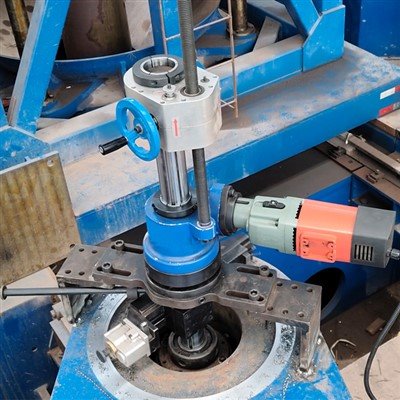
Don’t let a corroded bore or a tough environment derail your next repair. Let’s get you a bore welder that works as hard as you do, even when the conditions are brutal.
Linear Milling Machine References
- American Welding Society. Corrosion-Resistant Welding Practices for Industrial Applications. AWS D1.6:2021.
- International Electrotechnical Commission. Ingress Protection Rating Standards for Electrical Equipment. IEC 60529:2021.
- NACE International. Corrosion Control for Welding Equipment in Harsh Industrial Environments. NACE SP0177:2020.
- Marine Marketers Association. Portable Welding Equipment for Offshore and Coastal Corrosive Environments. 2023 Industry Report.
Shangqiu JDA Machinery Technology Co., Ltd.
With abundant experience, we are one of the most professional bore welder manufacturers and suppliers in China. We warmly welcome you to buy cheap bore welder for sale here from our factory. Quality products and reasonable price are available.
Address: No. 55 Pingyuan Middle Road, Liangyuan District, Shangqiu, Henan, China
E-mail: sales@jdamachines.com
WebSite: https://www.jdamachines.com/
