As a concrete batching plant supplier, I get this question at least a few times a week from contractors, project managers, and even small construction business owners who’re putting together a new build or replacing aging equipment: “What’s the lifespan of a concrete batching plant?” It’s not a one-word answer—if it were, this conversation would be a lot shorter, and way less useful for anyone actually trying to budget for equipment, plan maintenance, or avoid costly mid-project breakdowns. Over the 12 years I’ve been working in this industry, I’ve seen plants that run reliably for 20+ years, and others that start giving out less than five. The difference isn’t usually the brand or the upfront cost—it’s how the equipment is treated, what it’s made of, and how well the people operating it understand its needs. Concrete Batching Plant

First, let’s get a baseline: the average operational lifespan of a stationary concrete batching plant—our most common model, used for large construction projects like highway interchanges, high-rise buildings, and bridge works—ranges between 15 and 25 years. Mobile units, which are moved between job sites, clock in a bit lower, 10 to 20 years, because of the extra wear and tear from disassembly, transport, and frequent setup on uneven ground. But that’s just a range. I’ve sold a stationary plant in 2007 that’s still going strong on a commercial development project in Ohio, with only a few part replacements and a yearly full service. I’ve also seen a budget mobile unit from a no-name brand that the owner replaced after three years because the mixing drums corroded through, and the control system fried from exposure to rain at a temporary job site in Florida. So what factors actually determine where a plant falls on that spectrum?
The biggest one by far is maintenance, and not just the quick weekly checks. A lot of new operators think batching plants are heavy, rugged pieces of equipment that can take a beating without much upkeep. That’s partially true—they’re built to handle harsh conditions, but neglect the small, regular things, and you’re looking at a dead plant fast. Let’s break down the key maintenance areas we stress with every customer, because it’s the single biggest driver of lifespan:
Structural components are the backbone of any batching plant. This includes the mixers, aggregate bins, hoppers, and the steel support frame that holds everything in place. Concrete is a rough material—full of sand, gravel, and cement, which are abrasive and corrosive over time. The mixer blades, for example, aren’t just there to mix concrete; they have to stand up to constant impact from heavy aggregates, and chemical corrosion from wet cement paste. If you don’t lubricate the blade bolts regularly, they’ll seize up, the blades will shift, and instead of mixing evenly, you’ll get weak concrete that fails tests. By year 10, a plant with poor blade maintenance will start having to run twice as long to get the same mix quality, putting extra stress on the motor and gearbox, which cuts lifespan even more.
Aggregate bins and hoppers are another area where neglect kills. These hold sand, gravel, and cement, and if you let concrete residue build up in the corners, especially in cold weather where it can freeze solid, you’ll get uneven material flow. That leads to wrong batch sizes, which is a safety hazard, but also puts extra strain on the conveyor belts and load cells. We had a customer in Texas last year who skipped cleaning his cement hopper for six months, and the hard residue built up so much that it broke the bin’s support beam, forcing a $15,000 repair and a two-week delay on his highway project. The same customer’s older plant, which he’d maintained with a full bin clean every two weeks, is now at 18 years old with no structural issues.
Then there’s the electrical and control systems, which are often the first part of a plant to fail, but easy to overlook. Modern batching plants run on digital controls that regulate everything from batch size to mixing time, and if you don’t protect those components from dust, moisture, and temperature swings, they’ll burn out in a few years. I’ve seen mobile plants that were kept outside in the rain for weeks without covering their control panel, and the circuit boards were dead within 18 months. The good news here is that replacing control systems is way cheaper than replacing a whole mixer, so even if your plant is older, updating the controls every 10 years can add 5 to 7 years to its total lifespan.
Another factor is the operating environment. Not every job site is a concrete slab in a controlled factory; some are in humid coastal areas, some are in dusty desert sites, some are in cold climates with freezing temperatures. Plants in coastal Florida or the Gulf Coast have to handle salt air, which is way more corrosive than regular air. We sell plants in that region with extra galvanized steel on the structural parts, because without it, salt will eat through the bin walls in 8 to 10 years, compared to 15 for a plant in a dry, inland area. For customers in cold climates, the water lines and mixer need to be drained and insulated in winter—skip that, and a frozen pipe can split, or a frozen mixer motor can seize up, costing thousands in repairs. I know a contractor in Minnesota who runs two batching plants, and he budgets $2,000 a year just for winterization, and his plants are both 17 and 21 years old, still running reliably.
The level of use also matters a lot. A plant that runs 24/7 on a 100-story skyscraper project will wear out faster than a plant that runs 8 hours a day, 5 days a week on small residential projects. We have a customer in Las Vegas who rents his batching plant out to different job sites, so it’s moving and operating almost every day, and he replaces his mobile unit after 12 years, which lines up with the average. Another customer in Chicago uses his stationary plant only for commercial projects a few times a month, and it’s 22 years old, still going strong. The key here is not just how much it runs, but how it’s treated when it’s running. If you run batches of extremely high-strength concrete (which has extra silica and cement) every day, that’s more abrasive than regular concrete, so you’ll need to replace mixer blades and liners every 2 years, instead of every 4.
Wait, I should also address a myth that’s out there: “Used plants are all going to die soon, so it’s better to buy new.” That’s not always true. We’ve sold refurbished batching plants that are 10 years old, and with a full inspection and part replacements, they’ve lasted another 10 years, sometimes cheaper than a new entry-level plant. I always tell customers that a used plant’s lifespan depends entirely on its maintenance history. If the previous owner kept detailed service logs, and all the structural parts are in good shape, you can get a lot of life out of it. If there are no logs, you’re basically rolling the dice.
Now, how do you actually extend your plant’s lifespan beyond that average range? Over the years, we’ve put together a list of non-negotiable steps we share with every customer, and the ones who follow them have plants that hit or exceed the 25-year mark. First, stick to a scheduled maintenance log. We give every customer a digital maintenance checklist that’s color-coded by frequency: daily checks (look for loose bolts, clean the mixer, check water levels), weekly checks (lubricate conveyor chains, test load cells), monthly checks (inspect structural welds, clean aggregate bins), and annual full service (hire a certified technician to inspect the motor, gearbox, and control systems). Skipping even the monthly checks adds up—one customer told us he started doing monthly weld inspections after a cracked support beam caused a breakdown, and his repair costs dropped by 70% the next year.
Second, train your operators properly. A lot of small construction companies hire operators who’ve never worked with a batching plant, and they don’t know the basics—like not overloading the mixer, or not letting wet concrete sit in the mixer overnight (which causes it to harden and destroy the blades). We offer free operator training for all our customers, and we’ve seen a huge difference in plant lifespan when operators know what they’re doing. One first-time plant owner, who hired an untrained operator, had his mixer break down after 8 months when the operator ran a batch too heavy and burned out the motor. After he got trained, his next plant lasted 16 years with no major issues.
Third, invest in quality replacements parts when you need them. It’s tempting to buy cheap generic blades or conveyor belts to save money, but those parts won’t stand up to the concrete. We’ve seen a customer buy a $200 generic mixer blade, and it wore out in 3 months, compared to the $500 OEM (original equipment manufacturer) blade that lasts 2 years. Even if that’s twice the cost, over time, it saves you from more frequent repairs and downtime. That downtime is another cost people forget—if your plant is down for a week, you’re missing out on concrete deliveries, which can lead to project delays and penalty fees from contractors.
I also want to talk about when it makes sense to replace a plant, instead of repairing it. No matter how well you maintain it, at a certain point, the cost of repairs will be more than the cost of a new or refurbished plant. For most stationary plants, that’s around the 25-year mark. The structural parts will start to have hidden corrosion, the control systems will be obsolete, and replacement parts will be hard to find. For mobile plants, that’s around 20 years, because of the extra wear from transport. But if your plant is older than that, and the repairs are minor (like replacing a conveyor belt or a small circuit board), it’s still worth keeping if it’s working reliably.
Let me give you a real example from last quarter. We had a customer in Atlanta who had a 19-year-old stationary plant that was starting to have issues: the mixer blades were worn, the control panel had a few faulty components, and the support frame had some minor rust. He was debating buying a new plant, which would cost him $120,000, or repairing his old one for $18,000. After we inspected it, we told him the repair would be enough to get another 5 to 7 years of life, which made more sense for his upcoming small residential projects. A new plant didn’t fit his budget, so he went with the repair, and he’s now been using it for 6 months with no issues. That’s the kind of decision we help customers make every day—balancing lifespan, cost, and project needs.
Another example: a customer in Denver who has a 22-year-old stationary plant that’s run on highway projects for decades. Last year, he had to replace the entire control system, which cost $12,000, but he said it was way cheaper than buying a new plant. The control system update made his plant as efficient as a 10-year-old model, so it’s now running just as well, with a few more years left. That’s why updating parts, not just repairing them, can extend lifespan a lot more.
Now, I want to be clear: no plant lasts forever, and even the best maintenance can only get you so far. At the end of the day, a concrete batching plant is a heavy-duty, high-use piece of equipment, and it will eventually need to be replaced. But understanding the factors that affect its lifespan lets you plan ahead, budget for maintenance and repairs, and avoid the surprise breakdowns that kill projects.
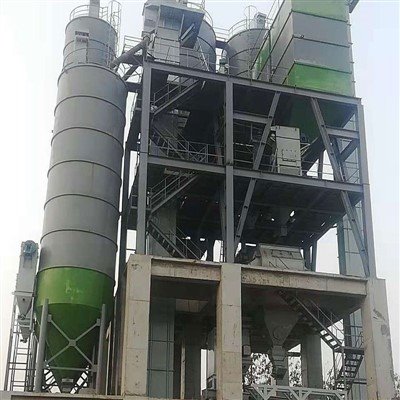
If you’re in the market for a new, refurbished, or even used concrete batching plant, and you want to get a realistic idea of what lifespan to expect, or you need help with maintenance plans, part replacements, or anything related to your equipment, don’t hesitate to reach out to our team. We work with contractors of all sizes, from small residential builders to large civil construction firms, and we tailor solutions to fit your needs and budget. Whether you’re setting up your first plant or replacing an old one, we can help you make the right choice to get the most life out of your equipment.
Single Drum Dryer References:
- Construction Industry Institute. (2020). Equipment Lifespan Benchmarks for Heavy Construction. University of Texas at Austin.
- American Concrete Institute. (2018). Guide to Maintenance of Concrete Production Equipment. ACI 304R-18.
- National Ready Mixed Concrete Association. (2021). Mobile vs. Stationary Batching Plant Performance and Lifespan Report. NRMCA Publication 15-21.
- Occupational Safety and Health Administration. (2019). Maintenance Best Practices for Heavy Construction Equipment. OSHA 3512-09.
Zhengzhou Tongding Machinery Equipment Co., Ltd.
Zhengzhou Tongding Machinery Equipment Co., Ltd. is one of the most professional concrete batching plant manufacturers and suppliers in China, featured by quality products and good price. Please rest assured to buy CE approved concrete batching plant made in China here and get quotation from our factory. Also, customized service and 5 years warranty are available.
Address: Kexue Avenue Industrial Park, Xingyang City, Zhengzhou City, Henan Province
E-mail: admin@tongdingmachine.com
WebSite: https://www.td-machinerygroup.com/
