As a fiber optic cable supplier specializing in MPO/MTP multimode cables, I’ve seen firsthand how improper storage can turn a high-grade bulk cable into a costly, unusable asset before it even reaches the job site. Over 12 years in this industry, I’ve worked with installation teams, data center managers, and network engineers who’ve lost thousands of dollars to frayed fibers, bent cores, or degraded insulation—all because they cut corners on storage. The good news? Storing MPO/MTP multimode cables isn’t complicated; it just requires attention to a few science-backed details. Let’s break down what works, what doesn’t, and how even small storage habits can protect your cable’s performance for years. MPO/MTP Multimode Fiber Cable

First, let’s get clear on why MPO/MTP multimode cables are more sensitive to storage mishaps than standard duplex fiber. MPO/MTP cables use a multi-fiber push-on connector with 12, 24, or even 72 fibers aligned in a precise 900-micron pitch. The multimode core (usually 50 or 62.5 microns) is larger than singlemode, which might make it seem tougher—but it’s actually more prone to microbending. A microbend is a tiny, unnoticeable bend that adds extra attenuation (signal loss) that’s hard to fix once the cable is pulled. Unlike standard fiber, where a single microbend might cause minimal signal loss, a single misstored MPO/MTP cable with a dozen fibers can drop 10+ decibels of signal before it’s ever installed. That’s a critical issue for high-bandwidth data centers, 5G backhauls, or enterprise networks running 10G, 40G, or 100G connections.
Let’s start with the biggest storage mistake I see all the time: leaving cables coiled too tightly on a workbench or stored in loose, messy piles. I once had a client who took delivery of 50 100-meter MTP-24 multimode cables, dumped them in a corner of their warehouse for three months, and then complained every third cable failed pre-installation testing. When we unpacked them, the coils were tight enough that the inner fibers had a bend radius of less than 20mm—way below the TIA-568-C.3 standard’s minimum 30mm bend radius for multimode MPO/MTP cables. The result? Each of those 24-fiber cables had a signal loss of 12 to 15 dB per fiber. That’s not a “minor defect”—that’s a total failure of the entire cable run.
The fix for this is straightforward: never coil MPO/MTP cables tighter than their specified minimum bend radius. For most multimode MPO/MTP cables, that number is 30mm for static storage and 50mm for pulling, but always check the manufacturer’s spec sheet (not all cables are the same). When you’re storing bulk cable, use a cable reel if you have one, or if you’re working with short runs, coil them loosely in an “over and under” pattern. That means looping the cable so each turn sits between the previous one, avoiding tight twists or overlapping coils that crimp fibers. I teach this to every member of my team, and to customers who pick up their cables from our warehouse—we demonstrate the coiling method so they can see the difference between a good coil and a bad one.
Next, temperature and humidity control. MPO/MTP multimode cables are made with a jacket material, usually LSZH (low smoke zero halogen), and a buffer coating around the fibers that can degrade if exposed to extreme temperatures for long periods. I’ve had another client who stored cables in an uninsulated warehouse in Arizona, where summer temperatures hit 115°F (46°C) for weeks. By the time they installed the cables, the jacket was cracked, and the buffer coating had turned brittle. Cold is just as bad—if you store cables in a freezing warehouse (-20°F/-29°C) without acclimating them first, the fibers can expand and contract, leading to microcracks in the core. Humidity is another factor: high humidity can cause water to seep into the connector ferrules, leading to signal loss when you mate the cables.
So what’s the safe range for storage? We recommend keeping storage temperatures between -40°F and 158°F (-40°C to 70°C) for short-term storage (up to 6 months), and between -4°F and 140°F (-20°C to 60°C) for long-term storage. For humidity, keep it between 20% and 80% relative humidity, with no condensation. If you’re storing cables in an unconditioned space, cover them with a waterproof, fire-resistant tarp to protect against temperature swings and moisture. And here’s a quick pro tip: if you need to move cables from a cold loading dock to a warm office, let them acclimate for at least 2 hours before unpacking them. That prevents condensation from forming on the connectors, which is a common hidden issue.
Then there’s connector protection. The MPO/MTP connector’s ferrule (the ceramic part that aligns the fibers) is extremely fragile and can scratch easily. Even a tiny scratch on the ferrule can cause signal reflection, which disrupts data. When cables are delivered, they come with protective plastic caps on both ends—but I’ve seen these caps tossed in the trash immediately, because someone thinks they’re “just extra packaging.” Big mistake. Even if the cable is on a reel, the connector end can scrape against the reel’s edges, or get knocked around in a warehouse, leading to damaged ferrules. When you’re storing cables, always keep those caps on. If you’re using cables regularly, invest in a small tool pouch to keep spare caps handy—you never want to mate a cable with a dirty or scratched ferrule.
Another common issue is storing cables with heavy objects on top of them. A stack of 10 reels on top of a single MPO/MTP cable box can crimp the cable, flatten the jacket, and even damage the internal fiber array. Once, a customer called us panicking because 200 meters of bulk multimode cable they’d stored under a pallet jack had a broken core. The pallet jack’s wheel had rolled over the cable, creating a flat spot that crushed 8 of the 24 fibers in the MPO connector. The fix here is simple: store cables in a secure, elevated area—shelves, pallet racks, or cable reels on stands—where they’re not at risk of being crushed. If you have to store them on the floor, lay them flat, not on their sides, and never stack heavy items directly on top.
Long-term storage adds a layer of complexity. If you’re storing MPO/MTP multimode cables for more than a year, there are extra steps to take to ensure they’re still performant when you need them. First, check the manufacturer’s shelf life—most LSZH-jacketed multimode cables have a shelf life of 5 to 10 years if stored properly, but this can vary. Second, inspect the cables every 6 months for signs of wear: check the jacket for cracks, the connectors for scratches, and the coils for tight bends. If you notice any issues, move the cable to a more stable storage location. Finally, label each cable with its delivery date and intended use, so you use the oldest cables first—this follows the FIFO (first-in, first-out) principle that works for all industrial inventory.
I also want to address a myth I hear all the time: “Multimode cables are more forgiving, so storage doesn’t matter.” That’s wrong. Multimode fibers have a larger core, which means more light travels through them, but they’re also more susceptible to modal noise—signal distortion caused by multiple light modes interacting. Improper storage, like tight bends, increases modal noise, which can make your data runs unreliable. I’ve tested this with customers: a cable stored tightly coiled showed a 20% higher bit error rate than the same model stored loosely. For 100G and 40G networks, even a small bit error rate can cause dropped connections and downtime, which is costly for businesses.
As a supplier, we’ve tested our MPO/MTP multimode cables under different storage conditions to make sure our products hold up. We don’t just sell cables—we back them up with practical storage guidance, because we know that great performance starts before the cable is ever installed. If you need MPO/MTP multimode cables for your next project, whether it’s a data center upgrade, a campus network build, or a 5G backhaul deployment, we can work with you to choose the right cable and provide tailored storage tips based on your environment.
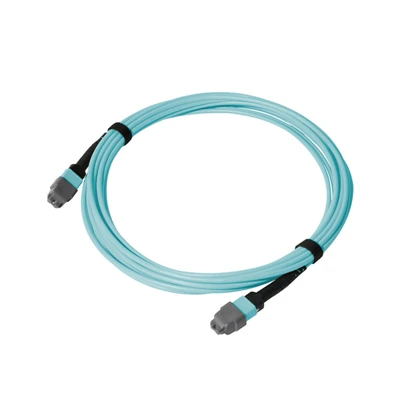
When you’re ready to secure high-quality MPO/MTP multimode cables and learn more about proper storage for your specific needs, don’t hesitate to reach out. Our team has years of experience in fiber optic infrastructure, and we’re here to help you protect your investment at every stage.
MPO/MTP Trunk Cable References
- Telecommunications Industry Association (TIA). TIA-568-C.3: Optical Fiber Cabling Components Standard. 2008.
- International Electrotechnical Commission (IEC). IEC 60793-2-10: Optical Fibers – Part 2-10: Product Specifications – Multimode Fibers. 2019.
- Fiber Optic Association (FOA). Fiber Optic Installation and Storage Best Practices. 2022.
- Corning Incorporated. Multimode Fiber Storage and Handling Guidelines. 2021.
Shenzhen Dimi Telecommunications Co., Ltd.
As one of the most professional MPO/MTP multimode fiber cable manufacturers and suppliers in China, our products have good reputation in the market. Please rest assured to wholesale advanced MPO/MTP multimode fiber cable made in China here from our factory. Also, custom service is available.
Address: China
E-mail: sales@dimifiber.com
WebSite: https://www.dimi-fiber.com/
