If you’re an electronic component flammability tester supplier like me, you’ve probably had customers ask: “Why should I bother with ISO 17025 accreditation for my flammability tests?” Or worse, you’ve seen clients turn down your testing services because your lab lacks that little, super important accreditation stamp. Trust me, I’ve been there. A few years back, my team and I were just cranking out testers, installing them in labs, and walking away—until a major electronics OEM (original equipment manufacturer) flat-out said no to working with us because their in-house testing lab couldn’t prove its results were reliable. That’s when we realized: ISO 17025 isn’t just a fancy acronym. It’s the ticket to credibility, especially when flammability testing for electronics is at stake—think phones, laptops, EV battery components, anything that needs to pass fire safety rules. Electronic Component Flammability Tester

Now, let’s cut through the noise. A lot of people act like getting ISO 17025 is this big, scary process that only suits huge labs. But for a mid-sized lab using your flammability testers? It’s totally doable. I’m gonna walk you through exactly how we helped our clients (and even tweaked our own tester designs to make accreditation easier) pull this off, no stuffy jargon, no hidden hoops.
First, let’s make sure we’re on the same page about what ISO 17025 actually is for flammability testing. This standard is all about two core things: consistency and traceability. For flammability, that means every time a lab tests a resistor, a connector, or a small battery component with their tester, the result (like how long it burned, if it self-extinguished, or if it dripped flaming material) is the same no matter who runs the test, when they run it, or which exact tester they use. And every step of that test needs a paper trail that links back to a calibrated tool, a known material, a trained technician—no guesswork allowed. If your lab’s results get called into question for a product recall, that traceability is what’ll save you.
Let’s start with the basics: pre-audit prep, because skipping this part is how you end up failing your first assessment. Here’s what we tell every lab using our flammability testers (we sell both manual and automated ones, so we tailor advice to their setup):
-
Map your processes to the standard’s requirements
ISO 17025 isn’t a single rulebook—it’s a set of clauses that cover everything from technician training to equipment calibration. For flammability testing specifically, you’ll need to focus on clauses that apply directly to your work: Clause 6 (resources: equipment and personnel), Clause 7 (test methods), and Clause 8 (measurement traceability).
A common mistake labs make here is trying to copy-paste a generic ISO 17025 manual and swap “environmental testing” for “flammability testing.” That’s a no-go. For example, if you use our automated flammability tester (model FT-101, super popular with small-to-mid labs), your process for mounting a test sample has to be exactly documented. No “just clip it in tight”—write down the torque on the clips, the distance between the sample and the ignition source, the exact way you mark the sample’s burn length. If an auditor asks, you shouldn’t have to guess. We even include a step-by-step process manual with every tester we sell now, specifically tailored for ISO 17025-compliant flammability testing, because we got tired of clients fumbling through this part. -
Get your equipment sorted (our testers play a big role here)
ISO 17025 requires all test equipment to be calibrated and traceable to national or international standards. For flammability testing, the key tools are your ignition source (usually a Bunsen burner or our electric ignition module—way more consistent), timing device, and sample measuring tools.
Wait, let’s be real: a lot of labs use stopwatches and call it good. But ISO 17025 demands that timing devices be calibrated at least once a year against a traceable standard (like a NIST-traceable timer for US labs, or UKAS for UK). If you use our automated FT-101, its internal timer is already factory-calibrated, and we send a calibration certificate with every unit—so you don’t have to worry about calibrating a random stopwatch. The ignition source is another big one: if you’re using a Bunsen burner, you have to verify its flame height is exactly 20mm (for most electronics flammability tests per UL 94, which ties into ISO 17025) every single test run. Our testers have a built-in flame height sensor that automatically checks that, logs it, and alerts you if it’s off—no more human error there. That’s a huge win for passing audits, because auditors love seeing automated checks instead of handwritten notes that could be fudged.
Also, keep a log for every piece of equipment. We tell clients to have a binder (or digital log, we recommend cloud-based for easy access) that shows when each tester was calibrated, any maintenance done, and any issues found. For example, if you clean your FT-101’s burner nozzle monthly, log that—auditors want to see you’re maintaining gear correctly.
- Train your team (no, “good at testing” isn’t enough)
ISO 17025 doesn’t just let anyone run flammability tests. Every technician doing the work needs formal training specific to your lab’s process, and they need to prove they can do it correctly. That means no one walking in off the street to operate your tester and start testing samples.
We offer free, 2-hour training webinars for all our FT-101 customers, specifically covering ISO 17025 requirements. We walk through how to set up a test, calibrate the tester, document results, and handle non-conformances (like if a sample burns way longer than expected). Plus, we do on-site training for labs that want it—small fee, but it’s saved a lot of clients from making stupid mistakes like mounting samples wrong, which would make all their test results invalid.
Another thing: keep training records. Log every time a tech did a refresher course, passed a skills test, or attended a workshop. If an auditor asks, you can’t say “they know what they’re doing”—you need to point to a document that says “Tech Jane Doe passed the flammability test proficiency exam on 05/12/2024.”
Now, moving past prep: picking a certification body (CB). This is the company that will audit your lab and issue the ISO 17025 certificate. Not all CBs are created equal, especially for flammability testing. You want one that has experience with electronics fire safety, because some general CBs don’t know the difference between a UL 94 V-0 test and a horizontal burn test for capacitors.
We recommend asking fellow electronics component suppliers which CB they use—word of mouth is way better than a Google search. Also, check if the CB is accredited by a national body (like ANAB in the US, UKAS in the UK) because that makes your certificate more widely recognized. For example, a lab with an ANAB-accredited ISO 17025 certificate will have an easier time working with global OEMs than one with a random, unrecognized CB’s stamp.
Once you’ve picked a CB, the audit process is next. There are two parts: a stage 1 audit (document review) and a stage 2 audit (on-site inspection). The stage 1 is where most labs fail if they didn’t do their prep. The auditor will go through your manual, equipment logs, training records, and make sure everything lines up with ISO 17025. If you’re missing a calibration log for your timer, or your test process doesn’t specify how to mark sample burn points, they’ll flag that and give you a chance to fix it before the stage 2.
We’ve had clients tell us that having our pre-written ISO-compliant process manual for FT-101 testers made their stage 1 audit take half the time. No guesswork, no last-minute writing of procedures. That’s why we started including that manual—we realized flammability testing-specific processes are hard, so let’s take the work off your plate.
The stage 2 audit is the on-site check. The auditor will watch a technician run a flammability test with your tester, check your logs, ask questions about non-conformances (like if a test failed, how you investigated why), and verify your equipment is calibrated. A pro tip here: be transparent. If you had a tester break a month ago and had to repair it, tell the auditor. Don’t hide it—just show them you recalibrated it after repair, and you have a log of that. Auditors hate dishonesty way more than they hate small, fixable issues.
Now, what happens if you pass? You get your ISO 17025 certificate, which is valid for 3 years, but you’ll have to do surveillance audits every year to keep it. That’s not scary—we help clients prepare for those too, by sending updated calibration checks for their testers and reminding them to update their process manuals if needed (like if a new UL 94 standard comes out).
Wait, let’s talk about the benefits, because I know you’re thinking “is this worth the hassle?” For one, it lets you bid on big OEM contracts that require ISO 17025 results. I’ve seen clients’ revenue jump 40% the year after they got accredited, just because they could work with a major EV component maker. Also, it reduces risk—if a product you tested fails a fire safety check, you can prove your results were reliable, so you don’t get sued or lose your license. And for your team, it gives them a clear set of rules, so there’s less confusion about how to do tests correctly.
Now, a few common pitfalls to avoid, based on what we’ve seen with clients:
- Not updating your processes:If a new standard comes out (like UL 94 updated in 2023), you have to change your test process. A lot of labs stick to their old manual and get flagged in audits. We send email alerts to all our customers when flammability standards change, and update our process manuals accordingly.
- Neglecting traceability:Every test result has to link to something. If you test a sample, the log needs to say which tester you used, what the flame height was, what the calibration date of the timer was, and who ran the test. If you can’t show that, the auditor will fail you.
- Cutting corners on equipment:Using a cheap, uncalibrated ignition source might save you $100 now, but if your flame is 25mm instead of 20mm, your test results are wrong, and you’ll fail the audit. Our FT-101 is built to ISO 17025 requirements, so you don’t have to worry about that.
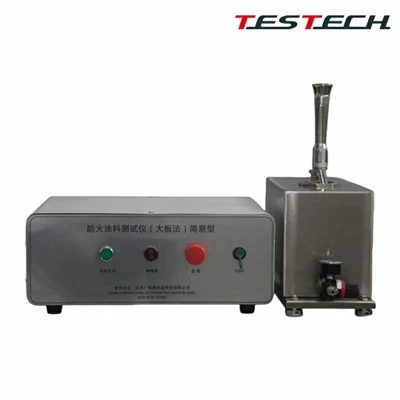
If you’re a lab that’s thinking about getting ISO 17025 for flammability testing, or if you have a tester that’s holding you back, get in touch with us. We can walk you through how our flammability testers are designed to make accreditation easier, share the process manuals we use with our own clients, and even connect you with CBs that specialize in electronics fire safety. No sales pitch, just real advice from people who’ve been in your shoes and built testers specifically for this purpose.
Wire Cable Flammability Tester Reference: ISO/IEC 17025:2019, General requirements for the competence of testing and calibration laboratories; UL 94, Standard for Safety of Flammability of Plastic Materials for Parts in Devices and Appliances
TESTech Instrument (Suzhou) Technologies
TESTech Instrument (Suzhou) Technologies is one of the most reliable electronic component flammability tester manufacturers and suppliers in China. If you’re going to wholesale durable electronic component flammability tester, welcome to get quotation from our factory. For price consultation, contact us.
Address: 8/F, R&D and Production Workshop No. 5, Jiangsu Guoqian Technology Innovation Industrial Park, 168 Lüliangshan Road, Huqiu District, Suzhou, Jiangsu Province, China
E-mail: molly@testech.com.cn
WebSite: https://www.testechfiretest.com/
