If you’ve ever been digging for reliable FEP Teflon wire pricing lately, you’ve probably noticed it’s not as straightforward as just grabbing a standard off-the-shelf cable. As someone who’s been supplying these wires for over 10 years—first out of a small garage workshop, now running a small team that sources and ships to electronics manufacturers, aerospace shops, and even hobbyist prototype labs— I get how frustrating it is to scroll through generic product pages that either list a random per-meter price with zero context, or hide “contact for quote” behind a wall of fluff. So let’s break this down like we would if you were sitting at my kitchen table, sipping lukewarm coffee, asking straight up: “What’s the real price of FEP Teflon wire per meter, when I’m actually ready to buy it?” FEP Teflon Wire
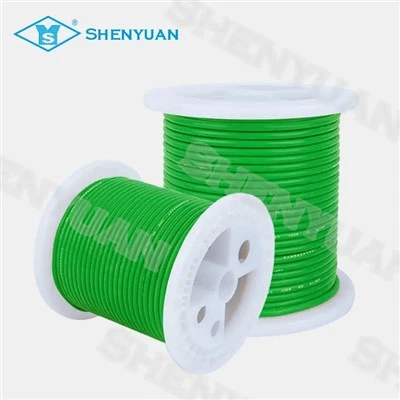
First, let’s get one thing out of the way: FEP Teflon wire isn’t a single product. That’s the biggest mistake people make. A 26 AWG (American Wire Gauge) FEP wire for a small consumer electronics battery pack is way different from a 10 AWG FEP wire for industrial motor wiring, which is still different from a high-temperature FEP wire used in satellite components. AWG size is non-negotiable here— smaller numbers mean thicker wire, more copper inside, more material costs, so higher per-meter price every single time. But FEP itself, the outer insulation? That’s another huge variable. Not all FEP is created equal. Some is virgin FEP, made from new resin with no recycled content, which is more heat-resistant (it can handle up to 200°C continuously, way higher than regular PVC insulation) and way less prone to cracking when bent repeatedly. Then there’s reclaimed FEP, which is melted down from old insulation, saves cost for bulk purchases that don’t need top-tier performance, but is only rated to around 150°C and has a slightly shorter lifespan. That split alone adds about 20-30% to the price right there.
Now, let’s talk actual numbers, because I know you came here for that, not just jargon. Let’s use mid-range quantities first— like if you’re a small business or a hobbyist buying 100 to 500 meters, that’s the sweet spot for most of our regular clients. For a common 22 AWG virgin FEP wire, which is the go-to for Arduino projects, small sensor circuits, and low-voltage automotive wiring, that’s $0.12 to $0.18 per meter. Wait, why the range? Because copper prices shift a little every month— global commodity markets for copper go up and down based on things like construction demand or mining delays, so we don’t lock in fixed prices long-term. Then add on any custom stuff: if you need the wire to be tinned copper (the silver-colored coating on the conductors that prevents corrosion), that adds $0.03 to $0.05 per meter. If you need it stranded instead of solid? Stranded bends easier without breaking, perfect for moving parts like robotics joints, and that’s a $0.02 to $0.04 markup too.
For thicker gauge wires, say 16 AWG, which is used for power supplies, heater elements, or larger industrial equipment? That’s $0.35 to $0.55 per meter for virgin FEP, same quantity range. If you’re going even thicker, like 10 AWG for heavy machinery or solar panel wiring, that jumps to $1.10 to $1.40 per meter. And if you opt for reclaimed FEP insulation across all these gauges, knock 20-25% off each of those numbers. Easy enough, right?
But wait, that’s for “small to medium” bulk. If you’re a bigger operation— like a factory needing 10,000 meters or more, or even a large aerospace firm needing 100,000 meters— the price per meter drops a lot, because we can negotiate better rates from our FEP resin suppliers and cut down on packaging and shipping overhead. For example, a 22 AWG virgin FEP wire for that 10,000 meter order can go as low as $0.08 per meter, and the 16 AWG drops to $0.28 per meter. We also have bulk discounts for repeat clients, too— if you order from us every quarter for production runs, we’ll tack on an extra 5-10% off to keep you happy.
Now, let’s talk about the hidden costs that aren’t always listed on product pages, because that’s the stuff that gets people stuck when they get a final quote way higher than expected. First, lead time. If you order standard gauges (20, 22, 24 AWG) of virgin FEP, we keep those in stock, so you get them in 2-3 business days, no extra charge. But if you need a custom gauge (say, 18 AWG with a black FEP insulation and stranded tin copper conductors) that we don’t have on hand, that requires a small production run, and we have to add a production surcharge of 10-15% per meter, plus a 1-week lead time. Also, shipping: if you’re ordering less than 500 meters, shipping to a US address is usually $15-$25, so you’ve got to add that to your total cost. If you’re ordering over 1,000 meters, shipping is free for domestic orders, which is a big one for our regular clients.
Wait, but what about people who are shopping for super low prices? I get it, budgets are tight. But let’s be real— there’s a reason some random websites list FEP Teflon wire for $0.05 per meter. That’s almost certainly recycled FEP that’s been mixed with other plastics, or even “FEP-like” insulation that’s not actually Teflon at all. That stuff won’t hold up to high heat, will crack after a few bends, and might even be a fire hazard if used near voltage. As a supplier, I’ve had clients come to me after ordering 10,000 meters from a cheap online vendor, only to have their entire production line fail because the insulation melted at 160°C instead of the rated 200°C. So when you see a price way lower than the ranges I gave you, it’s too good to be true, period.
Now, let’s cover some edge cases that I get asked about all the time. What about high-temperature FEP wire, like for space applications or industrial furnaces? That’s a whole different category. Virgin FEP that’s tested to withstand 260°C (the max for FEP, way higher than standard 200°C) with a Class H temperature rating, for aerospace or medical devices? That’s $0.75 to $1.20 per meter for 22 AWG, and up to $2.10 per meter for 16 AWG. That’s non-negotiable, because that insulation has to meet strict safety standards (like UL 1309) that add a lot of testing and material costs. Another edge case: wire with a specific color. FEP insulation comes in standard colors (black, white, red, blue) for most applications, no extra charge. If you need a custom color, like neon green or metallic silver, that’s a $0.04 to $0.06 per meter markup, because we have to run the insulation line separately to avoid color cross-contamination.
Wait, also— let’s talk about exchange rates if you’re ordering internationally. If you’re outside the US, or buying in bulk for export, the price per meter can shift a little based on current currency values. Right now, for example, our European clients pay about 5-10% more than domestic US clients due to shipping and EU import duties, but we pass those costs on transparently, no hidden fees. We also work with freight forwarders for clients in Asia and Latin America, so we can get you a competitive rate without the hassle of dealing with customs paperwork yourself.
Now, let’s wrap this up with what this means for you, whether you’re just testing a small prototype or placing a full production order. If you’re new to FEP wire, don’t get hung up on the smallest price tag— first figure out exactly what you need: gauge size, insulation type (virgin vs reclaimed), conductor type (solid vs stranded, tin vs bare), and any certifications (UL, RoHS, aerospace standard) you need. Then, when you’re ready to lock in a quote, reach out to us directly. I know a lot of suppliers hide behind automated forms, but we answer calls and texts during regular business hours— no bots, no scripted sales pitches. We’ll send you a custom quote within 24 hours, no obligation, and even help you pick the right gauge and insulation if you’re not sure.
If you’re just buying a few meters for a personal project, like building a custom LED strip or a small robot, we also have a small “sample pack” deal: $12 for 10 meters of mixed gauges, so you can test what works before buying bulk. That’s a perk we started during the pandemic, when a lot of hobbyists were stuck at home working on projects, and it’s still one of our favorite things to offer.
Now, let’s make sure I didn’t leave anything out. Oh, right— why FEP specifically? A lot of people ask why not use PVC or silicone insulation for lower cost. PVC melts at around 80°C, silicone at 150°C, so FEP is the only insulation that can handle high temperatures, harsh chemicals (like in chemical processing plants), and repeated bending without degrading. So while it’s more expensive upfront, it saves you money long-term because you don’t have to replace failed wiring every few months. That’s a big reason our clients come back to us— they know the price per meter is worth the lifespan.
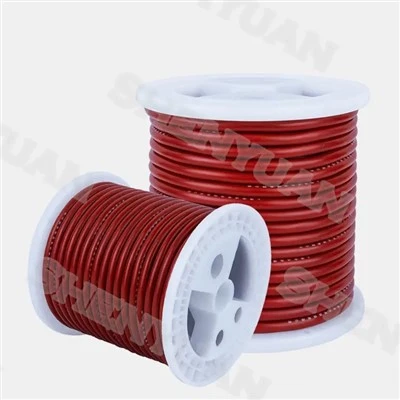
At the end of the day, FEP Teflon wire pricing isn’t a random number pulled out of thin air. It’s tied to raw material costs, manufacturing processes, quantity, and certifications. As a supplier who’s been in this for years, I don’t jack up prices for no reason, and I don’t cut corners to undercut competitors. If you’re ready to talk through your project, get a real quote, or even ask a random question about FEP wire (like “can this wire go in a water heater?” or “what gauge do I need for a 12V 5A motor?”), just reach out. No fine print, no pressure to buy, just straight answers.
Medical Cables References:
- National Electrical Manufacturers Association (NEMA). (2022). Wire and Cable Specifications for High-Temperature Applications.
- DuPont. (2023). FEP Teflon Resin Material Properties and Cost Breakdown.
- International Electrotechnical Commission (IEC). (2021). Standard for Insulated Wires for Industrial and Aerospace Use.
- Copper Development Association. (2023). Global Copper Commodity Price Trends and Impact on Wire Manufacturing.
Shanghai Shenyuan Special Cable Co., Ltd.
Shanghai Shenyuan Special Cable Co., Ltd. is one of the most professional fep teflon wire manufacturers and suppliers in China, featured by quality products and good service. We warmly welcome you to wholesale bulk customized fep teflon wire at competitive price from our factory. If you have any enquiry about quotation and free sample, please feel free to email us.
Address: No.680 Hengguan Road, Jiading District, Shanghai
E-mail: info@shenyuan.com.cn
WebSite: https://www.shenyuancable.com/
