As someone who’s spent nearly a decade navigating large-item logistics between China and Australia, I get how stressful it can be to pull together product samples for your Australian clients. Whether you’re a furniture brand testing a new outdoor lounge line, a machinery manufacturer showcasing a compact production unit, or a home goods retailer wanting to let buyers feel the weight and finish of a large storage cabinet, the question on every team’s mind is the same: Can I ship large-item samples from China to Australia without losing time, money, or the sample itself? Large-item Logistics From China To Australia
Let me cut straight to it: Yes, you can — but it’s not as simple as dropping a box off at the nearest courier. Large items, defined here as anything over 50kg, or with dimensions exceeding 120cm in length, 100cm in width, or 150cm in height, have specific rules that vary from standard parcel shipping. Over the years, I’ve helped hundreds of small and medium-sized businesses avoid costly mistakes like hidden duties, damaged goods, or delayed samples that kill a sales deal. Today, I’m breaking down exactly what you need to know to make this work, from paperwork to cost, and what to watch out for.
First, let’s tackle the biggest misconception: “Samples” aren’t treated the same as commercial cargo in Australia, but they also aren’t the same as small, low-value parcels. Australia’s Department of Home Affairs sets the rules for imported goods, and samples fall into a unique category — but only if you can prove the item is genuinely for evaluation, testing, or display, not for resale. That’s a critical line. If you label your large item as a “commercial sample” without proper documentation, Customs could flag it, hold it at the port, or charge you taxes and duties that you weren’t expecting.
For large items (over 50kg) specifically, Australia also has strict guidelines about packaging and handling. Large items are more prone to damage during transit, so standard cardboard boxes just won’t cut it. We recommend heavy-duty wooden crating for items over 100kg, especially if they’re fragile — like a ceramic kitchen island top or a metal garden sculpture. Most couriers won’t insure large items shipped in cardboard, so proper crating isn’t just a suggestion; it’s a way to protect your investment.
Next, let’s talk about the paperwork. This is where many clients trip up. For any sample imported into Australia, you’ll need two core documents: a commercial invoice and a Certificate of Origin. But for large items, there’s an extra step: a Cargo Declaration, which outlines the item’s dimensions, weight, and value. The key here is that you must declare the item’s value accurately. If you undervalue a $2,000 furniture sample to avoid duties, Australian Customs can impose fines or seize the item. For samples, you can claim a 5% concession on goods and services tax (GST) if the value is under AUD 1,000, but anything over that triggers GST, and in some cases, a small customs handling fee.
Wait, let’s clarify that concession: It only applies if the sample is non-commercial, meaning you’re not using it to make a profit, and you can show proof of that. If you’re a business sending a sample to a potential client to close a sale, that qualifies, but if you’re sending 10 identical samples to different buyers, that might be classified as commercial stock, and duties will apply. I always tell clients to keep records of all communications with the Australian recipient — emails, meeting notes, or order inquiries — to back up the “genuine sample” claim.
Now, how long does shipping take? That’s a top question for anyone trying to hit a client deadline. For air freight, large items take about 7–10 days from factory door to Australian door, but that’s the fastest option. The downside? Air freight for large items is expensive — sometimes twice as much as sea freight per kilogram. Sea freight is way more budget-friendly, but it takes 25–30 days, and large items might need to clear port customs, which can add a few extra days. We also offer a “door-to-port” option for clients who have someone on the Australian end to pick up the item directly from the port, which saves on delivery fees but requires a bit more coordination.
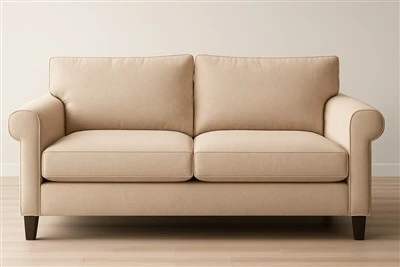
I’ve noticed that many first-time clients don’t account for the extra steps when shipping large items. For example, if your sample is a bulky sofa, you might need to arrange a tail-lift truck for delivery to the client’s address, because standard courier trucks can’t lift heavy items onto porches or up stairs. That’s an add-on cost, and it’s easy to forget when you’re budgeting. We always build that into our quotes, but if you go with a cheaper courier, they might not mention it until the item arrives, leading to unexpected fees.
Let’s get real about costs. On average, shipping a 100kg furniture sample from a factory in Guangzhou to Sydney costs between AUD 450 and AUD 700, depending on the size and speed. That includes crating, freight, and basic customs clearance. For smaller large items (50–100kg), it’s a bit cheaper, around AUD 300–500. Compare that to a small parcel, which might be AUD 50–100 for the same distance — the difference is all in the weight, size, and handling required for large items. I always advise clients to prioritize reliability over cost here; a cheap courier that delays a sample by two weeks could cost you a $10,000 sale, so the extra AUD 100–200 is almost always worth it.
Now, what about restrictions? Not every large item can be shipped to Australia as a sample, which is a point I make to clients early on. For example, food products, live plants, and some electronic goods have strict biosecurity rules. Australia has one of the strictest biosecurity regimes in the world, to protect local ecosystems, so any item that could carry pests, seeds, or pathogens needs extra documentation. If you’re shipping a wooden furniture sample, for instance, it needs to be treated with heat or fumigated before shipping, and you have to provide a phytosanitary certificate — otherwise, Customs will destroy it. That’s a rare case, but I’ve seen it happen to clients who tried to skip the treatment to save time.
Another restriction: Dangerous goods. If your sample is any type of machinery with lithium batteries, or if it’s paint, chemicals, or aerosols, you can’t ship it as a standard large sample. You’ll need a specialized dangerous goods courier, and the process is more complex — but it’s still possible, as long as you follow the correct labeling and documentation.
I get it, going through all this paperwork and rules might feel overwhelming, especially if you’re new to international shipping. That’s why many businesses partner with a specialized large-item logistics provider instead of trying to handle it themselves. For example, when a client comes to me with a sample request, I don’t just pick a courier and send it off. I first confirm the item’s details: dimensions, weight, material, and what it is. Then I create a customized plan: what kind of crating is needed, which shipping method fits their timeline and budget, and what documents they need to prepare. I even coordinate with the Australian recipient to make sure they’re ready to receive the item, whether that’s arranging a tail-lift or clearing it through customs on their end.
Let me share a quick story to illustrate why this matters. A few months back, a small outdoor furniture brand from Foshan came to me panicking. They had a custom patio set sample for a major Australian retail show in 10 days, and their previous courier had lost the shipment. We worked with them to rush the sample via air freight, built a heavy-duty steel crate to protect the wicker and metal frames, and double-checked all the customs documentation to avoid delays. The sample arrived three days before the show, and they ended up securing a $50,000 order with that retailer. Without the right logistics partner, that sale could have fallen through.
Now, if you’re still wondering if it’s worth the effort, let’s weigh it against the alternative. If you don’t ship a large sample, how do you prove to an Australian client that your product is high-quality? A photo or a video only tells so much — they need to feel the weight of a solid wood table, sit on a test chair, or check the finish of a kitchen cabinet. That sample could be the difference between a “maybe” and a signed contract. For large-item businesses, samples aren’t just a product; they’re a sales tool, and getting them right is critical.
But here’s the final tip I always give: Don’t wait until the last minute. Shipping large items from China to Australia takes time, even with fast air freight. Factor in at least two extra days for documentation and customs checks, and build a buffer in case something goes wrong. I’ve had clients try to ship a sample in 5 days, only to hit a delay in Guangzhou port that set them back a week — that’s lost business you can’t get back.
If you’re ready to ship a large-item sample, or you have questions about your specific item, the best step is to connect with a logistics provider who specializes in this route. They can walk you through every step, answer your questions, and make sure your sample arrives on time, undamaged, and without unexpected fees. Don’t take the risk of handling this on your own — a small misstep with paperwork or packaging can cost you more than the logistics fees themselves.

At the end of the day, shipping large-item samples from China to Australia is absolutely possible, as long as you’re prepared. You don’t have to navigate the rules alone — a reliable logistics partner takes the stress out of the process, so you can focus on what matters: closing that sale. If you have a sample in mind, or need to clarify any part of the process, reach out to our team to discuss your needs and get a customized quote.
China To Australia Consolidation Shipping References
Australian Department of Home Affairs. Importing goods into Australia.
Australian Quarantine and Inspection Service. Biosecurity requirements for imported goods.
International Air Transport Association. Cargo guidelines for large and heavy items.
Shenzhen Kuaihui International Logistics Co., Ltd.
Shenzhen Kuaihui International Logistics Co., Ltd. is a leading China-Australia dedicated logistics service provider in China. As a professional agent and platform, we are committed to providing high quality large-item logistics from china to australia with low price. Welcome to contact us for pricelist.
Address: 3rd Floor, Building 6, Nanbiantou Industrial Zone, Xifang, Songgang Street, Bao’an District, Shenzhen City, Guangdong Province
E-mail: info@kkhwl.com
WebSite: https://www.kuaihuiexp.com/
