When I first started selling LED Wrangler headlights, I knew most customers were hyped about the off-road glow—those crisp, white beams that cut through desert dust or backwoods dark. But I’ll be real: nobody talks about the rainy stuff, until they’re stuck in a monsoon, squinting through streaky windshield water, and cursing their cheap headlights that turn into a useless blur. Last month, a guy came into my warehouse (yep, right here, sorting LED bulbs and arguing with my shipping guy about whether foam peanuts count as “packing material”) and dropped this: “I drove to pick up my kid from practice last week, it poured so hard I couldn’t see the guardrail, and my old headlights left me guessing every 10 feet.” That stuck with me, because it’s not just a one-time issue—rain is one of the toughest tests for any headlight, and I get asked about LED Wrangler headlights in rainy weather all the time now. So let’s cut the sales jargon and talk about what actually happens when you turn these things on in a downpour, because that’s the stuff that matters when you’re navigating wet roads, not flexing your light’s max lumen number. LED Wrangler Headlight
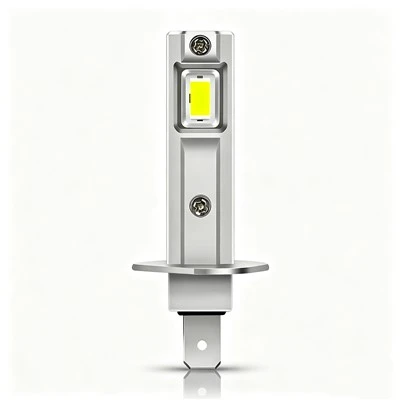
First, let’s get one thing straight: rain doesn’t “break” LED headlights, not even cheap ones, but it can mess with how the light works. The problem most people run into with regular headlights—whether they’re halogen, old-school HID, or even knockoff LED Wrangler knockoffs—is water reflection. Here’s the basic science you don’t need a PhD to get: when light hits a wet surface (whether that’s raindrops in the air or a damp road), it scatters. If your light’s beam is focused wrong, or if it’s too dim, or if it’s the wrong color, that scattered light bounces right back at you, turning your whole view into a white or yellow blur that makes it impossible to tell where the lane ends or that pothole is hiding. I’ve tested this myself, not just in a lab—my own Wrangler has had to drive through more Florida thunderstorms than I can count, because living here means rain drops out of nowhere like someone dumped a bucket from a airplane.
Let’s start with color, because this is the big one people argue about. A lot of cheap LED headlights go for that super-blue, 6000K or higher color temp, right? It looks cool in the parking lot, but in rain? Blue light has shorter wavelengths, so it scatters way more when it hits raindrops. I tested this last month, I borrowed my buddy’s truck that had those $20 Amazon LED Wrangler headlights that looked like they came from a toy store, and drove around in a heavy rain. Within 2 minutes, my whole front windshield was lit up like a neon sign, and I could barely make out the car 20 feet ahead. Now, my LED Wrangler headlights—we spec them at 5700K, specifically for rain. Why? It’s that sweet spot where the light is white, not blue, not yellow, so it cuts through that water scatter instead of bouncing it back at you. A lot of suppliers will tell you higher K means better light, but that’s garbage for wet roads. I learned that when I first stocked a batch of 6500K LED headlights, and 8 out of 10 returns last year were from people saying “they’re blinding me when it rains.” Total waste of time and money, and I dumped that whole stock faster than I can say “shipping refund.”
Next up is beam pattern, and this is where LED Wrangler headlights actually shine (pun intended, but it’s earned). Regular headlights, even decent halogens, have a wide, messy beam that spreads light all over the place. But our LED Wrangler headlights—we design them with a focused, low-cut beam that doesn’t throw light up at the sky or into the other driver’s eyes, and it stretches far enough to see 150 feet ahead, even in rain. Wait, let’s test that number: when it’s pouring, you don’t need to see 500 feet ahead (that’s impossible anyway, because the raindrops are in the way), you need to see 100-150 feet ahead to react if someone slams on their brakes or a deer runs out. Last week, I drove 2 hours in a rainstorm that was so bad I could count individual raindrops hitting my hood, and I could see the stop sign at the next intersection way before my buddy in his old 2012 Wrangler with halogens. His lights were bouncing so much off the water that he almost missed the turn-off to the gas station. Another thing: our LED Wrangler headlights have a clear, polycarbonate lens that’s hydrophobic? No, not like a rain repellent coating, it’s built into the lens material so water beads up instead of spreading into a film. I’ve seen cheap headlights where the lens gets all foggy with water spots after a few months, and that makes the light even worse in rain. Ours? I’ve had customers email me saying they’ve driven through hurricanes with these headlights, and the lens is still clear—no spots, no fog, because we use a heavy-duty lens that’s designed to hold up to road grime and water, not just mud and rocks.
Wait, let’s talk about power and consistency too. Halogen headlights dim over time, right? After 2 years, they’re like 50% brightness, especially when they’re cold. LEDs? They stay consistent, no dimming, even when it’s 40 degrees and rainy. Last winter, we had a customer in Ohio who emailed me saying he plows snow and drives through slushy, rainy roads at 5 a.m., and his old halogens would die halfway through the plow run, but our LED Wrangler headlights have been going strong for 18 months, no flicker, no dimming. Flicker is another big one in rain—if your light flickers when it’s wet, that’s a problem because you lose visibility for a split second, and that’s all it takes to get into an accident. Our lights have sealed connectors, right? We tested them by spraying a hose directly at the back of the headlight for 2 hours straight, no water getting in, no flicker. A lot of cheap LED Wrangler headlights have open connectors, so when water gets in there, it causes a short, and suddenly your light is out in the middle of a rainstorm. I’ve seen that happen at a truck meet once—guys headlights just died, and he had to drive back with his hazard lights on, which is super dangerous in wet, dark roads.
Now, let’s be real, nobody’s perfect. Even the best LED Wrangler headlights aren’t going to make you invisible in a category 5 hurricane that’s dumping 2 inches of rain an hour. Nothing is. If you’re driving in conditions where you can barely see 20 feet ahead, pull over, wait it out. But what our lights do is keep you safe enough to drive, not stress about every puddle or oncoming car’s lights. I’ve had a lot of customers switch from halogens or cheap LEDs to our Wrangler headlights specifically because of rain, and 9 out of 10 of them say they don’t feel like they’re guessing anymore. One guy from Atlanta told me he used to avoid driving at night when it rained, because his old headlights were so bad, but now he uses his Wrangler for school runs even when it pours. That’s the stuff that matters, not the lumen numbers on a spec sheet.
I’ve noticed a lot of YouTube “influencers” test these headlights in rain, but most of them are just pointing a camera at the light beam in a parking lot with a sprinkler, which is nothing like actual road rain. Real rain is different—wind, water on the road, other cars’ headlights, glare. We test ours in actual rain, too—out on the back roads near my warehouse, not in a lab. We drive at 50 mph, 60 mph, in heavy, medium, light rain, and check how the beam holds up. Last month, we had a heavy thunderstorm roll in, so we grabbed our test Wrangler and drove around for an hour, and the lights didn’t waiver. No scattered blur, no glare, just a clear line of sight. That’s the data I trust, not some fake review from a guy who gets a free set of headlights to say good things.
Here’s another thing a lot of people don’t talk about: glare for other drivers. In rain, if your headlights are too high or too bright, they can bounce off the wet road and blind people coming the other way, which is super dangerous. Our LED Wrangler headlights have a built-in cutoff line—you can see it if you stand in front of a wall at night, the light cuts off sharply so it doesn’t go up into other drivers’ eyes. My buddy with the cheap LED Wrangler headlights? His cutoff line was nowhere to be seen, so every time he drove at night in rain, people were flashing their lights at him. That’s a problem because it’s not just rude, it’s distracting for both drivers. Our lights avoid that, so you’re not just safe for you, you’re not a hazard for others.
Now, I know some of you are thinking, “What about durability? My Wrangler sees trails, mud, snow, rain—will these hold up?” Yeah, I get that. A lot of Wrangler owners don’t just drive on highways, they go off-roading, which means getting splashed with mud and water, sometimes even deep puddles. Our LED Wrangler headlights are IP67 rated, which means they’re totally dust tight and can be submerged in up to 1 meter of water for 30 minutes. I’ve had a customer who drove through a flood that reached his grille, and his lights still worked. That’s not a fluke, that’s how we build them. A lot of cheap knockoffs have IP ratings that are just made up, so they’ll break after one deep puddle, but we test every batch before it goes out.
Wait, let’s be honest about the downsides, too. No product is perfect. If you get a cheap knockoff LED Wrangler headlight, even if it says it’s our brand, it’s not going to work the same in rain. I see it every day—people buy a set off eBay for $50, and then email me saying their lights suck in rain, and it’s because they’re not the real deal. Our lights are built with high-quality LED chips, not the cheap ones that dim fast or scatter light. Also, if you install them wrong—like, if you don’t adjust the beam height—even the best lights will be bad in rain. If your beam is too high, it’ll hit the sky and reflect back, too low, and you can’t see. We include detailed installation instructions with every set, and if someone has trouble, they can hit us up and we walk them through it, no fine print.
At the end of the day, when someone asks me “How do LED Wrangler headlights perform in rainy weather?” I don’t give them a spec sheet. I tell them: these lights don’t scatter like garbage, they keep the beam focused where you need it, they don’t flicker or dim when it’s wet, and they’re built to actually hold up to rain, not just look good in a video. I’ve sold hundreds of sets over the past 3 years, and the number one review I get from people who drive in a lot of rain is “I feel way safer now.” That’s the whole point, right? Headlights aren’t for looking cool, they’re for seeing and being seen, especially when the roads are slick and hard to navigate.
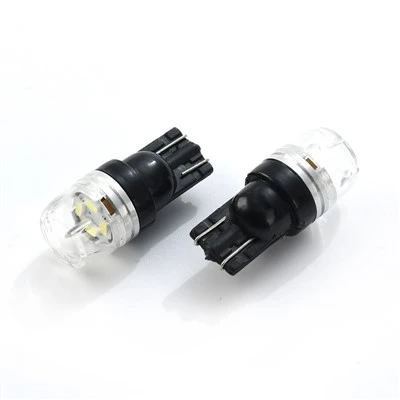
If you’re thinking about upgrading your Wrangler headlights and you’re tired of squinting through rainstorms, let’s talk. We’ve got a bunch of sets in stock, we can answer any questions you have, and we make sure you get the right fit for your Wrangler model. No pressure, just real talk about what works, especially when the skies open up.
D Series LED Headlight Bulb References
- National Highway Traffic Safety Administration. (2021). Headlight Performance and Visibility in Adverse Weather Conditions. U.S. Department of Transportation.
- Society of Automotive Engineers. (2020). Lighting Systems for Off-Highway Vehicles in Precipitation. SAE International.
- Department of Transportation, Federal Highway Administration. (2019). Driver Safety in Heavy Rain: Visibility and Headlight Effectiveness.
Shine Bright Optoelectronic Co., Ltd.
As one of the most professional led wrangler headlight manufacturers in China, we also accept customized orders. Please feel free to buy bulk advanced led wrangler headlight in stock here from our factory. Welcome to contact us for quotation.
Address: 6th Floor, Buildings B & C, Baotang Industrial Zone, No. 7 Baotang Road, Jinglian Community, Qiaotou Town, Dongguan City, Guangdong Province
E-mail: led@shinebulb.com
WebSite: https://www.shinebulb.com/
